


How to Transition to Offshore Teams Without Losing Control
Optimize your 2026 offshore strategy with a Mirror Stack, Zero Trust security, and AI to scale execution while saving 40-70%.
9 min read
Loading…
Find out what is offshore software development, who it's for, and how it helps businesses cut costs, boost output, and access global expertise.
Written by: Nasif Sid Created on: 11 Aug 202511 min to read
When your business needs to build software faster and cheaper without compromising quality, offshore software development is the only answer. It means hiring a team from another country to handle part or all of your software project. Simple, smart, and increasingly common.
Well, you get access to skilled developers worldwide without the high cost of hiring locally. Offshore teams can design, build, and maintain your apps while you focus on growing your business. It's a great way to save time and money.
In this blog, I’ll walk you through what is offshore software development, how it compares to other outsourcing models, and when it’s the right move for you. We’ll also cover the benefits, risks, best practices, and how to hire the right partner.
Let’s start!
Offshore software development means you hire a team from another country to handle your software tasks like coding, design, testing, or maintenance. It’s a smart way to save money and find skilled software developers fast.
Hiring locally in markets like the U.S., Europe, or Australia can be expensive. That’s why companies increasingly collaborate with teams in countries such as Bangladesh, India, Ukraine, or the Philippines, regions known for strong technical talent at more competitive rates. This shift reflects the growing adoption of the offshore development model as a practical way to scale development without long hiring cycles.
That shows just how fast offshore services are growing. You can hire a full team or get help with just one part, like UI/UX, mobile apps, or QA.
The main difference between onshore vs nearshore vs offshore outsourcing development is how far the team is from you. Onshore means they’re in your country, nearshore means a nearby country, and offshore means a faraway country, usually with lower costs.
| Feature | Onshore | Nearshore | Offshore |
| Location | Same country as your business | Neighboring country or same region | Distant country (different continent or time zone) |
| Cost | Highest | Medium | Lowest |
| Time Zone | Same or very close | Partial overlap | Big time difference |
| Communication | Very easy (same language/culture) | Easy to moderate | Maybe harder (language/cultural gaps) |
| Cultural Fit | High | Moderate | Varies widely |
The benefits of offshore software development are clear: it helps you save money, hire skilled people faster, and grow your team as needed. It also lets you focus on your main business while your offshore team builds your product.
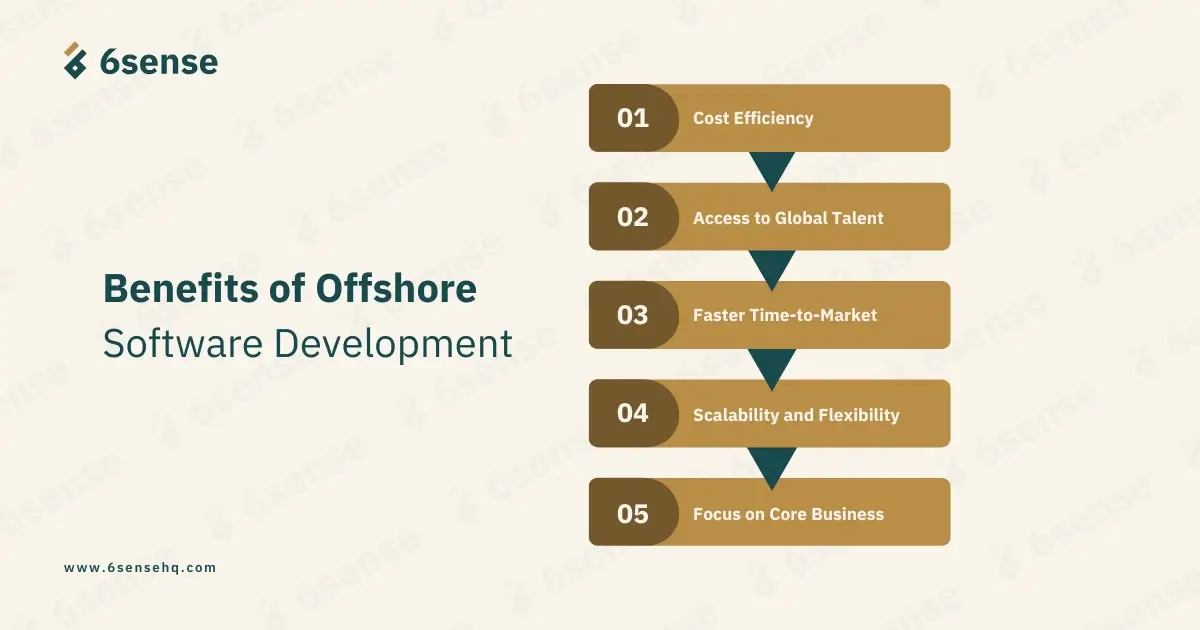
With offshore development, you can cut software costs by over 50%. I’m not talking about cutting corners, just smart hiring. Developers in countries like India or Ukraine charge less, but still deliver excellent quality.
Plus, you save on salaries, office space, and hiring time, all without losing performance.
When you hire offshore, you’re not stuck with local talent shortages. You get access to skilled developers around the world. Whether you need AI experts, cloud, or software engineers, they’re out there, and you can hire them quickly and easily.
Offshore teams work in different time zones, which means your project can move forward even while you sleep. I’ve seen this cut product development time by weeks. When speed matters, like during software product launches, offshoring gives you a clear edge.
One of the best parts of offshore development is how easy it is to scale. You can start with two developers, and add more when needed. I’ve done this myself; it’s fast, simple, and way cheaper than hiring full-time employees.
When your offshore team handles the technical side, you and your team can focus on growing the business. You’re not buried in code or QA issues, you’re building strategy, closing deals, and moving forward while experts handle the tech work.
The challenges of offshore and many custom software development mostly come from distance, time zones, and communication gaps. If you and I don’t plan things well, it can lead to delays, confusion, or even security risks. But with good management, these can be solved.
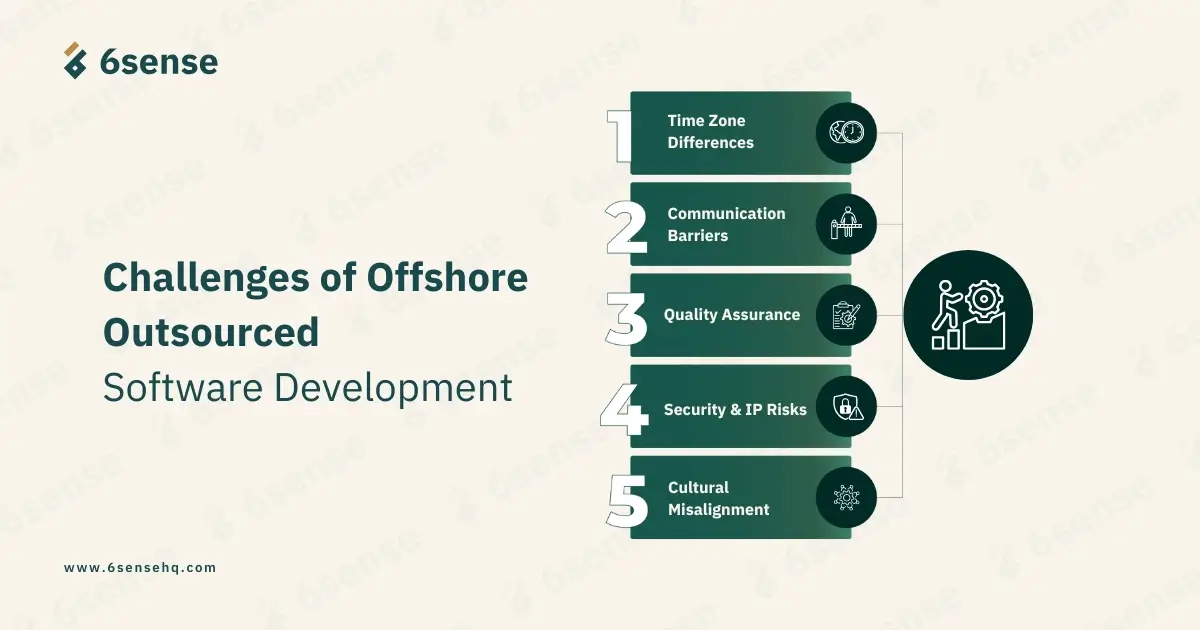
The biggest issue is timing. Your offshore team may start work when you're ending your day. It can slow things down if quick answers or meetings are needed. You’ll need overlapping hours or clear schedules to keep things moving smoothly.
Language or writing style differences can confuse. I’ve seen teams misread tasks or miss updates because things weren’t clear. Regular calls, clear documentation, and using simple English help avoid misunderstandings and project delays.
Keeping software quality high can be tough when you're not in the same room. If testing isn’t built into the software development process, bugs slip through. You and I need to make sure the offshore team includes skilled QA testers and follows strong review steps.
You’re sharing your ideas and data with people in another country, which is a risk if you're not protected. Always sign an NDA and check that your offshore partner follows security laws. I never skip this, and neither should you.
Different cultures mean different work habits. What feels urgent to you might not feel the same to your offshore team. It can cause tension or slow things down. I’ve found that early conversations about work style help avoid these problems later.
If you want offshore software development, it’s the right choice when you need expert help, fast results, or lower costs. If you’re short on time, people, or budget, offshore development can be your best move. Here’s when to go for it:
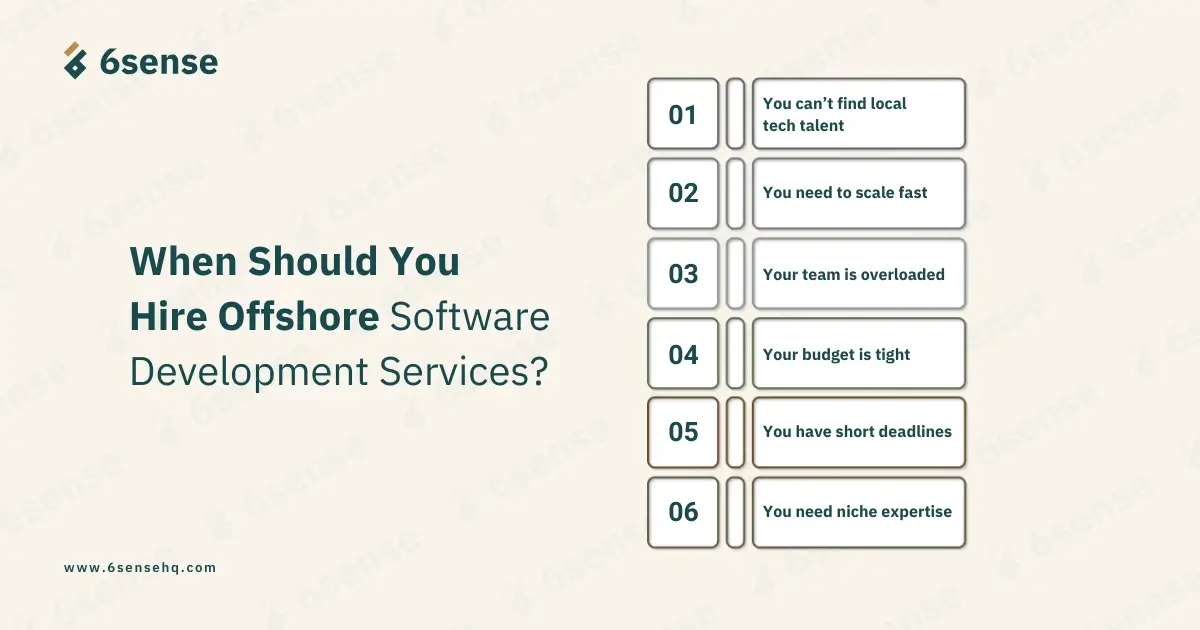
If you're struggling to hire skilled developers near you, going offshore gives you instant access to a broader talent pool. I’ve seen offshore software development companies wait months for local hires. Offshore teams let you start in days, with the right skills and experience.
Need more developers but don’t want the long-term cost of full-time hires? Offshore teams are great for scaling up quickly. You can add people when needed and scale back after. It gives you flexibility without the stress of permanent hiring.
If your in-house team is drowning in tasks or burned out, offshore support can help fast. I've used it to take pressure off my team during busy times. It helps avoid delays, missed deadlines, and unhappy employees.
Hiring locally can be expensive, especially when you factor in salaries, benefits, and office space. Offshore development lets you get the same work done for a much lower cost. I’ve saved 40–60% this way without sacrificing quality.
Need to launch something fast? Offshore teams often work in different time zones, which means your project keeps moving 24/7. I’ve used this setup to hit tight launch dates while my local team focused on other priorities.
Sometimes, you need skills your in-house team doesn’t have like blockchain, AI, or a specific tech stack. Instead of spending months hiring, I’ve brought in offshore experts for specific tasks. It’s faster, cheaper, and gets the job done right.
For offshore software development, you need clear goals, strong communication, and the right team setup. Without structure, things can fall apart. I’ve followed these exact steps, and they’ve saved me time, money, and headaches.
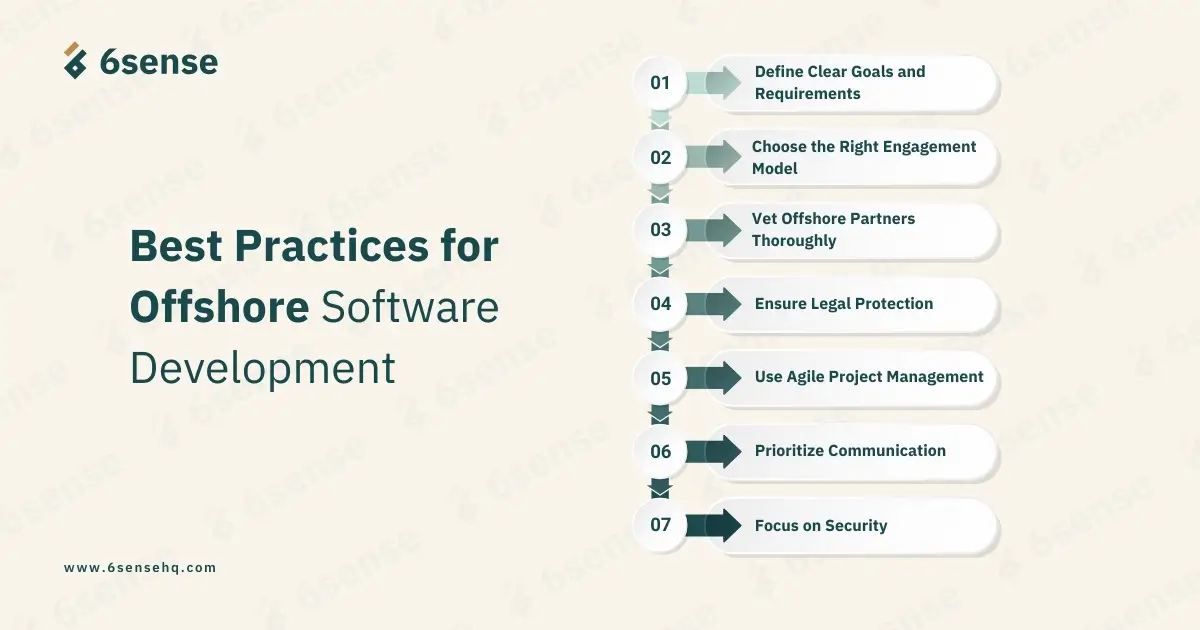
Before starting, know exactly what you want. Use the SMART method to set goals that are Specific, Measurable, Achievable, Relevant, and Time-bound. I always write clear project briefs. It helps your offshore team understand what success looks like and reduces confusion during development.
Pick a model that fits your project. For long-term work, go with a Dedicated Team. For fixed tasks, use the Project-Based Model. If your needs change often, the Time & Materials model gives flexibility. I sometimes mix them using a Hybrid model, which works great for complex projects.
Don’t rush into hiring. Check their portfolio, client reviews on Clutch or GoodFirms, and ask for references. I also look for certifications like ISO 27001 and test how well they communicate in English. It helps me avoid surprises and choose a reliable partner.
Always sign an NDA and add clauses that protect your ideas and data. I never start a project without legal agreements. It ensures my IP stays safe and gives me peace of mind if anything goes wrong later on.
Agile methods like Scrum help manage tasks clearly. I use tools like Jira, Trello, and Asana to keep things organized. They make it easy to track progress, assign tasks, and adjust plans fast, especially when your team is working from another time zone.
Talk often and talk clearly. Set regular meetings and use simple tools like Slack, Zoom, or email. I always make sure we have some overlapping work hours. It keeps everyone in sync and prevents delays caused by waiting for replies.
Protect your data. I make sure all files are encrypted, access is limited, and offshore teams follow security rules like GDPR or HIPAA. If your project involves private info or healthcare data, this step is non-negotiable. Better safe than sorry.
If you want to hire the best offshore development team, you need to be clear about what you want, do your research, and check if the team can truly deliver. I’ve done this myself, and here’s the exact process I follow.
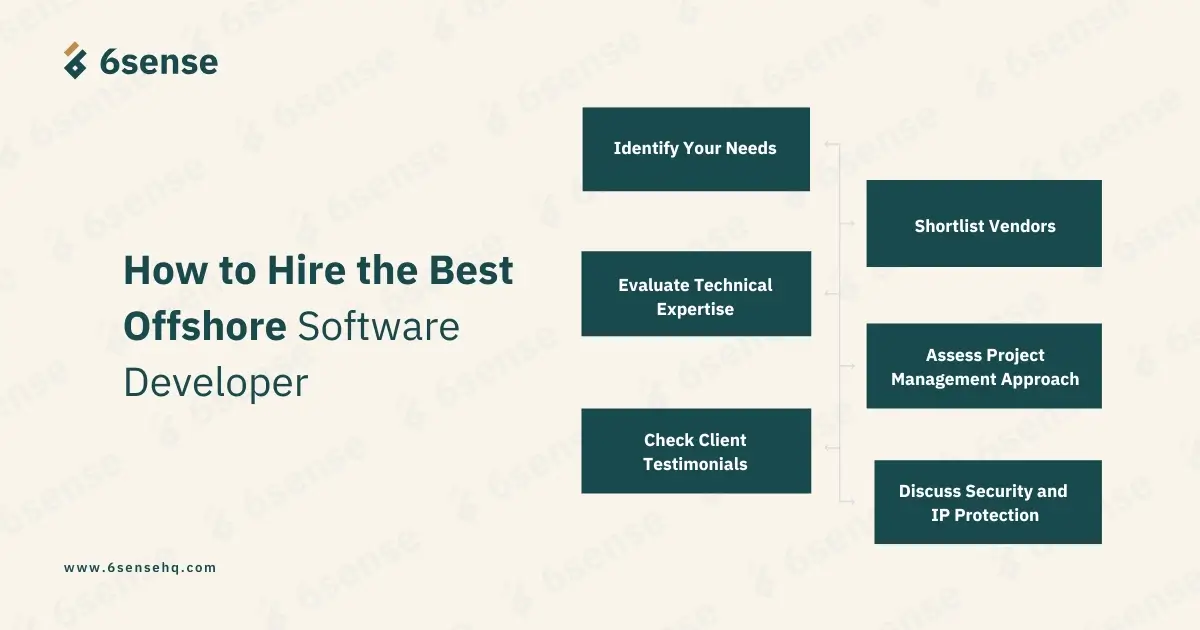
Before you even contact a vendor, get clear on your project needs. What skills are you looking for? What’s your budget? When do you need it done? I always outline the tech requirements, timelines, and goals before speaking with anyone. This helps you filter out teams that can’t meet your expectations and speeds up the hiring process.
Don’t just Google random companies. I use trusted platforms like Clutch, GoodFirms, and LinkedIn to find proven vendors with good track records. Look at their services, industries they work with, and company size. Shortlist 3–5 top matches, then dig deeper into each one.
I never hire without testing skills first. Ask for code samples, past project demos, or even do a small paid test project. It shows you what the team is really capable of. Don’t rely only on resumes; see how they solve real problems in action.
It’s not just about writing code; it’s about how the project is managed. Ask what tools they use (Jira, Trello, etc.), how they track progress, and how often they give updates. I’ve learned that a good workflow makes or breaks a project, so make sure it fits yours.
Client reviews say a lot. I look for testimonials that talk about communication, delivery quality, and how issues were handled. Go beyond star ratings, see if the vendor kept promises, met deadlines, and was easy to work with. It’s a strong sign of reliability.
Before sharing any project info, talk about security. I always sign NDAs and ask how they protect client data. If your project involves sensitive info, make sure they follow global data laws like GDPR or HIPAA. Your ideas and files should stay safe, no matter where the team is located.
6sense HQ helps you set up a skilled offshore development team that works just like your in-house team. Their experts follow Agile methods, give daily updates, and fit right into your workflow. You save time, cut costs by up to 52%, and still keep full control of your product. The 6sense team handles hiring, HR, training, and more, so you can focus on building faster.
Build your offshore team with 6sense HQ and grow without limits.
Offshore software development isn’t just about saving money; it’s a smart way to grow faster and get access to top global talent. When done right, it helps you build better products, move quicker, and stay ahead of the competition. But to succeed, you need to be clear on your goals, follow best practices, and pick the right team.
If you’ve been wondering what is offshore software development and whether it’s right for you, the answer might be simpler than you think.
Want a reliable offshore partner? Hire Offshore Developers from 6sense HQ to build smarter, faster, and for less. Reach out today!
Optimize your 2026 offshore strategy with a Mirror Stack, Zero Trust security, and AI to scale execution while saving 40-70%.
9 min read

Stop scrolling, start hiring: 15 best offshore dev sites for 2026 with rates, vetting process, and quick picks. Tap in!
14 min read

| In-person or easy virtual meetings |
| Some in-person or easy virtual |
| Mostly virtual, fewer face-to-face meetings |
| Best For | Full control and real-time collaboration | Balance of savings and communication | Saving money and scaling fast |
| Risk Level | Lowest | Moderate | Higher (if not managed well) |
Offshore ROI in 2026: calculate true TCO, payback & NPV, dodge rework traps, and scale faster, grab the checklist now!
7 min read