Loading…
Loading…

Code Audit Services
Get a senior-led Codebase & Production Readiness Audit for $499, with a detailed report within 7 days after scope and required access are confirmed. For AI-built, inherited, outsourced, or existing software. We investigate the codebase, validate meaningful findings, and tell you what should happen next.
Six engineering review areas
Validated findings with severity and priority
Detailed remediation direction
Fixes scoped separately
$499 · Full audit · Detailed report · Delivered within 7 days*
*Delivery begins after scope and required access are confirmed.
When an Audit Becomes Useful
Use an audit when the next product decision depends on knowing what is actually happening inside the system.
The app works, but you do not know whether security, architecture, testing, or deployment shortcuts will hold up under real use.
A freelancer, agency, previous team, or former developer built the system. Your current team needs evidence before it keeps investing in it.
Changes are slower, regressions are more common, or simple features now touch too many parts of the system.
Before replacing working software, you want evidence showing what is actually wrong and whether targeted remediation is more sensible.
What We Review
The emphasis changes with your product, stage, stack, and the reason for the audit.
We look for complexity, duplication, coupling, inconsistent patterns, and other conditions that make safe change harder or more expensive.
We evaluate boundaries, responsibilities, data flow, coupling, scalability constraints, and the blast radius of future changes.
We review authentication, authorization, sensitive-data handling, secrets, input handling, and other security-sensitive implementation risks.
We assess whether critical product behavior can be verified reliably after meaningful changes, not simply how many tests exist.
We review vulnerability signals, support status, version gaps, compatibility, upgrade pressure, and external-service dependency risk.
We review deployment, environments, observability, backups, recovery, rollback, and other controls that affect reliable operation.
Product requirements, test material, architecture documentation, workflows, acceptance criteria, and other relevant context are also reviewed where available to establish expected behavior and verification confidence.
How the Audit Works
We move from context and access to validated findings, priorities, and a practical next step.

We start with the product, architecture, current stage, and the concern that triggered the audit. Available requirements, workflows, test material, and architecture documentation help establish expected behavior.

We obtain the repositories, environments, and technical context required for the agreed audit scope. Access requirements are confirmed before the audit begins. How we handle repositories, credentials, and ownership is documented on Security, IP & Engineering Standards.

Engineers review the agreed audit areas across the codebase and supporting engineering environment, using documentation where it helps explain expected behavior.

Tools, checklists, documentation, and engineering review can surface signals. We investigate them in context before treating them as audit findings.

Validated findings keep credible source classifications where applicable, use category-specific engineering severity where needed, and receive remediation priority.

The report helps you decide whether to keep building, harden, refactor, rescue, or investigate rebuilding.
Source signal → Engineering investigation → Validated finding → Severity & remediation priority → Recommended action. A Senior Engineering Lead owns the technical judgment while the Project Manager keeps the review connected to product context, scope, and the question that triggered the audit.
Inside Our Engineering Review
These examples come from our internal production-readiness assessment process and show some of the controls and engineering signals we inspect during a review.
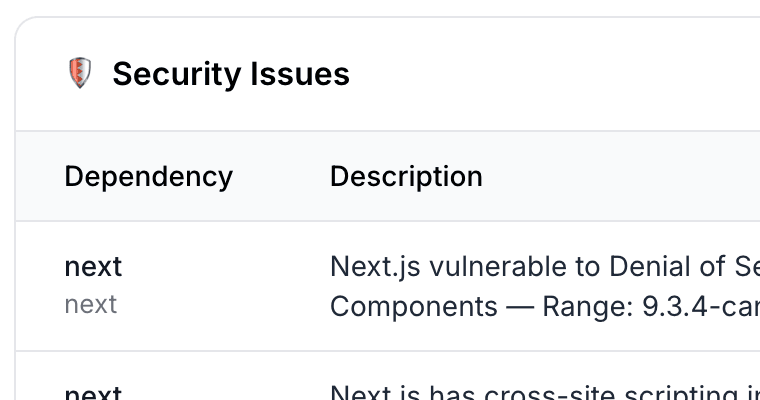
Review authentication, authorization, secrets, session behavior, and security-sensitive data access.
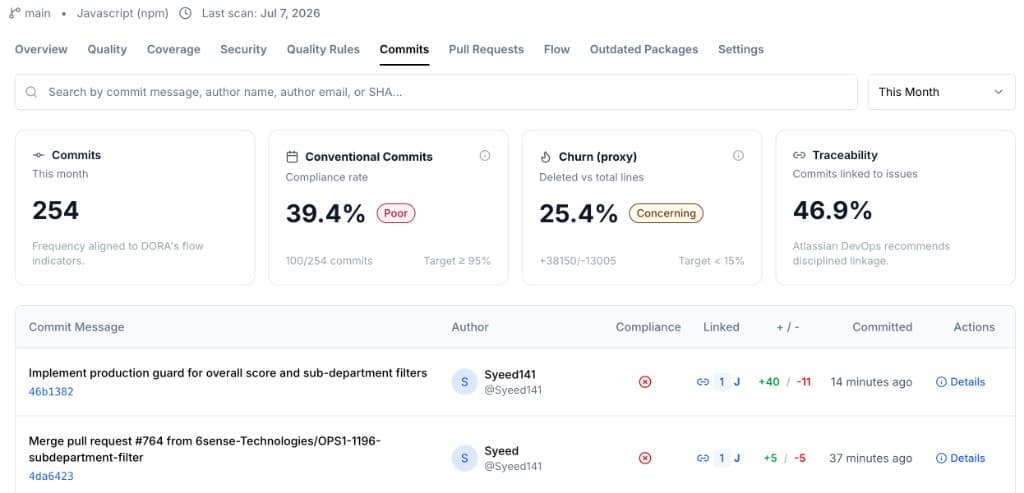
Review change activity, code churn, issue traceability, and engineering signals that can reveal delivery and maintainability risk.
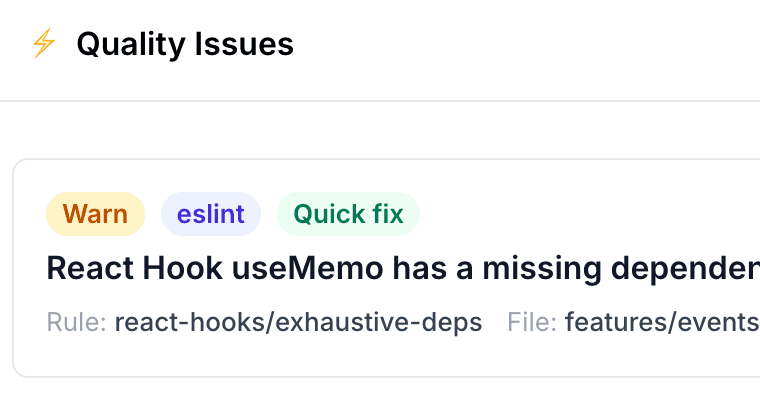
Review whether the codebase can be changed, verified, operated, and maintained with reasonable confidence.
These examples demonstrate our assessment methodology and internal review criteria. They are not client outcomes or fabricated findings.
Real Audit Finding
A finding should explain more than what a tool detected. It should show what engineers investigated, what was confirmed, why it matters, and what should happen next.
| Finding format | 6sense Codebase Audit |
|---|---|
| Finding | A High Next.js advisory sits on the framework that serves production traffic |
| Context | Dependencies / web framework · next |
| Source classification | Npm audit / advisory signal — High — Next.js Denial of Service with Server Components — GHSA-mwv6-3258-q52c — Package: next — Direct dependency |
| Engineering severity | High — the App Router path is live in production |
| Remediation priority | Before next milestone |
| Evidence / investigation | Our dependency review surfaced a High advisory on next for Denial of Service with Server Components (GHSA-mwv6-3258-q52c). The package is installed directly and powers the production App Router, so this is not unused leftover software. Engineering confirmed the affected framework is on the live request path before treating the advisory as a material finding. |
| Why it matters | A reachable DoS condition on the framework that serves customer traffic can interrupt product availability. Leaving a confirmed High advisory on an active production dependency increases the chance of avoidable outage risk before the next release window. |
| Recommended action | Upgrade next to a patched release listed in GHSA-mwv6-3258-q52c, redeploy the application, and rescan dependencies to confirm the advisory is cleared. Keep the item before the next milestone unless production exposure is confirmed sooner. |
Finding
Context
Source classification
Engineering severity
Remediation priority
Evidence / investigation
Why it matters
Recommended action
Sanitized internal audit finding. Product-identifying details have been removed. This is not a client result.
What You Actually Get
A documented engineering assessment of the agreed review scope, validated findings, supporting context, risks, and recommendations.
Material findings include severity or source classification, remediation priority, why the issue matters, and the recommended response.
See what should happen immediately, before the next milestone, as planned work, or be consciously accepted and monitored.
Evidence to support Keep Building, Harden, Refactor, Rescue, or Investigate Rebuilding.
Scope & Price
We confirm the application scope before payment. Standard audits are delivered within 7 days after scope and required access are confirmed.
Covers one application within the agreed standard scope and includes the detailed engineering report.
The delivery clock starts after the agreed scope and required access are confirmed.
If your system requires a larger or more complex review, we tell you before payment and confirm a custom scope.
The audit diagnoses, validates, prioritizes, and recommends. Any implementation is a separate engagement.
No payment is required before the standard audit scope has been confirmed.
How Findings Are Classified
We preserve credible source classifications and use category-specific engineering rules where tools are not enough.
| Classification | How it is applied |
|---|---|
| Source Classification | Credible source classifications remain visible. |
| Engineering Assessment | Category-specific engineering rules apply when tools are not enough. |
| Strategic Gaps | Important engineering capability gaps remain separate from severity. |
| Remediation Priority | Immediate · Before Next Milestone · Planned · Accept & Monitor. |
Source Classification
Engineering Assessment
Strategic Gaps
Remediation Priority
Source Signal → Engineering Investigation → Validated Finding → Severity → Remediation Priority → Recommended Action
Category-specific engineering rules for how we classify findings.
Who Reviews Your Codebase
A Senior Engineering Lead and Project Manager oversee the audit, with relevant specialists supporting deeper investigation where needed.
Owns the technical assessment, validation of findings, severity, remediation priority, and final engineering recommendations.
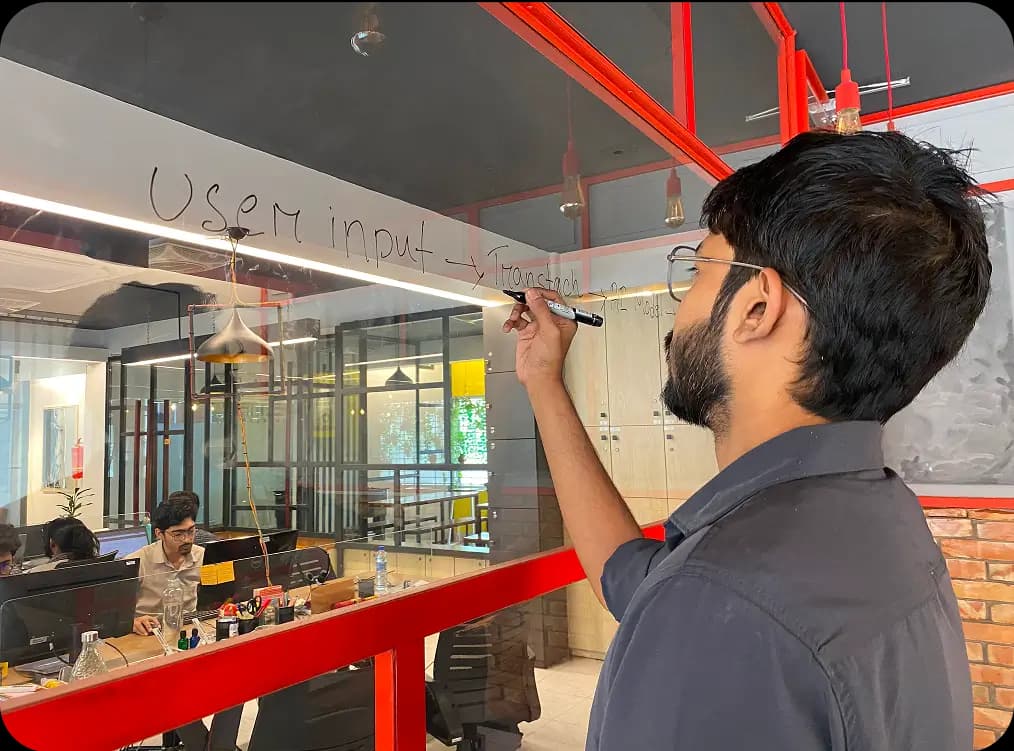
Establishes product context, coordinates scope and access, and keeps findings connected to the question that triggered the audit.
Backend, frontend, cloud/DevOps, security-sensitive implementation, and database/infrastructure specialists may support deeper investigation. The buyer receives one consolidated audit—not disconnected specialist reports.
What Happens After the Audit
The audit may support continuing as-is, targeted hardening, deeper rescue work, or investigating a rebuild.
Continue normal development when the foundation is reasonable.
Address contained production blockers and high-priority findings.
For substantial stabilization, remediation, or architecture work.
Only where evidence shows replacing significant parts makes more sense.
Ongoing engineering ownership after stabilization.
The audit does not exist to manufacture remediation work. Diagnosis comes first.
Not Sure You Need the Audit?
The Production Readiness Check helps determine whether your situation appears to justify code-level engineering investigation. This is not a free code audit.
Scope, timing, access, deliverables, and what happens after the report.
 Misty evergreen forest
Start the $499 Codebase & Production Readiness Audit and get a detailed report within 7 days after scope and required access are confirmed.