


How to Build Dedicated Development Team in 2025
Learn how to build a dedicated development team, choose the right roles, compare costs, and manage collaboration for faster, scalable product growth.
6 min read
Loading…
When you need to build software fast but don’t want the hassle of hiring full-time staff, a dedicated development team is your answer. It’s a group of professional developers, designers, and testers who work only on your project, like your own remote tech squad.
Written by: Nasif Sid Created on: 25 Jul 202511 min to read
I’ve seen many businesses struggle with time, budget, and hiring challenges. That’s where this model shines. Unlike staff augmentation, which adds a few people to your team, a dedicated team is fully committed to your product, ready to build, iterate, and scale with you. In this blog, I’ll walk you through what a dedicated development team is, who’s typically on the team, how to hire one, red flags to watch out for, what affects the cost and more. Let’s dive in.
A dedicated development team is a group of tech experts, such as developers, designers, testers, and project managers, who work full-time on your product. They act like part of your team but are hired through an external vendor. You get the skills without building an in-house department.
I like this dedicated team model because it’s fast, flexible, and you stay in control. Your team focuses solely on your specific project, with no context switching or distractions, unlike in traditional outsourcing.

In fact, the global outsourcing services market was valued at US$854.6 billion in 2025 and is projected to reach US$1.11 trillion by 2030. Dedicated teams are driving this growth by giving companies the power to scale faster and smarter without the usual hiring pain.
You should hire a dedicated software development team when you want a smart, flexible way to build or scale your product without the cost or delay of building an in-house team. It gives you speed, focus, and top global talent all on your terms.

If you’re struggling to find good developers locally, this model helps. I’ve seen how hard hiring can get endless interviews and limited choices. A dedicated team gives you access to skilled professionals worldwide, ready to start and matched to your tech needs.
Time matters when building software. With a dedicated team, you skip the slow hiring process. You can onboard a whole, experienced team in a few weeks, ready to work in your tools and fit your workflow right away.
You need people who care about your product. Unlike freelancers or agencies juggling multiple clients, a dedicated team works only on your project. They know your goals, your users, and your vision, so they deliver better, faster, and more aligned results.
Your needs change as your product grows. A dedicated team can grow with you. Add more developers when things speed up, or scale down when you need to pause. No rehiring, no layoffs, just smooth changes that fit your budget and roadmap.
Hiring full-time staff costs more than the salaries you pay for offices, tools, training, and HR. A dedicated development team cuts all that. You get a high-performing group without long-term commitments, saving you money while still building quality software.
A dedicated development team consists of professionals with specific roles who work together to build and maintain your software. Each person brings unique skills to ensure your product is delivered smoothly, efficiently, and at high quality.
| Role | Responsibility |
| Project Manager | Manages timelines, coordinates the team, and communicates directly with you. |
| Developers | Write, test, and maintain the code—frontend, backend, or full-stack. |
| UI/UX Designers | Design user-friendly, visually appealing, and accessible interfaces. |
| Quality Assurance | Test the product to catch bugs and ensure it works as expected. |
| DevOps Engineers | Handle deployment, automation, and system performance. |
| Business Analysts | Translate business goals into technical tasks and align product features. |
| Solution Architects | Define the software structure and ensure it’s scalable and secure. |
A dedicated dev team gives you more than just coding power it brings focus, reliability, and flexibility. You get a team that fits into your company, works like your own, and removes the stress of day-to-day operations.
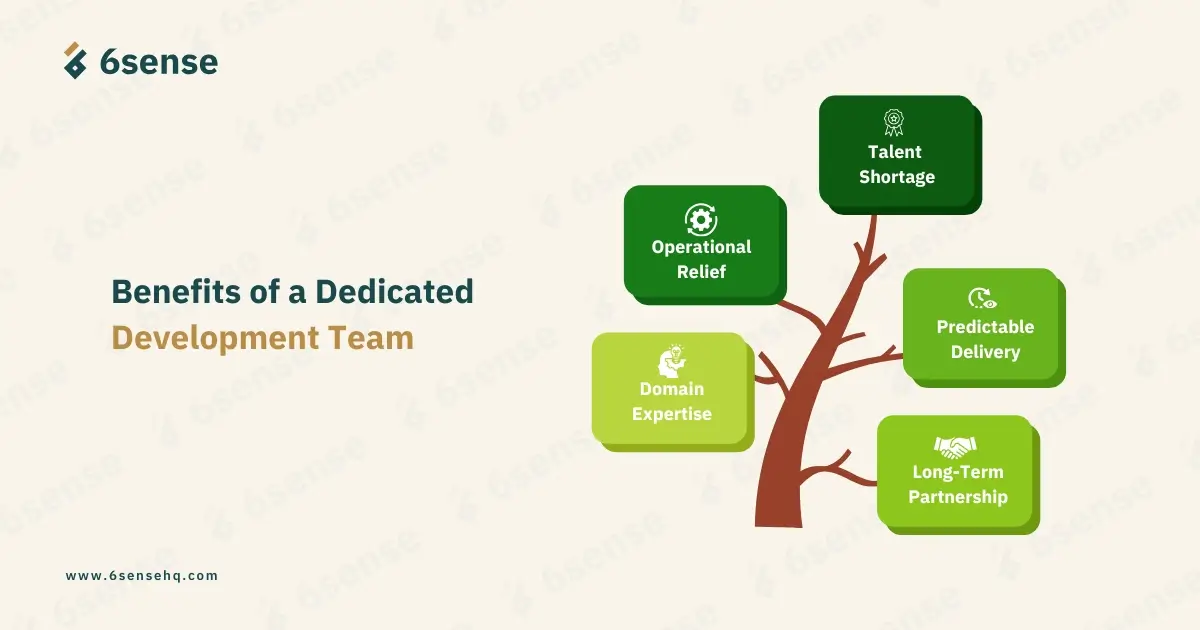
Your dedicated software development team doesn’t feel like outsiders. They use the same tools, follow your workflows, and fit into your culture. I’ve worked with teams like this, they join your meetings, follow your timelines, and feel like a natural extension of your business.
Because the team is entirely focused on your product, you get consistent progress. No juggling other clients or split priorities. You can plan better, hit deadlines more often, and avoid last-minute surprises that slow things down or blow up costs.
Dedicated teams stay with your product over time, which means they understand your goals and your codebase deeply. You don’t have to re-explain things. This saves time and keeps quality high, especially when scaling, improving, or adding features later.
Need experts in fintech, e-commerce, or AI? A dedicated team can bring in specialists with hands-on experience in your industry. This helps you build smarter, faster, and with fewer mistakes, because they’ve done similar work and understand your audience’s needs.
Hiring, payroll, legal stuff, it’s a lot. A good vendor handles all of that for you. You focus on the product; they take care of contracts, HR, and infrastructure. That’s one less headache and more energy for what really matters: building great software.
If you're wondering how to hire a dedicated development team, the key is to follow a clear, step-by-step process. You want the right people, the right vendor, and a team that fits your goals, budget, and work style. Let’s see in details:
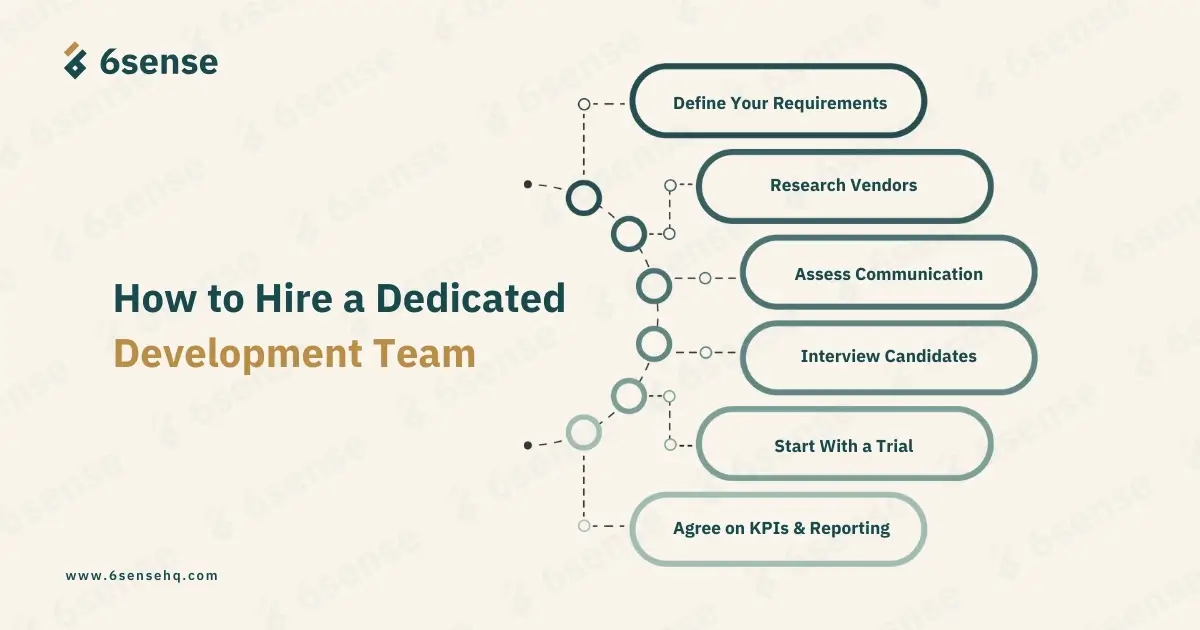
Start by listing exactly what you need roles, skills, and tools. For example, do you need a full-stack developer and a UI/UX designer? What’s your timeline and budget? Be clear about the goals of your project. The more detailed you are, the better your vendor can match you with the right team.
Look for vendors with a strong track record. Check client reviews, case studies, and years in business. For instance, if you’re building a fintech app, choose a vendor who has done fintech work before. Ask for references and compare how each one handles similar projects.
Ensure the vendor is responsive and easy to talk to. You don’t want to chase updates. Set expectations early, ask how often they’ll report progress, what tools they use (like Slack or Jira), and how time zone differences are handled. Good communication saves time and prevents confusion later.
Even if the vendor suggests a team, you should meet the people. Review their resumes, ask technical questions, and give them real-world scenarios. For example, ask a developer how they would solve a bug in your current app. Also, check if their attitude and work style match yours.
Many companies offer a trial period of 2–4 weeks. Use this to test how well the team works with you. Are they hitting deadlines? Communicating clearly? Taking feedback well? I always recommend doing a small task first, as it gives you real insight without big risk.
Set clear metrics from day one. Track things like delivery speed, number of bugs, and feature completion. Decide how updates will be shared, maybe weekly reports or sprint reviews. This keeps everyone accountable and gives you full control over the team’s performance.
When hiring a dedicated development team, be aware of the warning signs. These red flags can lead to poor results, delays, or wasted money. If you notice any of these, it’s better to pause than move forward blindly.
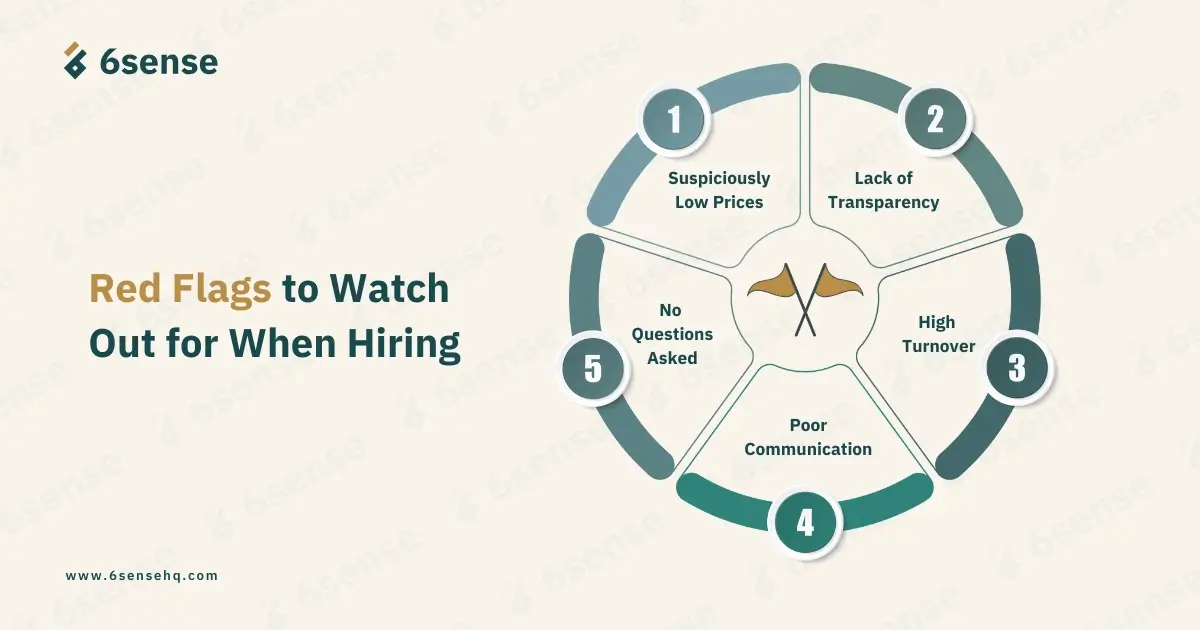
If the price sounds too good to be true, it probably is. Cheap rates often mean junior developers, missing skills, or extra costs later. I always ask: what’s missing from this price? Quality work comes at a fair, not bargain-basement, cost.
If the vendor fails to explain their development process, tools, or code standards, that’s a problem. You need clarity, not vague answers. I make sure they can show how they work and how I’ll track progress if not, I move on.
If they’re slow to reply, vague in answers, or just say “yes” to everything, that’s risky. You want a team that’s clear, honest, and proactive. Miscommunication leads to delays and mistakes, trust me, I’ve seen it happen.
If team members keep changing, your project will suffer. Every new person has to relearn everything, wasting time and breaking the flow. Ask the vendor about retention rates and how they handle staff changes before you commit.
If the team agrees with everything and never challenges your ideas, be careful. A good team asks smart questions, suggests improvements, and spots issues early. If they never push back, they might be trying to win the deal, not deliver real value.
The cost of a dedicated development team isn’t one-size-fits-all. It depends on several key factors like location, skills, and team structure. Knowing what drives the price helps you plan better and avoid unexpected costs down the road.
Where your team is based makes a big difference. Dedicated developers in Eastern Europe, South Asia, or Latin America typically cost less than those in the U.S. or Western Europe. I always weigh location against time zone differences, communication ease, and skills. Cheaper doesn’t always mean better, but it can stretch your budget further.
If you need senior developers, DevOps engineers, or specialists in AI or blockchain, expect to pay more. I’ve seen clients save by hiring a mix of some senior, some mid-level. That balance gives you solid expertise without blowing the budget.
Short-term projects often come with higher hourly rates. But if you're in it for the long haul, vendors usually offer discounted rates for longer commitments. Locking in a 6-12 month deal if your product will evolve over time.
A bigger team costs more, of course. But also consider who’s on it. A team with a project manager, QA, designer, and developers costs more than just two coders, but it also handles more work. I always match the team size to my current roadmap.
Some vendors include roles like project management manager or DevOps in their standard pricing, while others charge extra. Ask early what's included and what’s not. I once got surprised by a monthly add-on just for QA, which I assumed was built-in.
Last but not least, if your product handles sensitive data or works in regulated industries, you’ll need to factor in compliance. Think GDPR, HIPAA, or paid tools like Jira, Figma, or AWS. These things don’t seem big at first, but they add up quickly if not planned.
A dedicated development team can pose a challenge if you're not careful; issues like miscommunication or poor planning can slow you down. Here are the main issues I’ve seen and how you can handle them.
Working across time zones or cultures can lead to delays or misunderstandings. I’ve found that setting fixed daily check-ins and using shared tools like Slack or Jira helps keep everyone on the same page and avoids confusion.
It’s easy to keep adding features once the software project starts. But if you’re not strict about priorities, your timeline and budget will get out of control. I always stick to a clear scope and review changes weekly.
If the software team rushes early development or skips best practices, it causes problems later bugs, slow speed, and hard-to-update code. I make sure there are regular code reviews and time set aside for refactoring to avoid a long-term mess.
Even top developers need time to understand your product and tools. Don’t expect full speed from day one. I give new team members detailed docs, a clear product demo, and time to ask questions which makes onboarding smoother.
If all the knowledge stays with the vendor, you’re stuck if you ever switch. I make sure everything code, decisions, and processes are documented and shared. That way, I keep control and can move forward even if things change.
A dedicated development team is more than just extra hands, it’s a long-term technology partner. You get the speed and flexibility of outsourcing, combined with the alignment, accountability, and focus of an in-house team.
If you’ve been wondering what a dedicated development team is and whether it fits your business, the answer depends on your goals. Once those goals are clear, the next step is choosing the right partner to hire a dedicated development team that understands your product vision, development roadmap, and growth pace. Clear expectations and ongoing collaboration are what turn a team into a true extension of your company.
Need a trusted partner to scale your product with confidence? 6sense HQ builds dedicated development teams that are tailored, thoroughly vetted, and ready to deliver from day one.
Learn how to build a dedicated development team, choose the right roles, compare costs, and manage collaboration for faster, scalable product growth.
6 min read

Racing against the clock to ship your MVP? A dedicated development team gives you immediate access to skilled engineers, predictable output, and a streamlined build process. So you can validate your product faster without getting stuck in hiring cycles or management overhead
6 min read

This breakdown of the dedicated development team structure shows exactly who you need, why you need them, and how each role keeps your product moving without friction.
8 min read