


How to Build Dedicated Development Team in 2025
Learn how to build a dedicated development team, choose the right roles, compare costs, and manage collaboration for faster, scalable product growth.
6 min read
Loading…
This breakdown of the dedicated development team structure shows exactly who you need, why you need them, and how each role keeps your product moving without friction.
Written by: Nasif Sid Created on: 1 Dec 20258 min to read

A dedicated development team structure is essentially a setup where a group of tech pros like developers, designers, testers, project managers, and more work solely on your project. And usually, that means they're based elsewhere, maybe with an external partner or in an offshore location.
Imagine having your very own remote tech crew people who act like they're part of your company, but with that added bonus of flexibility and cost savings. They're not trying to juggle multiple clients at once; they're laser-focused on bringing your product to life, following your exact processes, and helping you reach your goals.
In this blog, we'll break down what a dedicated team structure really looks like, when it's a good fit for your project, and 5 key things that make the difference between success and failure.
Let's dive in!
A dedicated team is basically like an extension of your own in-house team, but usually with the added benefit of being more flexible and cost-effective than hiring locally.
So, why do businesses choose this dedicated team model? Well, first off there's the massive shortage of skilled devs out there.
Over 85 million tech jobs are expected to go unfilled by 2030, according to Korn Ferry. Trying to hire locally can be slow and expensive. Dedicated teams let you skip those long hiring cycles and get started building right away.
They're also super flexible, you can scale up or down as your project grows, all while tapping into global talent and saving on costs without sacrificing quality.
And since they're 100% focused on your product, you get better attention, speed and ownership, perfect for building MVPs, SaaS products, or long-term builds.
If you’re planning a complex, long-term project or need to quickly scale your engineering capacity, it’s often the right time to hire a dedicated development team to maximize efficiency and project success.
A dedicated software development team is simply a setup of key tech roles working together to bring your product to life. Each member has a specific job, and when they all click, the team runs smoothly. Here's what the structure typically looks like:
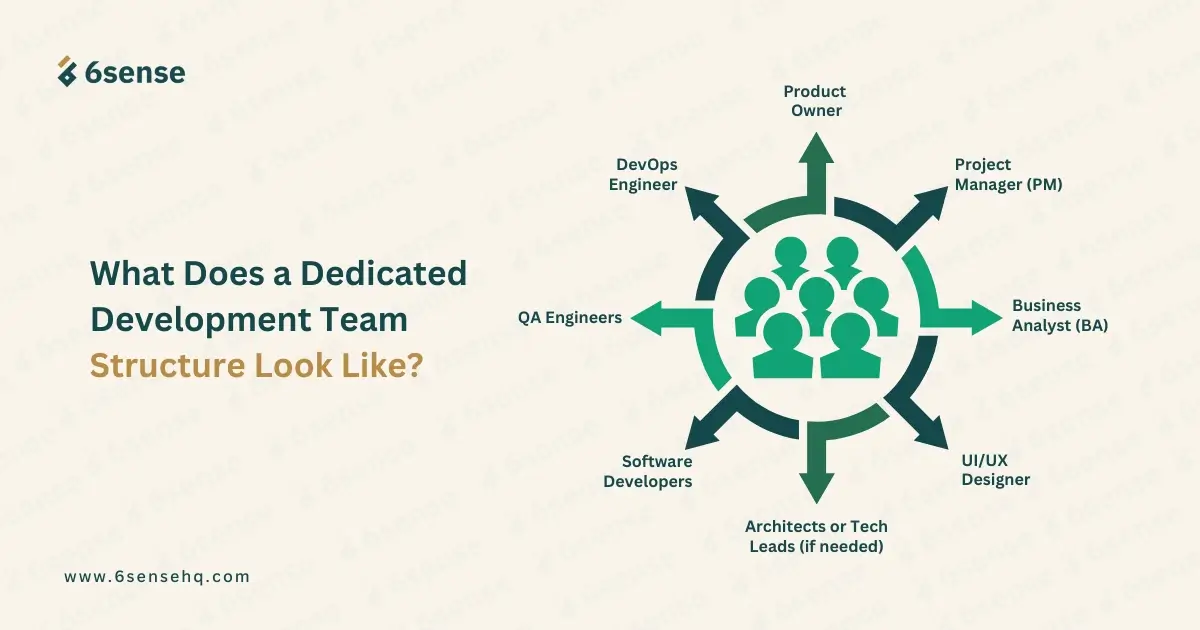
The product owner is the person who knows exactly what your product should be doing. They define the vision, set priorities, and make sure the team is building something users will actually want. They're the link between business goals and product features.
The project manager is the one who keeps everything on track. They manage timelines, assign tasks, get rid of blockers and make sure the team delivers on time. They're the chief organizer, ensuring the day-to-day workflow runs without a hitch.
The business analyst takes business ideas and turns them into clear requirements for the team. They ask questions, dig into problems, and ensure the devs know exactly what they need to build so they don't get confused later on.
This person designs how your app or software looks and feels. They focus on user experience, making things easy to use, visually appealing and intuitive so users don't get frustrated with your product.
These are the people who write the code and bring everything to life. You might have front-end devs (who handle what users see), back-end devs (who manage the behind-the-scenes logic), or full-stack devs who do both.
QA engineers test the software to catch bugs before users do. They make sure everything works as expected, from clicking buttons to loading pages, so your final product is smooth and reliable.
A DevOps engineer helps with deployments and automates repetitive tasks. They set up systems so code changes can go live quickly and safely, and they help keep the app running smoothly in production.
These senior experts make big technical decisions. They plan the overall structure of the software, choose tools and guide devs on best practices to make sure the codebase stays clean and scalable.
To assemble the right dedicated software development team, you need more than just skilled people you need team members who fit your project, goals and work style.
Here's how to build that team, step by step:
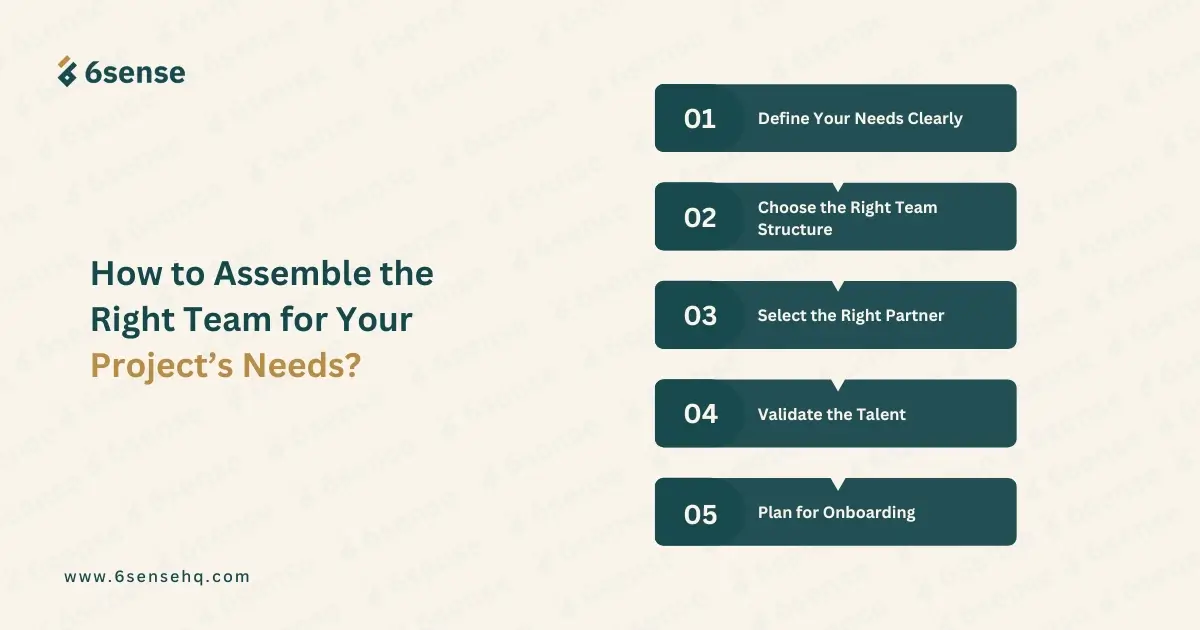
Start by knowing exactly what you want. What kind of product are you building? What's your timeline, budget and required tech stack? Get that straight before you even start looking for a team, so you can avoid miscommunication and get the right team from the start.
Decide if you need specialists (deep expertise), generalists (broad skills), or a mix of both. Most projects benefit from a mix of specialists for key areas and generalists for overall product development support.
Choosing the right vendor or agency is crucial. Don't just look at price, check their past work, communication style, team setup and reviews. A good partner will help you find better talent and make things run smoothly.
Don't just treat a resume as the final word. Have a real chat with the candidate, take a look at their portfolio, ask to see some actual code they've worked on or get them to do a small task and make sure they're really going to fit in with the rest of your team and your company culture.
Get everything sorted before the team arrives. Set up the tools they'll need like Slack, Jira or GitHub before they start. Share your workflows and give them a crash course on the company culture so they feel included and can start contributing right off the bat.
This model isn't suited to every company. But if any of these things sound familiar, then it might be worth considering:
All in all, if your business depends on getting high-quality results delivered on time and you're ready to put the time and effort into building a team of people who aren't just freelancers but true team players, then this model is definitely worth looking into.
If you want to build a dedicated development team that actually delivers, you need more than just a bunch of talented individuals you really need a system that actually works. Effective team management is crucial for dedicated teams, ensuring smooth coordination, clear communication, and streamlined collaboration across all roles.
Here are 5 simple things that will make or break your team's success:
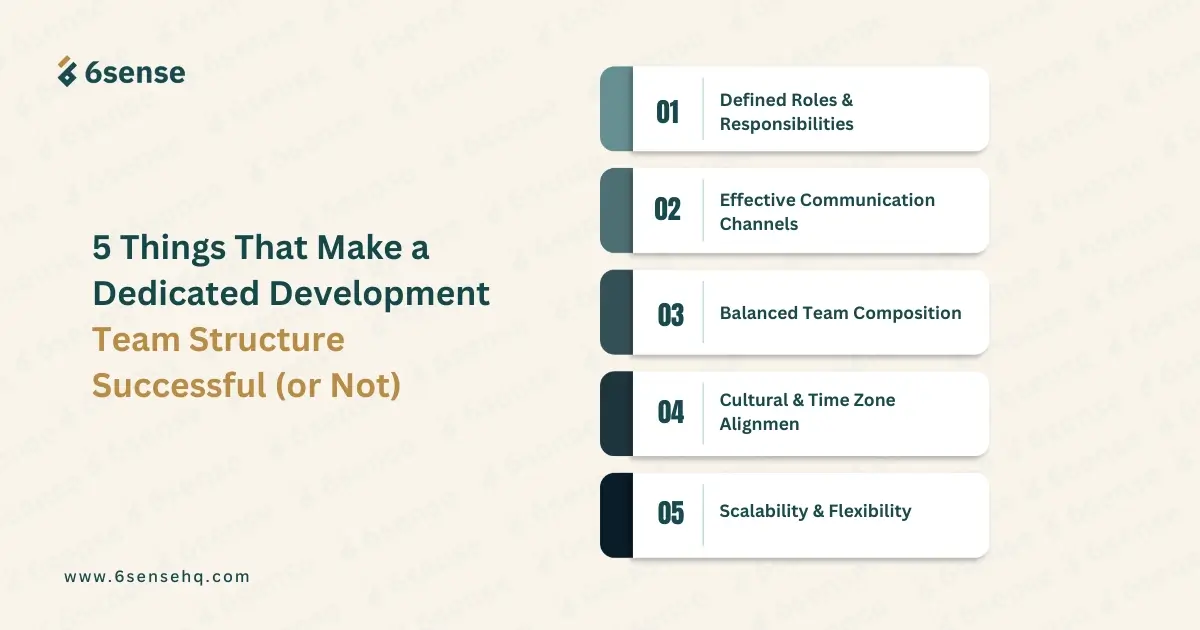
Everyone needs to know exactly what their job is and what's expected of them. When roles are unclear people get left out of the loop or stuck doing the same job twice. Clear responsibilities make it easier to know what's going on and stop things from falling through the cracks.
Good communication is what keeps teams moving in the same direction. Make sure you're using the right tools like Slack or Zoom, have regular check-ins, and that information is being shared clearly. Especially important if the team is spread across different time zones.
Getting the right mix of experience in the team is key. Too many junior members and things will slow right down, too many seniors and it'll be a budget-buster. Aim for a good balance that fits the size, stage and complexity of your project.
If the people on the team work out of the same time zones or at least overlap for a few hours a day, then communication is a lot easier. It's also good if the team understands and buys into the company values and has a chance to chat with the in-house team at least a few times a week.
Your project is going to change and grow, so does your team need to be able to grow with it? A good team structure should be able to adapt to new roles, changing priorities and shifting workflows without things grinding to a halt.
A dedicated development team structure is more than just filling some roles, it's about building a team that truly feels like part of the company. When you get the structure right, it means faster delivery, better results and a team that feels like part of the family. And that's a pretty big deal.
It also lets you tap into global talent, saves you having to constantly recruiting for a dedicated team, and cuts costs without giving up control. Whether you're launching a startup or scaling an enterprise product, the right software team structure makes all the difference. It's the smartest way to build software that really lasts.
Power your product growth with 6sense HQ, scalable teams, smart tech and zero hiring headaches.
Learn how to build a dedicated development team, choose the right roles, compare costs, and manage collaboration for faster, scalable product growth.
6 min read

Racing against the clock to ship your MVP? A dedicated development team gives you immediate access to skilled engineers, predictable output, and a streamlined build process. So you can validate your product faster without getting stuck in hiring cycles or management overhead
6 min read

Picking the right development team isn’t just a decision; it can make or break your project’s timeline, quality, and budget.
7 min read