


How to Build Dedicated Development Team in 2025
Learn how to build a dedicated development team, choose the right roles, compare costs, and manage collaboration for faster, scalable product growth.
6 min read
Loading…
Racing against the clock to ship your MVP? A dedicated development team gives you immediate access to skilled engineers, predictable output, and a streamlined build process. So you can validate your product faster without getting stuck in hiring cycles or management overhead
Written by: Nasif Sid Created on: 4 Dec 20256 min to read

Dedicated teams for MVP development are a fast, focused way to turn your product idea into a working solution.
Instead of building in-house or juggling freelancers, a dedicated development team gives you a full squad: developers, designers, and project managers who work solely on your MVP. It’s ideal for startups that need to move quickly, stay lean, and launch with confidence.
In this blog, we’ll walk you through why startups choose dedicated MVP teams, how these teams work, and what to do after your MVP goes live. If you’re building something new and want to launch smarter, not just faster, this guide is for you.
Startups shouldn’t build MVPs alone because it’s slow, expensive, and often lacks the right expertise.
The idea of building your minimum viable product in-house sounds tempting. You get control, visibility, and full ownership, right? But for most startups, the reality is far more complex.
Time constraints: Building an MVP from scratch takes months, and if your team is juggling other responsibilities, it could take even longer.
Skill gaps: You might have a great product idea, but lack deep frontend/backend expertise, UI/UX designers, or QA engineers.
Burn rate: Hiring a full in-house team can cost hundreds of thousands annually, even before product-market fit is proven. In fact, reports found that 29% of startups fail because they run out of cash, often due to slow development.
A dedicated MVP development team solves these issues by providing a ready-to-go unit that can execute fast, efficiently, and within a startup-friendly budget.
A dedicated MVP team is effective because it's built to move fast, stay focused, and deliver results with minimal friction. Unlike freelancers who work on multiple projects, these teams are fully committed to your product.
Here's what makes them truly valuable:
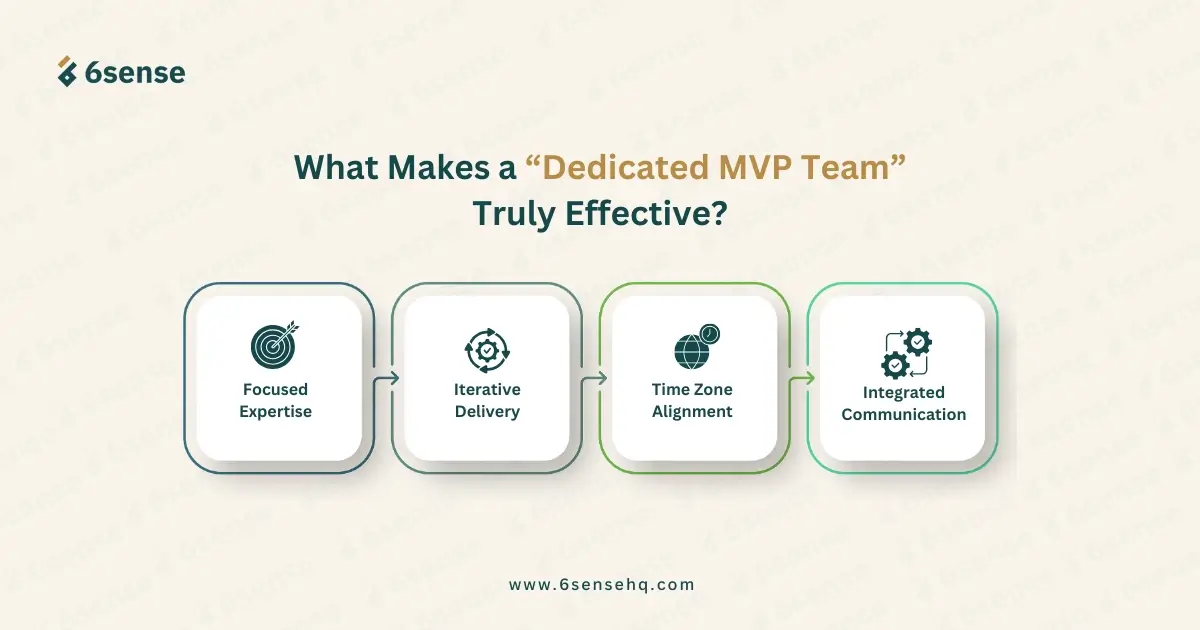
You get a complete team, including developers, designers, testers, and a product manager who has experience in this area. They understand how to build lean, testable products that work. Their experience with MVPs means fewer mistakes and faster progress from day one.
Dedicated teams usually work in short sprints using Agile methods. This means they can build, test, and adjust quickly. You get frequent updates, and changes based on your feedback happen in real time, not weeks later.
Working with nearshore or regional teams often means they’re in the same or a similar time zone. That makes it easier to schedule calls, get updates, and solve problems without waiting overnight or across multiple time zones.
These teams plug into your daily tools, Slack, Trello, Jira, or whatever you use. You’re not chasing updates. You see what’s happening as it happens, and that transparency builds trust and keeps things on track.
The right MVP team has a mix of key roles that cover strategy, design, development, and testing, all working together to bring your idea to life. Here’s how you should structure it:
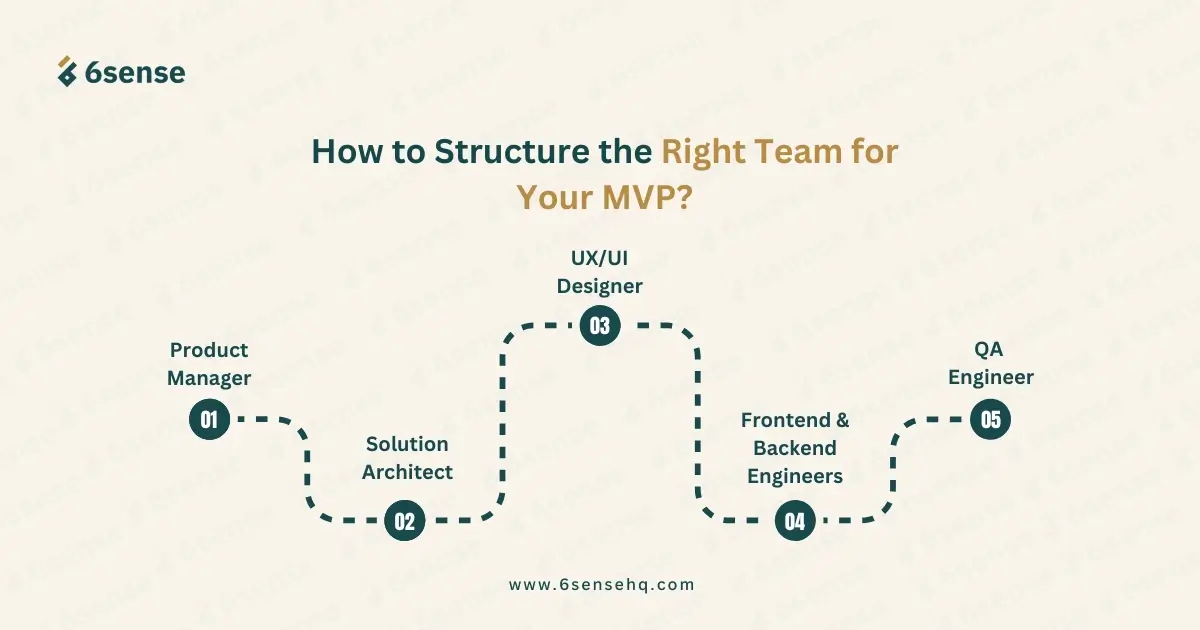
This person connects your vision to the team. They make sure the product solves the right problem, stays on track, and meets business goals. They also help prioritize features and keep development focused on what matters most.
They figure out the best tech tools and structure for your product. From picking the tech stack to planning how everything connects, their goal is to make sure the MVP works well now and can grow later without issues.
They design how your product looks and feels. From wireframes to clickable prototypes, they make sure the user journey is smooth and intuitive, so your early users actually enjoy using the product.
These developers build the actual product. Frontend engineers handle what users see, like buttons and screens. Backend engineers build the behind-the-scenes logic, like servers, databases, and APIs, that keep everything running.
This person tests the MVP to make sure it works properly. They check for bugs, broken features, and usability issues across devices. Their job is to catch problems before your users do.
If you’re a startup building your first product, choosing a dedicated team is often the smartest move.
Dedicated teams are perfect when you need to launch fast, think 3 to 6 months, not a full year. You don’t need to spend time hiring a full in-house team or managing multiple freelancers. Instead, you get a full set of experts, developers, designers, and product managers already working together.
Well, they don’t just write code; they help you with product discovery, user flows, tech decisions, and even post-launch support. Plus, as your product grows, the same team can scale with you.
Therefore, freelancers or in-house teams can work if you already have a solid roadmap, a product that’s been validated, and just need extra hands. But if you’re starting from scratch and want to move quickly without the hassle, a dedicated MVP team is a faster, more focused, and more cost-effective choice.
To hire and work well with a dedicated MVP team, follow a clear, simple process that sets everyone up for success. Here's how to do it step by step:
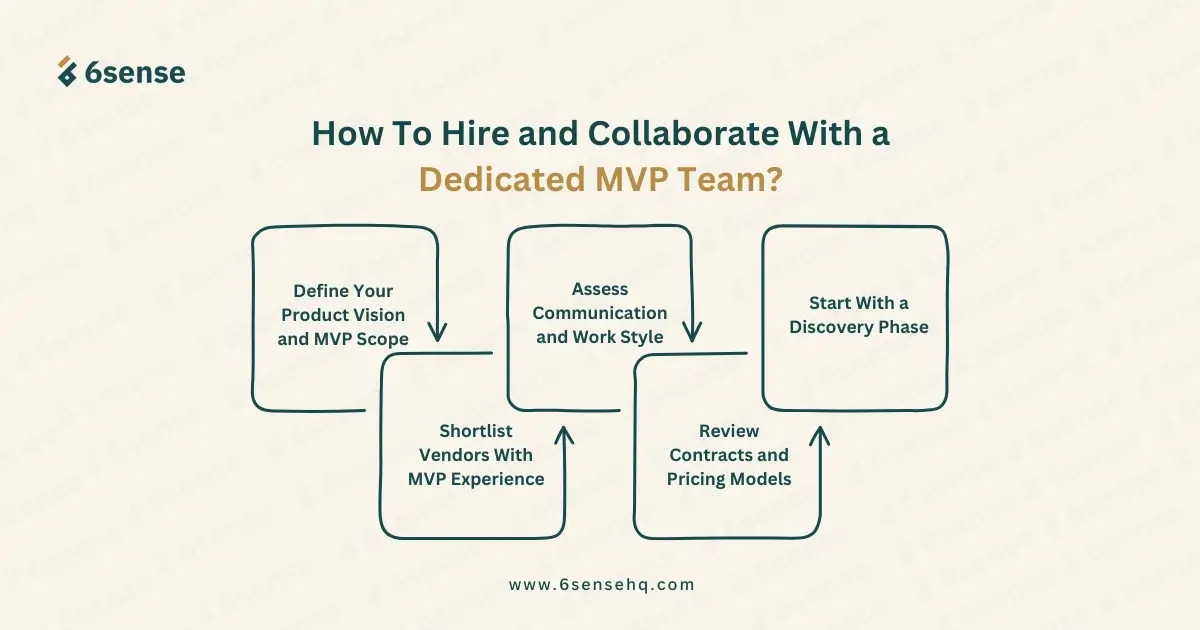
Start by being clear about what you're building and why. What problem are you solving? What are the must-have features for launch? This helps the team understand your goals and keeps everyone aligned from day one.
Look for agencies or teams that have built MVPs before, especially in your industry. Check their case studies, testimonials, or portfolios to see if they’ve handled similar products, just like 6sense HQ, as they clearly show you these. Experience with MVPs makes a big difference.
Make sure they use tools you’re comfortable with, like Slack, Trello, or GitHub and work in your time zone or close to it. Also, check if they follow agile practices so you can iterate and give feedback easily.
For startups, a time-and-materials contract is usually better than a fixed-price. It gives more flexibility as your idea evolves. Ask what’s included and make sure there are no hidden costs.
Good teams often begin with a small, paid discovery sprint. It helps clarify your idea, build trust, and reduce risk before full development begins. Think of it as a trial run to align expectations.
Startups move fast, and so should your product development. Instead of spending months building in-house or chasing freelancers, dedicated teams for MVP help you get from idea to launch quickly, without burning through your time or budget. These teams bring the right mix of skills, speed, and focus needed to build something real and test it in the market.
Whether you’re a solo founder or working with a lean team, having experienced partners by your side makes all the difference. Launch smarter, not harder.
Need help building your MVP? Let 6sense HQ guide you from concept to launch, faster, leaner, and smarter.
Learn how to build a dedicated development team, choose the right roles, compare costs, and manage collaboration for faster, scalable product growth.
6 min read

This breakdown of the dedicated development team structure shows exactly who you need, why you need them, and how each role keeps your product moving without friction.
8 min read

Picking the right development team isn’t just a decision; it can make or break your project’s timeline, quality, and budget.
7 min read