Proven Steps to Build Dedicated Development Team | 6sense HQ
How to Build Dedicated Development Team in 2025
Learn how to build a dedicated development team, choose the right roles, compare costs, and manage collaboration for faster, scalable product growth.
Written by: Nasif Sid Created on: 8 Dec 2025•6 min to read
To build a dedicated development team, start by assembling a group of skilled professionals who work exclusively on your project, aligned with your goals, timelines, and tech stack.
It’s a smart way to scale your development without the overhead of hiring full-time, in-house staff. Whether you're launching a product, expanding features, or need niche expertise, a dedicated team gives you focus, speed, and flexibility. It’s all while maintaining high quality and predictable costs.
In this blog, we’ll walk you through what a dedicated development team really is, how to build the right team, and tips to manage them successfully.
Let’s break it all down in a clear, simple way.
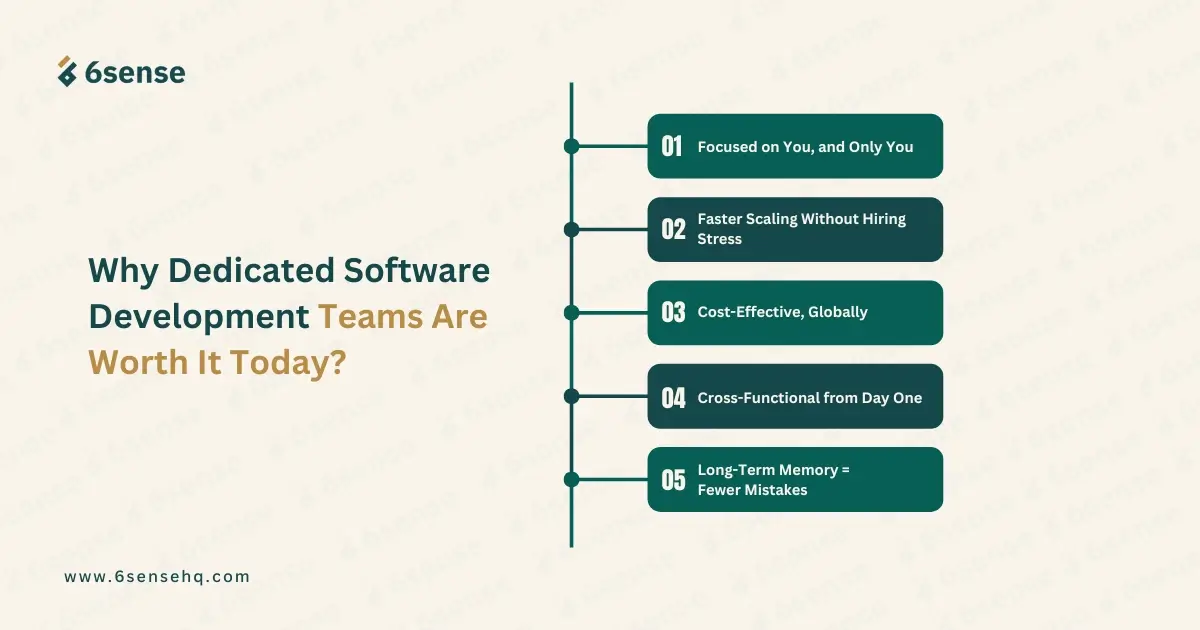
Why Dedicated Software Development Teams Are Worth It Today?
Because they give you focused, flexible, and long-term firepower without the overhead of hiring full-time. If you want to build something serious and scalable, dedicated teams help you move fast and stay consistent.
Here’s why companies love them:
1. Focused on You, and Only You
Unlike freelancers juggling multiple clients, dedicated team members are 100% committed to your product. They get deep into your codebase, your customers, and your vision, which leads to smarter decisions and better output over time.
2. Faster Scaling Without Hiring Stress
Need to go from 2 to 8 developers in a month? No problem. Dedicated teams can ramp up quickly, no job posts, no interviews, no delays. Just plug in and start building. You save time and momentum.
3. Cost-Effective, Globally
Hiring senior developers locally can cost upwards of $110k/year to $120k/year, as shared by one Quora user. Also, with an offshore dedicated team, you access global talent at a lower cost without compromising on quality. One Reddit user shared they saved 40% by outsourcing to Eastern Europe.
4. Cross-Functional from Day One
You don’t have to find a backend dev, then a designer, then a QA. Most dedicated teams come pre-built with everyone you need, frontend, backend, testers, and DevOps, already used to working together as one unit.
5. Long-Term Memory = Fewer Mistakes
When your team sticks around, they remember why things were built, what broke, and what users want. That continuity reduces rework, improves quality, and saves you hours of re-onboarding every few months.
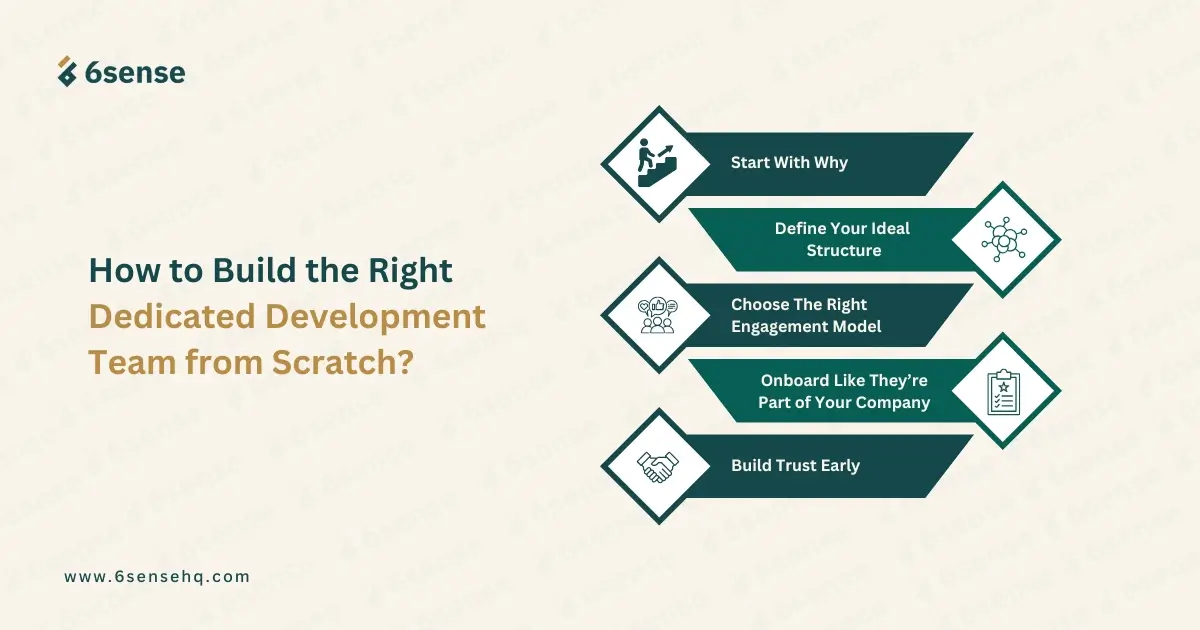
How to Build the Right Dedicated Development Team from Scratch?
To build a dedicated team that actually delivers, you need to plan strategically, not just fill seats. It’s about aligning people, the development process, and purpose from day one. Here’s how to do it the right way.
Start With Why
You need a clear reason for building this team. What are you trying to build, and why now? Your “why” drives everything else, from the roles you hire to the tech stack you use. When goals are clear, the team can stay focused and aligned.
Define Your Ideal Structure
Decide what kind of team you really need. Do you want a full-stack squad, developers, QA, designers, and a PM? Or are you plugging gaps in your current setup? Start with essential roles first, and scale the team as your product grows.
Choose The Right Engagement Model
You can either hire people in-house or partner with a vendor who provides a pre-vetted team. In-house gives control but takes longer. A vendor model moves faster. Just make sure the vendor offers real ownership, not just bodies on a Zoom call.
Onboard Like They’re Part of Your Company
Set your team up for success by making them feel included from day one. Share docs, project history, goals, and Slack etiquette. At 6sense HQ, for example, onboarding is treated as a strategic investment because how you start shapes how you perform.
Build Trust Early
Trust doesn’t happen by accident. Create rituals, daily stand-ups, sprint reviews, and feedback sessions. Plus, set clear milestones and be honest when things shift. Teams that communicate openly and frequently tend to deliver better because trust builds confidence, and confidence builds speed.
What Roles Make Up a High-Performing Dedicated Team?
A high-performing dedicated development team typically includes a mix of technical, design, and project management roles that cover the full product lifecycle from idea to deployment. These roles ensure quality, speed, and alignment across the board.
Role
What They Do
Tech Lead
Oversees architecture, code quality, and engineering decisions
Frontend Devs
Build the UI; turning designs into fast, responsive interfaces
Backend Devs
Handle databases, APIs, logic, and security
Full-stack Devs
Great for lean teams, versatile across frontend/backend
QA Engineers
Ensure bug-free releases through testing (manual & automated)
DevOps Engineers
Streamline deployment, CI/CD, cloud infra
Project Manager
Keeps the train on the rails, timelines, scope, and client communication
UI/UX Designer
Designs intuitive user experiences that drive adoption and retention
Depending on your scope, you might also need: business analysts, data scientists, security specialists, or mobile developers.
Tip: Start with the core roles. You can always expand later as your needs evolve.
Cost Comparison: In-House vs Freelancer vs Dedicated Team
If you're looking for the most cost-effective way to scale software development without compromising quality, building a dedicated development team is often the smartest financial choice, especially when compared to hiring full-time or relying on freelancers.
Here’s how the costs stack up across different models and regions:
Model
USA/Canada
Eastern Europe
South Asia
Key Notes
In-House Developer
$120,000 – $160,000
$60,000 – $90,000
$35,000 – $50,000
Includes salary, benefits, taxes, office space, and recruitment costs
Freelancer (Hourly)
$70 – $150/hr
$35 – $70/hr
$15 – $40/hr
Flexible but varies in quality, availability, and long-term reliability
Cost includes vetted, full-time professionals managed by the vendor
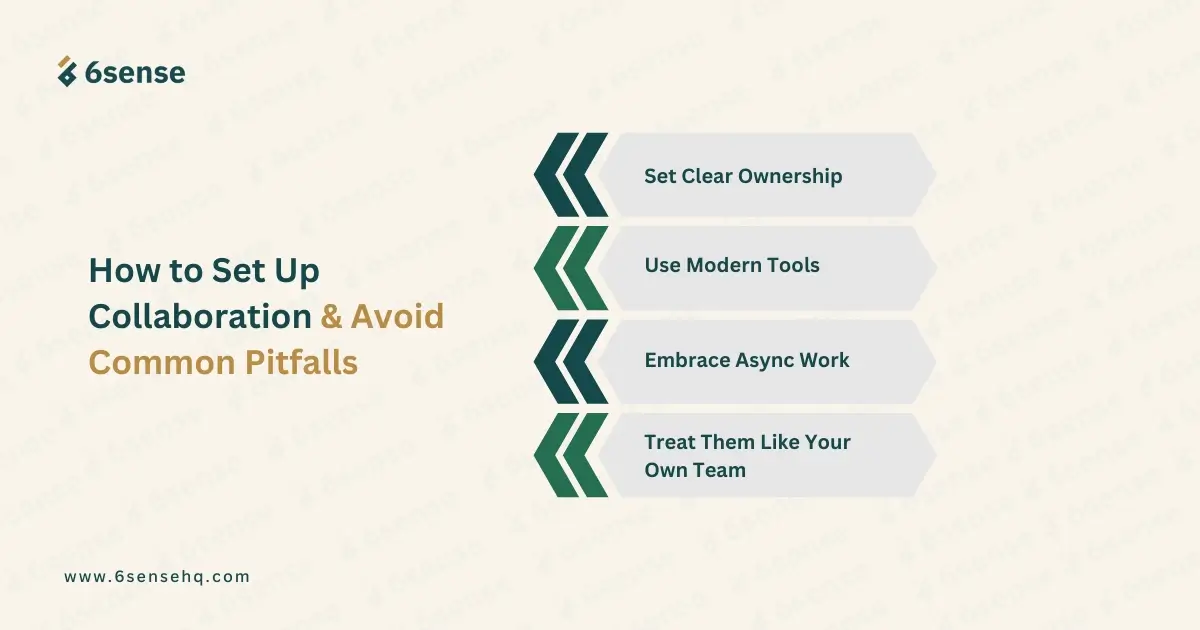
How to Set Up Collaboration & Avoid Common Pitfalls
To collaborate effectively with a dedicated team, you need clear roles, the right tools, and strong communication habits. It’s not harder than managing in-house; it just takes intention and team structure.
Set Clear Ownership
Every team needs to know who’s doing what. Assign a clear product owner or main point of contact. It avoids confusion and keeps decisions moving quickly instead of being slowed down by too many people giving mixed directions.
Use Modern Tools
Equip your team with the right stack from day one. Use tools like Slack or Zoom for communication, Jira or Trello for tasks, and GitHub for code. Clear tools lead to fewer dropped balls and smoother day-to-day work.
Embrace Async Work
Time zones shouldn’t be a dealbreaker. Set a few overlapping hours for real-time check-ins, but rely on tools like Loom or Notion to explain tasks clearly. Written updates help everyone stay on track, even when schedules don’t line up.
Treat Them Like Your Own Team
Don’t keep your dedicated team at arm’s length. Invite them to roadmap meetings, ask for feedback, and celebrate wins together. When they feel included, they take more ownership, and that leads to better results and longer-term loyalty.
Conclusion
If you're building a long-term product and need to move fast without hiring a full in-house team, a dedicated development team could be a great fit. It’s especially useful when you need specialized talent that feels like part of your company but without the costs of full-time employees.
So, start small, build a core team, and grow once you see results. With the right setup and partner, choosing to build a dedicated development team might be one of the smartest decisions for your product’s future.
Ready to turn your product vision into a fully-aligned team? Let Talk to build your dedicated dream team faster, smarter, and globally backed.
Racing against the clock to ship your MVP? A dedicated development team gives you immediate access to skilled engineers, predictable output, and a streamlined build process. So you can validate your product faster without getting stuck in hiring cycles or management overhead
This breakdown of the dedicated development team structure shows exactly who you need, why you need them, and how each role keeps your product moving without friction.