


How to Build Dedicated Development Team in 2025
Learn how to build a dedicated development team, choose the right roles, compare costs, and manage collaboration for faster, scalable product growth.
6 min read
Loading…
A great dedicated team can build your product, but great management makes it thrive.
Written by: Nasif Sid Created on: 10 Oct 20257 min to read

To manage a dedicated development team effectively, you need to treat them as a true extension of your in-house team, not as outsiders or temporary help.
That means giving them clear goals, the right tools, regular communication, and a strong sense of ownership from day one. These teams often work remotely across time zones, so managing them well requires structure, trust, and consistency.
In this blog, we’ll walk you through how to manage a dedicated development team step by step, including onboarding best practices, communication tips, tools that actually work, and much more!
A dedicated dev team needs a unique management approach because they function as a long-term, integrated part of your product team, not just external help.
Unlike freelancers or short-term contractors, they become embedded in your product lifecycle, team rituals, and long-term goals. That means your management style needs to evolve, too.
Traditional top-down or hands-off approaches don’t work well here. Instead, what’s needed is:
To onboard your dedicated team for a strong start, provide them with everything they need to understand your product, connect with your team, and begin contributing quickly. Don’t leave them guessing; set them up for success from day one.
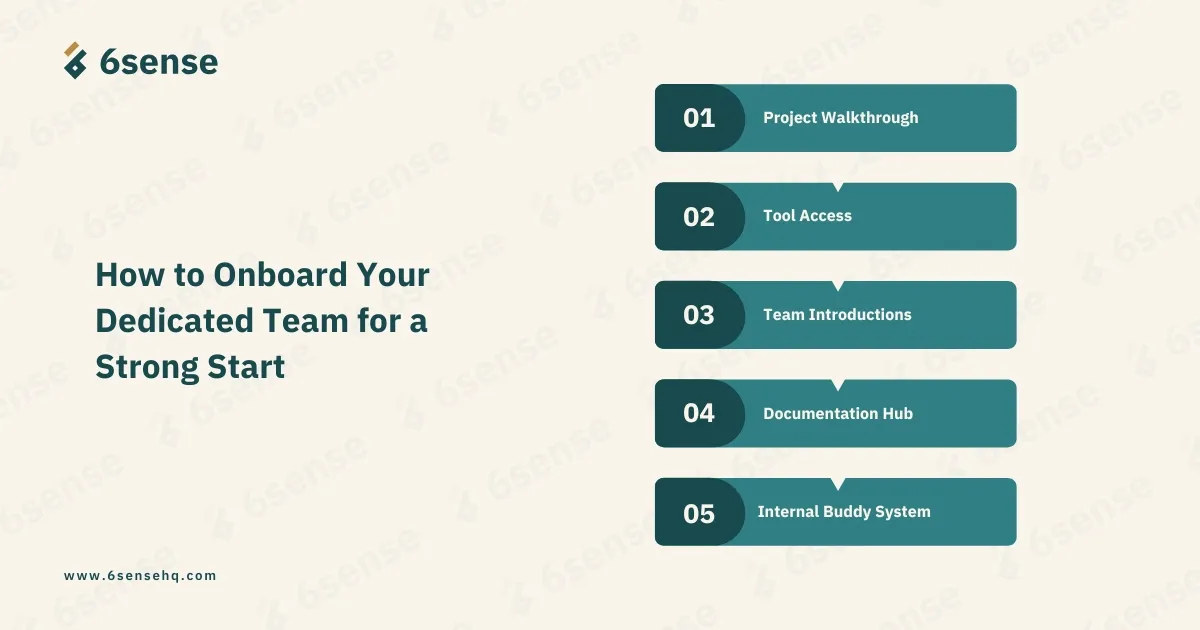
Walk them through your product’s vision, goals, user journey, and roadmap. Show how their work fits into the bigger picture, and explain any key features, past decisions, or open challenges they should know about.
Make sure they have access to all the tools on day one: GitHub, Jira, Notion, Slack, and anything else. A delay in tool setup can waste the first few days of onboarding.
Set up quick 1:1s and group calls with your internal team. Help your dedicated dev team put faces to names. It builds trust and makes communication smoother right away.
Create a shared space with everything they need: API docs, sprint guidelines, environment setup, and decision logs. Use tools like Notion or Confluence and keep them updated regularly.
Pair each new dev with an internal lead or senior dev. This person can answer questions, guide them through the first sprint, and help them feel connected faster.
To communicate effectively with a dedicated development team, you need to be clear, consistent, and intentional. It’s less about saying more and more about saying the right things at the right time, using the right tools.

Keep things predictable. Run short daily standups (15 minutes max), weekly sprint planning, and bi-weekly retros. It helps everyone stay on track, spot blockers early, and feel connected without wasting time in endless meetings.
Not everything needs a call. Use written updates, Loom videos, or recorded demos so team members can catch up in their time zones. This saves everyone from Zoom fatigue and keeps communication efficient and respectful during deep work time.
Give your team the proper channels to talk and track work. Use Slack for quick chats, Jira for task tracking, Notion for documentation, and Loom for screen walkthroughs. Each tool has a job, use them well to avoid noise.
Especially in the first few weeks, reply to questions quickly. Your responsiveness sets the tone for how open and available you’ll be. This builds trust fast and keeps momentum going when the team may still be finding its rhythm.
To help your dedicated software development team work efficiently, you need the right mix of tools and simple, repeatable processes. These support daily collaboration, clear tracking, and smooth delivery, especially when working across time zones or remotely.
| Category | Tool / Practice | Purpose |
| Project Management | Jira, Linear, Trello | Track tasks, sprints, and team workload |
| Code Collaboration | GitHub + Pull Request Reviews | Version control, peer reviews, and code quality checks |
| Documentation / Wiki | Notion, Confluence | Store guides, decisions, onboarding material, product docs |
| CI/CD | GitLab CI, CircleCI, Bitbucket Pipelines | Automate testing, deployment, and delivery pipelines |
| Communication | Slack, Zoom, Loom | Real-time chat, meetings, async updates via recorded video |
| Agile Process | Scrum with 1–2 week sprints | Organize work into manageable, iterative chunks |
If your dedicated developers start underperforming, don’t panic. Step in early, get to the root of the issue, and fix it with clarity, not blame. Most problems can be solved with better systems, communication, or expectations.
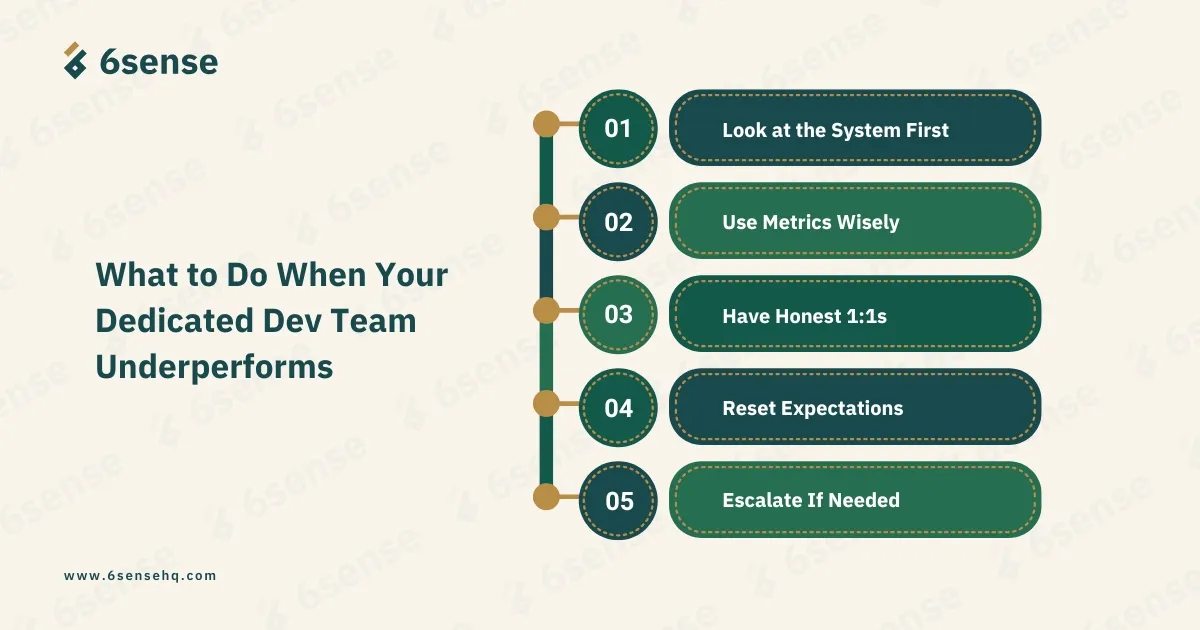
Before blaming the team, check if the problem is upstream. Were the requirements clear? Was the feedback timely? Was the task even realistic? A lot of underperformance happens because the process itself is broken, not the people.
Track useful data like cycle time, bug count, or missed deadlines to spot patterns. But don’t obsess over numbers or start micromanaging, which usually kills motivation instead of improving results.
Sometimes the problem is as simple as a blocked pull request or unclear priority. Sit down with the devs and ask what’s slowing them down. Listen more than you talk and avoid jumping to conclusions too fast.
Maybe the sprint goal was too ambitious. Or maybe the team misunderstood the priorities. Re-align on what's expected, by when, and why it matters. Clear, shared goals can get the team back on track fast.
If you’ve tried everything and things still don’t improve, it might be a mismatch in skills or mindset. It’s okay to make a change. A poor fit in a dedicated team model can slow the whole product down.
To manage a dedicated development team well, focus on clarity, trust, and consistency. These tips are simple to apply and make a big difference in how your team performs and collaborates, especially when they’re remote.
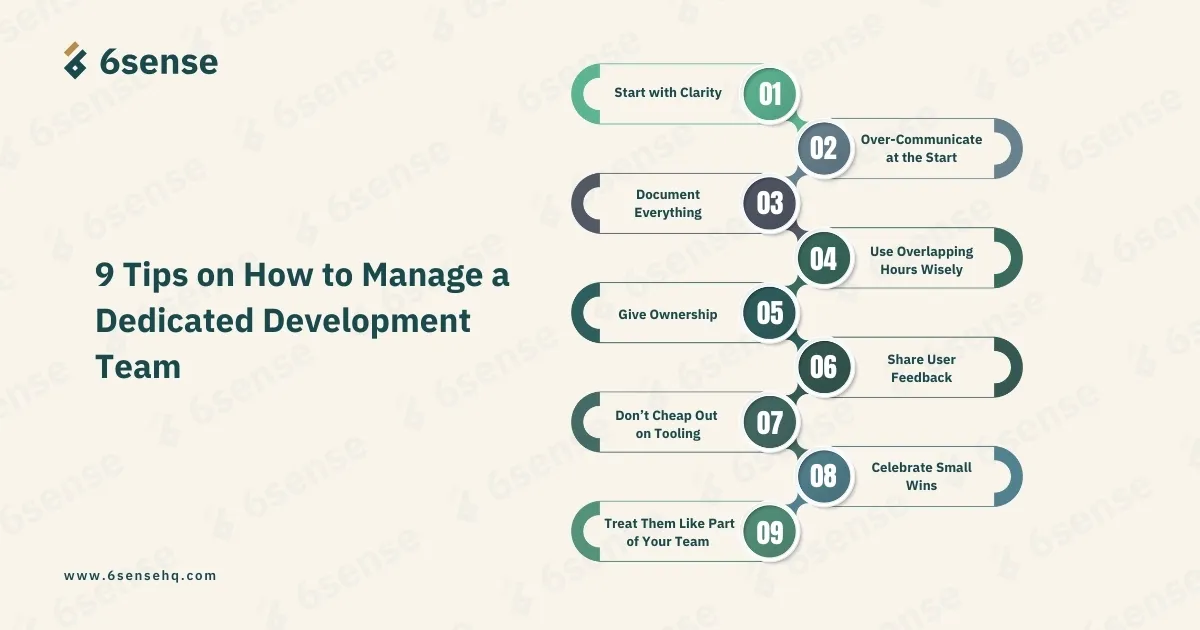
When you know how to manage a dedicated development team the right way, everything starts to click. Your team doesn’t just take orders; they think ahead, solve problems, and care about the product like it’s their own. Tasks get done on time, communication is smooth, and trust builds naturally. You’re no longer chasing updates or fixing avoidable bugs.
Instead, you’re building momentum with a group that feels entirely part of your company. The goal isn’t control, it’s clarity, connection, and shared ownership. That’s what makes a good team great.
Looking to scale with confidence? Partner with 6sense HQ and build your dream dedicated team the smart way.
Learn how to build a dedicated development team, choose the right roles, compare costs, and manage collaboration for faster, scalable product growth.
6 min read

Racing against the clock to ship your MVP? A dedicated development team gives you immediate access to skilled engineers, predictable output, and a streamlined build process. So you can validate your product faster without getting stuck in hiring cycles or management overhead
6 min read

| Definition of Done |
| Set clear standards for completed features or tasks |
| Quality Control | Code Reviews | Catch bugs, maintain standards, and share knowledge |
| Stakeholder Feedback | Weekly Demos | Show progress, gather input, and validate direction |
| Big Picture Planning | Quarterly Planning Sessions | Align priorities and roadmap across teams and leadership |
This breakdown of the dedicated development team structure shows exactly who you need, why you need them, and how each role keeps your product moving without friction.
8 min read