


How to Build Dedicated Development Team in 2025
Learn how to build a dedicated development team, choose the right roles, compare costs, and manage collaboration for faster, scalable product growth.
6 min read
Loading…
The success of your project depends less on the idea and more on the team you choose to build it.
Written by: Nasif Sid Created on: 11 Sept 202510 min to read

When your business needs to build great software but lacks the right team, a dedicated development team can be your best solution. The key to how to choose a dedicated development team is finding one with the right skills, clear communication, and a track record of success.
A good dedicated team will feel like a natural extension of your company. They work only on your project, understand your goals, and help you move faster without the hassle of full-time hiring. It’s smart, flexible, and cost-effective.
In this blog, I’ll show you exactly when to hire a dedicated team, who should be on it, what benefits you’ll get, and how to find a partner that truly understands your business.
Let’s dive in!
That’s a great question and one worth answering before jumping into hiring. Not every project needs a dedicated team, but in the right situation, it can be a game-changer.
Here’s when it makes the most sense:

Maybe your team is great, but they’ve never built a mobile app or worked with a certain tech stack. A dedicated team brings in experts with exactly the right experience so you can move forward faster without waiting to hire or train new staff.
If your software project needs more hands on deck right now, but you’re not ready to commit to full-time employees, a dedicated software team gives you flexible growth. You can scale up (or down) based on your needs, without the pressure of long-term contracts.
Big, ongoing projects like SaaS platforms or enterprise systems need full focus. A dedicated team stays with you for the long haul, understanding your goals and helping you evolve the software product over time, just like an in-house team would.
Hiring and keeping developers full-time can get expensive, especially when you need specialized skills. With a dedicated team, you get high-quality talent (often offshore) at a lower cost without sacrificing quality or control.
If your idea is still evolving or you’re planning to build and test in phases, flexibility is key. Dedicated teams are used to Agile workflows and can adapt quickly as your goals shift, helping you stay on track even when plans change.
A dedicated development team is more than just a group of coders. It’s a full lineup of specialists who each play a unique role in making your software successful. Let’s break down who’s typically involved and what they do:
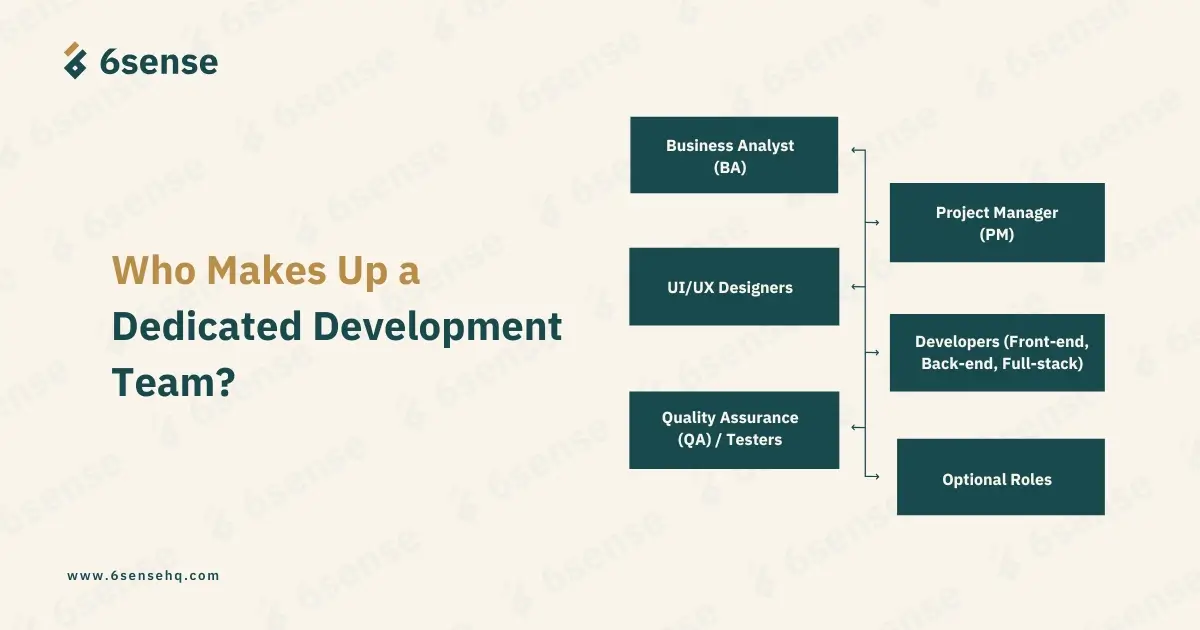
The BA is your go-to for turning ideas into actionable plans. They listen to your business needs, ask the right questions, and figure out what features your software should have.
Then, they create clear documentation and diagrams so the development team knows exactly what to build, no guesswork, just clear direction.
The PM is like the team captain. They make sure everyone knows what to do and when to do it. From setting timelines to keeping tasks organized, they help the project stay on track.
They also keep you in the loop, handle communication, and make sure risks and roadblocks are dealt with quickly.
These are the people who make your software not just usable, but enjoyable. UI designers handle the visuals, buttons, colors, and layouts. UX designers focus on how users move through the app or website.
Together, they ensure that everything looks great and works smoothly, keeping your users happy from start to finish.
Front-end developers bring the design to life on the screen, what users see and click. Back-end developers make everything work behind the scenes, like databases and server logic. Full-stack developers do both.
Together, they write clean code, build features, and turn the plan into a working product development.
QAs are the final line of defense before launch. They test everything: buttons, forms, performance, and security. Some tests are done by hand, while others are automated.
Their goal is to catch bugs early, make sure everything works as expected, and ensure your users don’t run into surprises.
Depending on your software development project, you might also need a few extras. DevOps engineers manage deployments and set up automation so your app can be updated smoothly.
Technical leads guide the team on architecture and best practices. And sometimes, a Product Owner (often from your side) helps prioritize what gets built next.
Thinking about bringing in a dedicated software development team? It’s not just a smart move, it’s often the most practical one. From saving money to launching faster, here are the key reasons why the dedicated team model works so well.
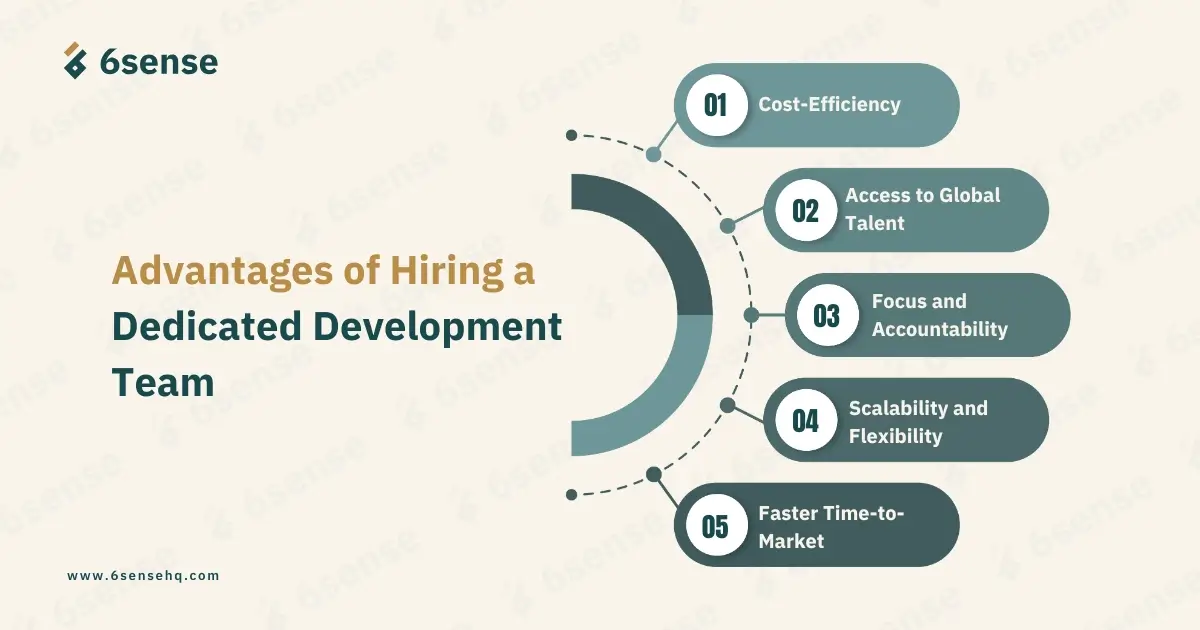
Hiring a dedicated team can save your business significant costs. You don’t have to spend on recruiting, onboarding, or training full-time employees. Plus, teams based in countries like Poland or the Philippines offer the same quality work at a lower cost.
You get top-level expertise without the high overhead. This makes it a great option for businesses that want to grow without burning through their budget.
Cost of Hiring Dedicated Development Team in 2025
With a dedicated team, you’re not limited to your local talent pool. You can tap into a worldwide network of dedicated developers who specialize in exactly what you need, whether it’s artificial intelligence, blockchain, finance tech, or healthcare systems.
This kind of access lets you build a team tailored to your project, even if those skills are rare or expensive in your home country.
Unlike freelancers who might juggle multiple clients, a dedicated team works on your project and only your project. This means they stay fully focused and deeply involved from start to finish.
Since they’re dedicated to your goals, they take real ownership of outcomes. You’re not just getting help; you’re getting a committed team size that acts like part of your company.
Need to expand your team quickly? Or scale back during a slow phase? A dedicated development partner can make those changes fast, sometimes in just a few days.
This flexibility is hard to achieve with in-house teams, where hiring or downsizing takes time and resources. Dedicated teams let you adjust based on what your project needs, when it needs it.
Because dedicated teams are experienced and already organized, they can get to work quickly, no long onboarding or training required. They often use Agile development methods, which help break development projects into smaller tasks and deliver value faster.
If you’re trying to build an MVP, meet a launch deadline, or respond to changing demands, a dedicated team can help you hit those goals without delay.
Choosing the right development team can make or break your project. It’s not just about technical skills; it’s about finding a team that fits your goals, work style, and budget.
Here’s a clear, step-by-step way to do it right:
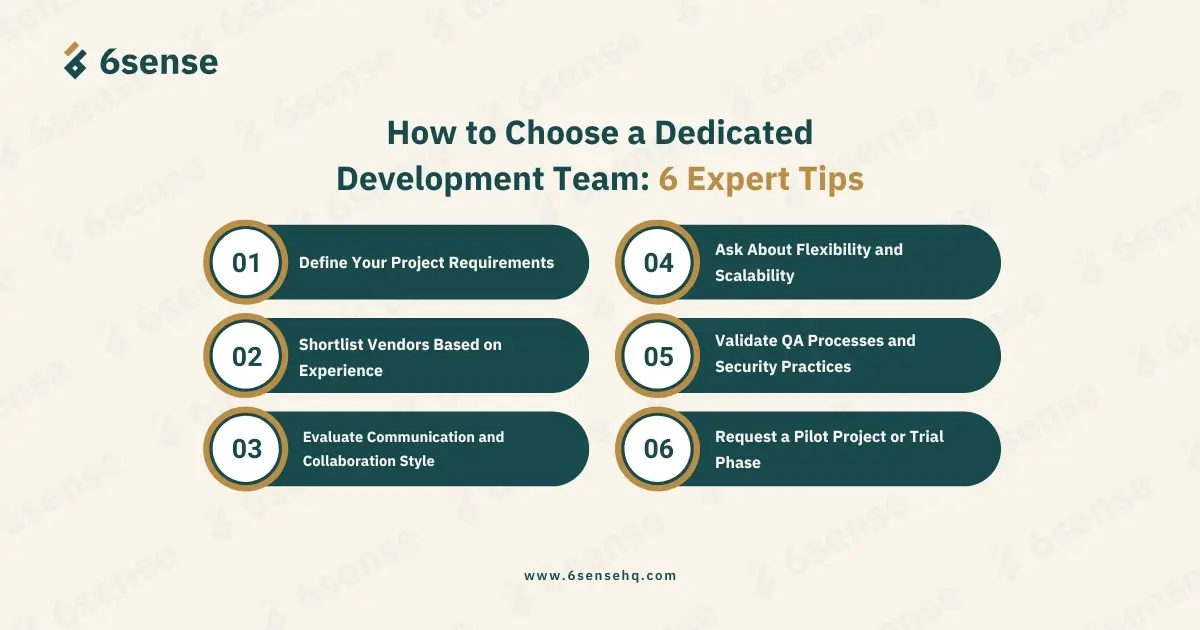
Start by getting clear on what you’re building. Outline your goals, list the must-have features, and decide which technologies you’ll need (like React or Python).
Add in your budget, timeline, and any specific business needs. This clarity helps you explain your vision to potential teams and ensures you attract partners who can actually deliver what you're looking for.
Look for companies that have built similar projects to yours. Check out their case studies and see what kinds of clients they’ve worked with. Explore their tech stack and industry expertise.
Use review platforms like Clutch or GoodFirms to see real feedback. You want a team that knows your space, not one learning on the fly.
Good communication makes everything easier. Talk to the team and notice how they respond. Are they clear, fast, and professional? Ask what tools they use (like Slack or Jira), and see if their work culture feels like a match.
A team that communicates well and keeps you updated will save you a lot of time and stress later on.
Your needs might change as the project grows. Can the team scale up quickly if needed? Do they have a strong talent pool and fast onboarding? Some top vendors can add new team members in just a few days.
That kind of flexibility is key for long-term projects where things can shift unexpectedly.
Ask how the team ensures your software will be high-quality and secure. Do they follow test-driven development? What types of testing do they use: manual, automated, or both?
For sensitive industries like fintech or healthcare, make sure they follow strong data privacy standards. A solid QA process protects your users and your brand.
Before signing a long-term contract, ask to start with a small pilot, maybe a 2-4 week sprint. This helps you see their skills, code quality, and communication style in action. It’s a low-risk way to test the waters and make sure they’re a good fit before you fully commit.
Many companies worry that an external team won’t “get” their business. But great dedicated teams take steps to fully understand your goals, audience, and what success looks like for you.
Here’s how they do it effectively:
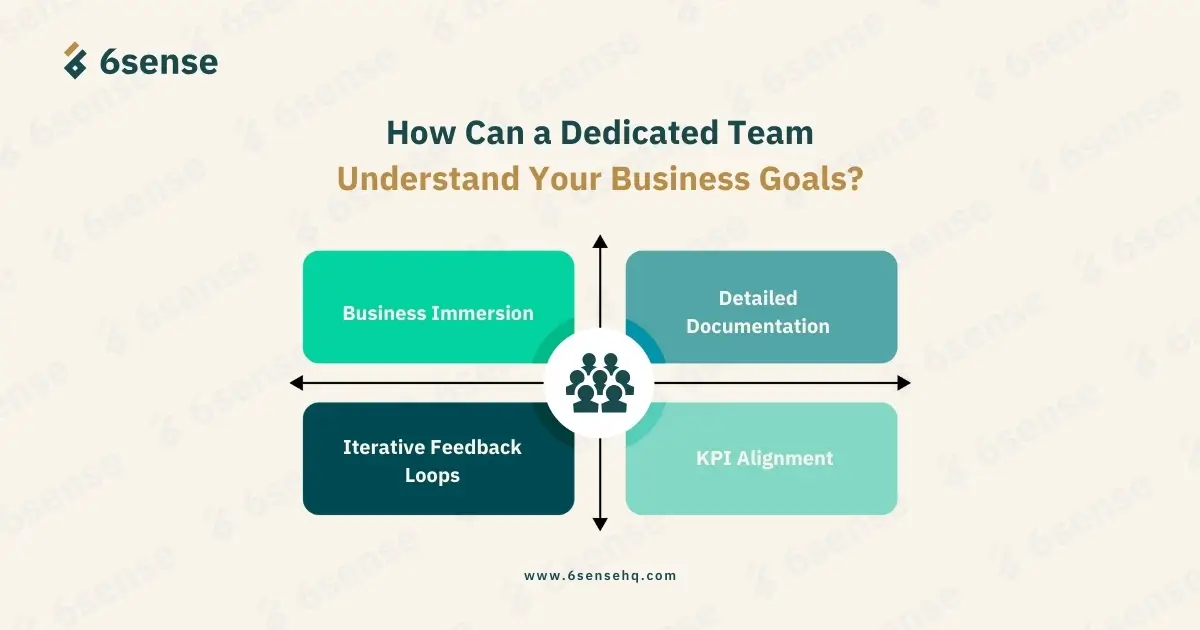
Strong teams don’t jump into coding right away. Business analysts and project managers begin by learning everything they can about your industry, users, and challenges. They run discovery sessions, ask detailed questions, and dig deep into your company’s goals.
Well, this helps them create a clear, shared understanding of what your software needs to do and why it matters.
Once the discovery phase is complete, the team turns your goals into structured documentation. This includes feature lists, user journeys, workflows, and edge cases. It’s not just for developers; it helps the whole team stay aligned.
Even if someone new joins mid-project, they’ll understand the full context right away because everything is clearly written down and easy to follow.
Great teams don’t disappear after kickoff. They stay in close contact with you through daily standups, weekly reviews, and sprint planning meetings.
These regular check-ins help them stay on track, make quick adjustments, and absorb new feedback as your priorities evolve. It keeps the app development process flexible and your vision front and center.
Dedicated teams know that success isn’t just about delivering features, it’s about meeting real business goals. That’s why they ask early on about your key performance indicators (KPIs), like user growth, retention, or revenue targets.
By aligning their work with your outcomes, they stay focused on building software that actually drives results.
If you’re thinking about building a new product or scaling your current one, choosing a dedicated development team can be a smart move. It brings you cost savings, faster timelines, and access to top talent. But knowing how to choose a dedicated development team makes all the difference.
Start by understanding what you need, ask the right questions, and don’t rush. Begin with a small trial, and focus on building a real working relationship. When you find the right fit, the results speak for themselves, faster launches, better quality, and a team that truly feels like your own.
Looking for a trusted team to build your next big thing? 6sense Technologies can help with smart & skilled tech talent who are ready to collaborate. Let’s connect.
Learn how to build a dedicated development team, choose the right roles, compare costs, and manage collaboration for faster, scalable product growth.
6 min read

Racing against the clock to ship your MVP? A dedicated development team gives you immediate access to skilled engineers, predictable output, and a streamlined build process. So you can validate your product faster without getting stuck in hiring cycles or management overhead
6 min read

This breakdown of the dedicated development team structure shows exactly who you need, why you need them, and how each role keeps your product moving without friction.
8 min read