


How to Build Dedicated Development Team in 2025
Learn how to build a dedicated development team, choose the right roles, compare costs, and manage collaboration for faster, scalable product growth.
6 min read
Loading…
Need expert developers? From screening to onboarding, learn how to hire a dedicated software development team for speed, flexibility, and full control.
Written by: Nasif Sid Created on: 14 Aug 202510 min to read

When you need to build great software fast without the stress of hiring in-house, the smartest move is to hire a dedicated software development team. Start by defining your goals, then choose a trusted company, check their experience, and sign a clear contract.
Well, I’ve worked with both in-house teams and remote teams, and believe me, having a dedicated team just for your project makes things simpler. You get skilled people who focus only on your work, saving you time, money, and headaches.
In this blog, I’ll walk you through everything: what a dedicated team is, how it works, what to expect, and what to watch out for. If you’re planning a tech project, this guide is just what you need.
Let’s buckle up!
A dedicated software development team is a full-time team that works only on your project, not for anyone else. You get developers, designers, testers, and a project manager, all focused on building your product from start to finish.
You don’t need to hire people one by one or worry about training. This team already knows how to work together and can start quickly. It’s like having your own software department, but remote and ready to go.

According to Statista, over 31.7% of global professional service firms provided IT consulting in 2022. It shows how popular outsourced teams are becoming. If you want faster results without the hiring headache, this setup could be a perfect fit for you.
The structure of a dedicated software development team includes all the key roles needed to build, test, and manage your software from start to finish. Each person has a clear responsibility that helps the team deliver faster and better results.
The pros and cons of a dedicated software development team help you understand if this model fits your needs. It offers flexibility and expertise but comes with some challenges you should prepare for.
Here's a clear breakdown:
Focus and Commitment
A dedicated team works only on your project, not others. This means faster development, fewer distractions, and better quality. You get full-time attention and a stronger connection between the team and your business goals.
Cost-Effective
You save money by avoiding in-house costs like salaries, office space, and equipment. You pay only for the team and work you need, making it a budget-friendly solution for startups and growing businesses.
Scalability
You can scale the team up or down based on project needs. Whether you need more developers for a big launch or fewer during quiet periods, the team can adjust quickly without long hiring processes.
Expertise on Demand
A dedicated team includes experienced developers, designers, and testers with specialized skills. You get access to top talent without hiring them full-time, making it easier to handle complex features or technologies.
Better Communication & Control
You get regular updates, full visibility, and direct control over the team’s work. Tools like Slack and Jira help track progress and fix issues quickly, so you stay involved every step of the way.
Integration Issues
At first, it may be hard to sync a dedicated team with your existing team. Different tools or processes can slow things down. Regular meetings and clear roles help smooth out early communication problems.
Time Zone Gaps
If the team is overseas, time zones might not match yours. This can delay responses or meetings. To fix this, plan overlapping hours or use tools that make async work easy and clear.
Management Overhead
Even with a managed team, you still need to review work, give feedback, and approve progress. Without active involvement, delays and misunderstandings can happen. Assigning a product owner helps avoid this.
Security Concerns
Sharing data with a third-party team comes with risks. To stay safe, always sign NDAs, set access controls, and make sure the team follows security best practices for your code and data.
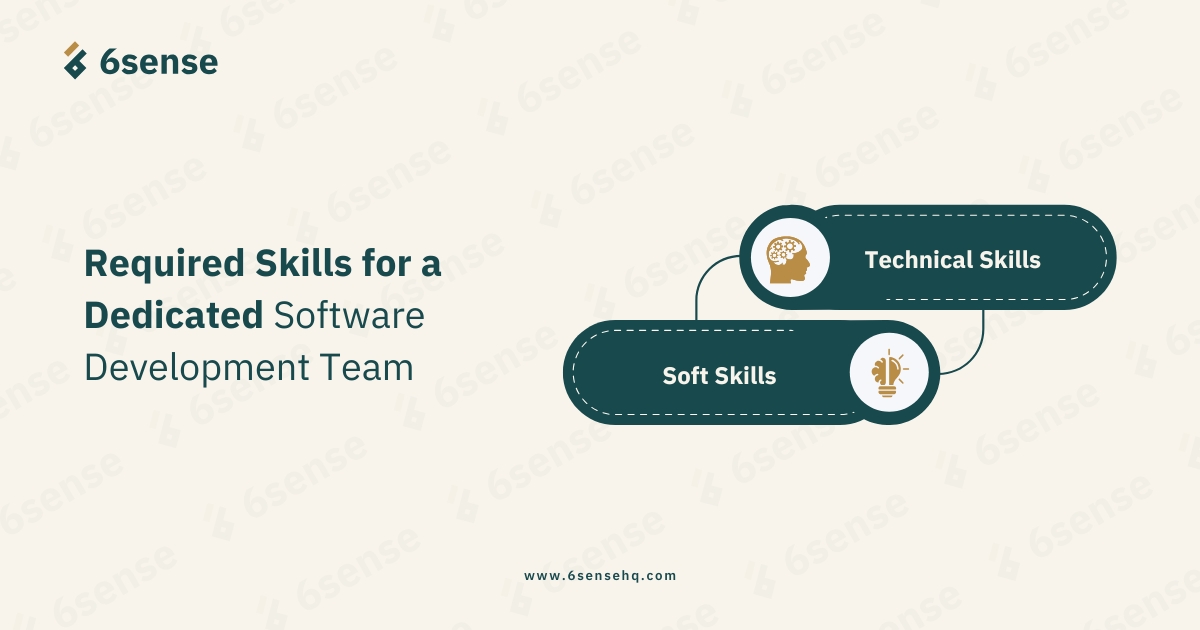
The required skills for a dedicated software development team include both technical abilities and soft skills. A strong team should not only know how to build software but also work well together, solve problems, and adapt to your needs.
Mastery in Programming Languages
The team must be skilled in core programming languages like JavaScript, Python, C#, or Kotlin, depending on your dedicated project. It ensures they can build features efficiently and handle issues without slowing development down or learning on the job.
Knowledge of Frameworks and Tools
They should know the right tools and frameworks like React, Angular, Node.js, or Flutter. These tools help accelerate development and ensure the product functions smoothly across various platforms, including websites, mobile apps, and custom platforms.
Experience with DevOps and Cloud Platforms
A good team understands DevOps practices and cloud services like AWS, Azure, or Google Cloud. This helps with continuous deployment, smooth updates, and safe data storage, so your software runs fast and stays reliable.
Familiarity with Agile and CI/CD
They should follow Agile practices and use CI/CD pipelines to deliver work in small chunks and update regularly. It keeps the project flexible and allows quick changes without major delays or system failures.
Strong Communication and Teamwork
Every team member should be able to explain things clearly, listen well, and work closely with others. Good communication helps avoid confusion, speed up decisions, and build better results, especially in remote or cross-border teams.
Ability to Work Under Deadlines
The team must be able to plan their time well and deliver tasks on time. This means being focused, managing priorities, and not letting pressure slow down progress or lead to sloppy work.
Proactive Problem-Solving
They should spot issues early and fix them fast. A team with a problem-solving mindset doesn’t wait for instructions; they suggest improvements, handle bugs, and keep things moving when challenges come up.
Reliability and Accountability
A reliable team owns their tasks and follows through. They should meet deadlines, stick to plans, and take responsibility if something goes wrong. This builds trust and keeps the project running smoothly.
Adaptability to Change
Projects often change, new features, different priorities, or updated tech. The team should stay flexible and adjust fast without losing momentum. This helps you build better products even when plans evolve mid-project.
Being clear about your goals, budget, and expectations makes the process smoother and ensures you choose the right team from the start. Let’s see how:
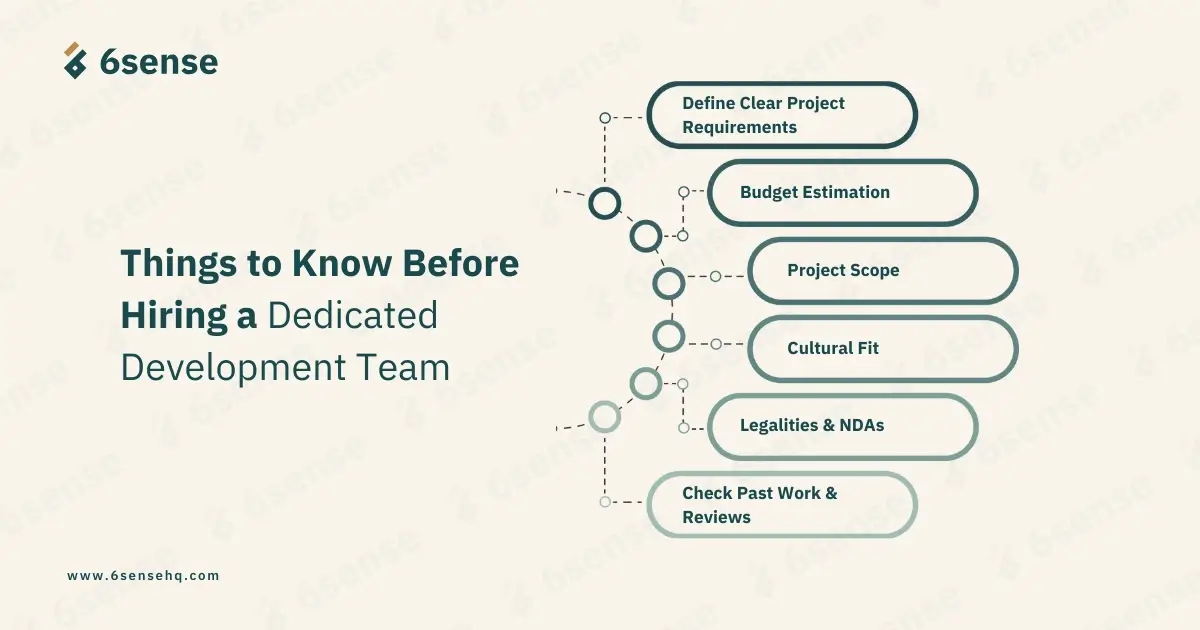
Know exactly what you’re building. List your features, tech stack, timeline, and business goals. This helps the software team understand your needs from day one and avoids delays or confusion later during development.
Set a budget before starting. Global rates vary — for example, Bangladeshi teams often charge $20–$30/hour. Knowing your limit helps you find a cost-effective team without sacrificing quality or stretching your finances.
Understand whether your project is fixed or flexible. A fixed scope works well for short-term builds, while a flexible one suits evolving products. Choose a team that can handle changes if needed.
Pick a team that matches your work style. Similar communication habits, time zones, and shared values make collaboration easier and more efficient. A poor cultural fit can cause misunderstandings and slow things down.
Protect your project with a clear contract. It should include deliverables, IP ownership, timelines, payment terms, and a solid NDA. It keeps your idea secure and ensures both sides are on the same page.
Always look at the team’s previous projects and read client reviews. A strong portfolio demonstrates their experience, and testimonials provide valuable insights into how they work, communicate, and deliver results.
To hire a dedicated software development team, you need to define your needs, evaluate the right team size, and set everything up properly for smooth collaboration and successful delivery. Here’s how:
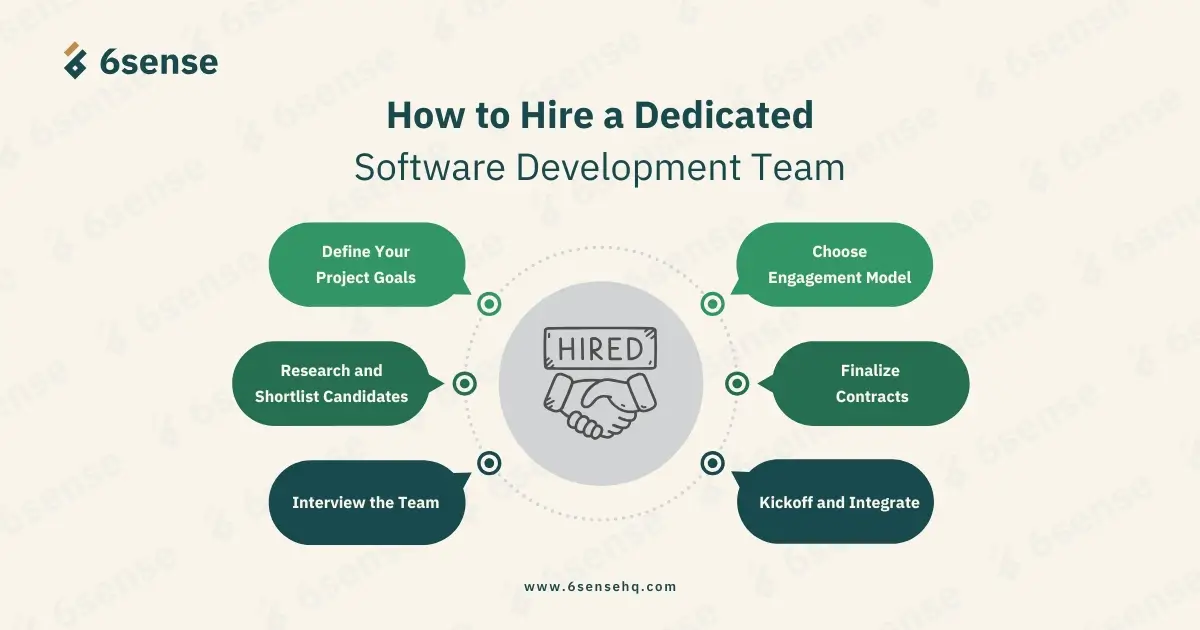
Start by outlining exactly what you want to build. List key features, timeline, budget, and required tech stack. Decide how you want the work managed, Agile (for flexible updates) or Waterfall (for structured planning). Clear goals help your team work faster and better.
Look for companies or agencies with strong experience in your industry. Check their websites, portfolios, client reviews, and case studies. A company with proven results and positive testimonials is more likely to deliver quality outcomes and work well with you.
Don’t just rely on the company profile; talk to the actual people who may work on your project. Ask technical questions, request code samples, or run a test task. Also assess soft skills like communication, flexibility, and teamwork.
Pick a pricing and work structure that fits your budget and scope. Common models include:
Draft a detailed agreement that includes everything, like the work scope, payment schedule, timelines, IP ownership, NDA, and exit terms. A firm contract protects both sides and ensures the team understands what’s expected before the project begins.
Once everything’s signed, begin the onboarding process. Set up tools like Jira for task tracking, Slack for communication, and Zoom for meetings. Assign responsibilities, plan your first sprint, and align schedules so everyone is ready to start smoothly.
If you want a dedicated development team that’s fully focused on your project, 6sense Technologies is a smart choice. Why 6sense? Because they handle everything: hiring, training, and managing, so you can just focus on building your product. You get top 0.5% developers, full-time support, and up to 52% cost savings. They follow Agile and use tools like Jira for full transparency.
With 6sense, you stay in control without dealing with the stress of hiring or overhead. Isn't it praiseworthy!
Hiring the right team can make or break your project. When you hire a dedicated software development team, you get full-time experts focused only on your goals. This model gives you speed, flexibility, and high-quality results without the need to manage in-house hiring.
Whether you're launching a new product or scaling an existing one, a dedicated team helps you move faster and smarter. If you follow the steps in this guide, you can build a strong, reliable team that turns your vision into a working product.
Need a trusted, dedicated development team? Reach out to us, we’re ready when you are.
Learn how to build a dedicated development team, choose the right roles, compare costs, and manage collaboration for faster, scalable product growth.
6 min read

Racing against the clock to ship your MVP? A dedicated development team gives you immediate access to skilled engineers, predictable output, and a streamlined build process. So you can validate your product faster without getting stuck in hiring cycles or management overhead
6 min read

This breakdown of the dedicated development team structure shows exactly who you need, why you need them, and how each role keeps your product moving without friction.
8 min read