How to Solve offshore development timezone issues | 6sense HQ
A Roadmap to Fixing offshore development timezone issues.
No more overnight bottlenecks: run offshore development with async updates and sharp overlap time.
Written by: Nasif Sid Created on: 24 Feb 2026•7 min to read
You can solve offshore development timezone issues by designing your workflow around async execution and intentional overlap. When timing is planned instead of guessed, offshore teams move faster and stay aligned.
As you scale with offshore development, time zone differences often feel like an unavoidable drag on progress. Messages wait overnight, decisions slow down, and simple clarifications stretch into days. Over time, this hurts project timelines and creates frustration across your team.
The problem usually isn’t your offshore team or their skills. It’s the lack of a clear system for managing time differences across distributed teams. When expectations, communication, and working hours are not designed upfront, delays become normal.
In this guide, you’ll learn how to manage time zone challenges in offshore development without adding more meetings or pressure. You’ll see how to use asynchronous communication, overlap planning, and simple coordination tools to keep your projects moving and your team on the same page.
Why Timezone Issues Break Offshore Development Teams
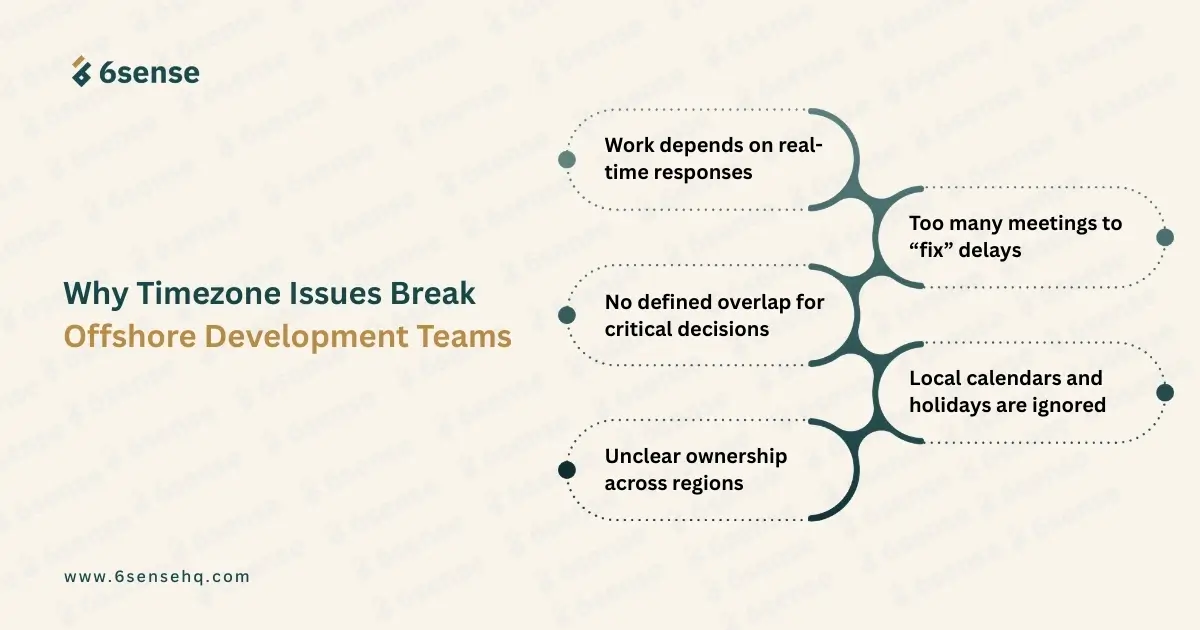
Timezone issues break offshore teams when work depends too much on real-time availability and unclear coordination. When timing is unmanaged, delays compound and progress slows across your projects.
If you’re working with offshore software development teams, these problems usually show up early. They don’t come from lack of effort. They come from how work is structured across different time zones.
Here’s what typically causes the breakdown:
Work depends on real-time responses
When tasks require immediate replies, progress stalls as soon as someone is offline. This creates waiting cycles that quietly stretch project timelines.
No defined overlap for critical decisions
Without planned overlapping work hours, important discussions get delayed. Decisions bounce across days instead of hours.
Unclear ownership across regions
When it’s not clear who moves work forward while others are offline, tasks sit idle, start with what a dedicated development team is. This weakens accountability across the offshore team.
Too many meetings to “fix” delays
Adding meetings feels productive, but it often creates more friction. Meetings scheduled across multiple time zones drain focus and reduce output.
Local calendars and holidays are ignored
When local holidays and working hours aren’t visible, expectations break down. Missed availability turns into frustration on both sides.
Signs Timezone Problems Are Hurting Your Projects
Timezone issues show up long before a project slips or deadlines are missed. If you know what to look for, you can fix the problem before it slows your offshore development.
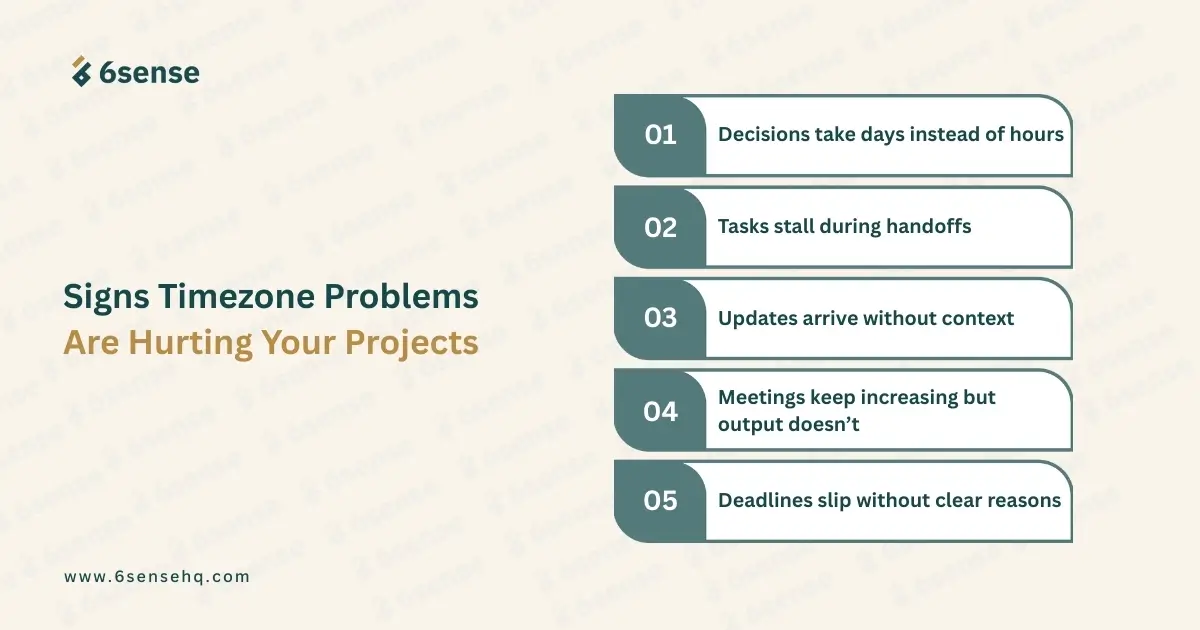
When you’re managing offshore teams, these are the most common signals that time zone challenges are already affecting your work:
Decisions take days instead of hours
When simple questions stretch across multiple days, your team is waiting on availability instead of moving work forward. This quietly drains project momentum.
Tasks stall during handoffs
If work pauses every time one region logs off, your development process lacks continuity. This often points to poor time zone management.
Updates arrive without context
When team members share progress without clarity, it becomes harder for you to make decisions. Misalignment grows when teams are not on the same page.
Meetings keep increasing but output doesn’t
More meetings usually signal a coordination problem. When scheduling meetings becomes the default fix, productivity drops across distributed teams.
Deadlines slip without clear reasons
If timelines move but no one can explain why, time differences are likely causing hidden delays. These issues often go unnoticed until delivery is already impacted.
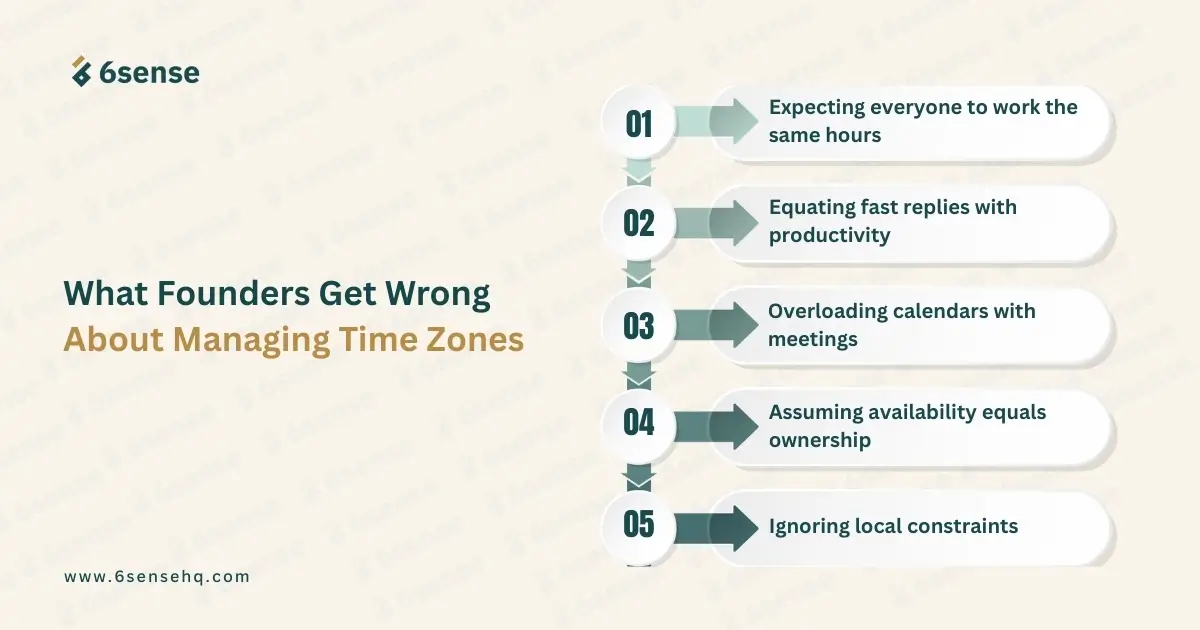
What Founders Get Wrong About Managing Time Zones
Most timezone problems don’t come from geography. They come from assumptions leaders make about availability, speed, and control when teams work across regions.
If you’re leading offshore development, these are the common mistakes that quietly slow your projects:
Expecting everyone to work the same hours
Your offshore team does not operate in the same time zone as your local development team. When expectations ignore this, frustration builds and delivery slows.
Equating fast replies with productivity
Quick responses feel reassuring, but they don’t always mean progress. Measuring output by responsiveness instead of results creates pressure without improving outcomes.
Overloading calendars with meetings
Scheduling meetings across multiple time zones often hurts focus. Too many calls reduce deep work time and make coordination harder, not easier.
Assuming availability equals ownership
When no one is clearly responsible for moving work forward during off hours, tasks stall. Clear ownership matters more than shared availability.
Ignoring local constraints
Local holidays, working hours, and regional norms affect delivery. When these aren’t planned for, timelines slip without clear explanations.
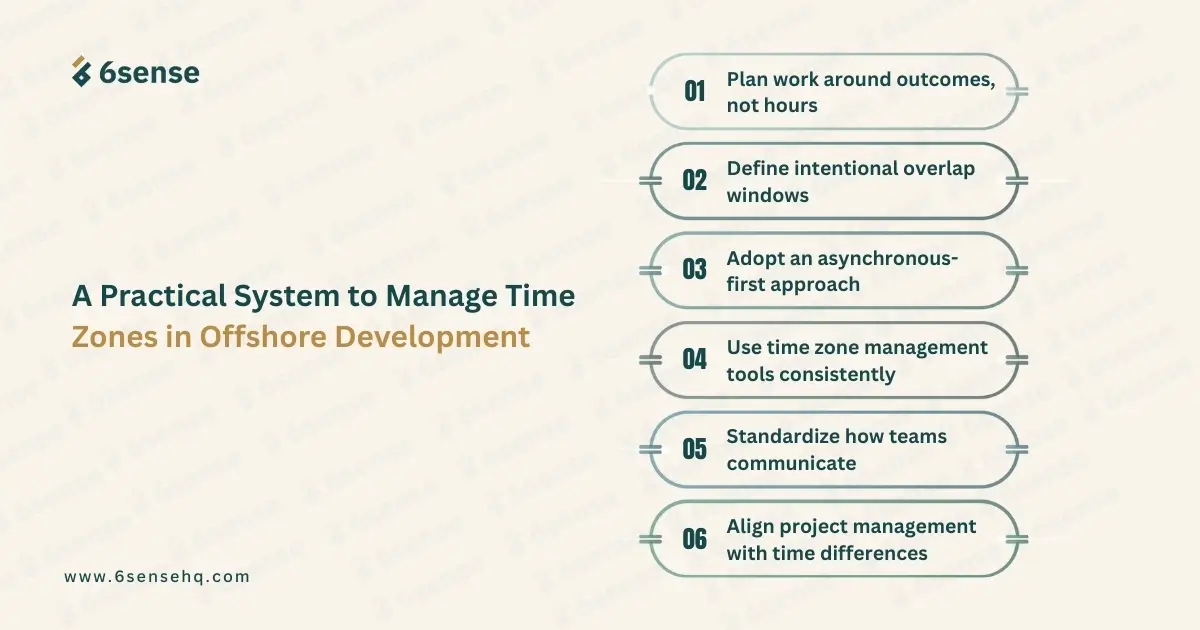
A Practical System to Manage Time Zones in Offshore Development
You can manage time zones effectively when your system is designed for distributed work, not real-time dependency. With the right structure, your offshore development stays predictable and aligned.
If you want your projects to move forward without constant coordination issues, this is the system you should put in place:
Plan work around outcomes, not hours
Focus your team on deliverables instead of overlapping schedules. When success is measured by results, team members work independently without waiting for others to come online.
Define intentional overlap windows
Set a clear two to three hour window for high priority discussions. Use this time for decisions, reviews, and problem solving that truly require real-time communication.
Adopt an asynchronous-first approach
Document tasks, decisions, and updates so work continues even when others are offline. Asynchronous communication keeps everyone on the same page without forcing meetings.
Use time zone management tools consistently
Tools like World Time Buddy and Google Calendar help you visualize working hours and avoid scheduling mistakes. Shared calendars should include local holidays and availability limits.
Standardize how teams communicate
Decide which communication channels are used for urgent issues versus routine updates. Clear communication norms reduce confusion and missed messages.
Align project management with time differences
Use project management tools to track progress and ownership across regions. Clear task visibility helps project managers keep momentum steady.
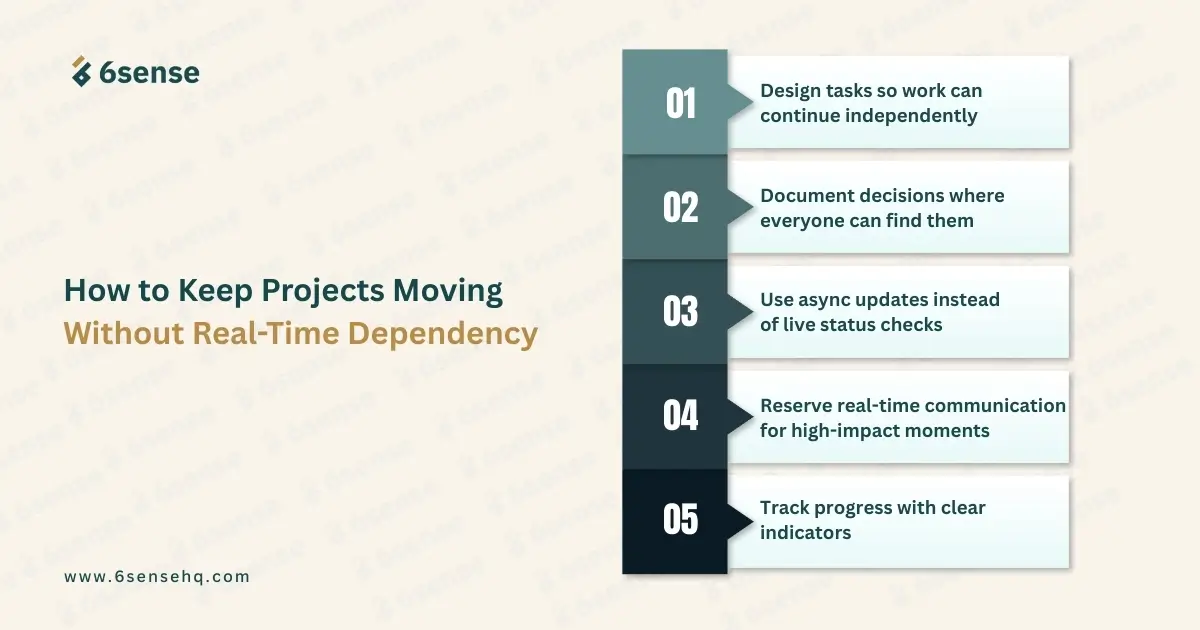
How to Keep Projects Moving Without Real-Time Dependency
Your projects don’t need constant real-time coordination to move forward. With the right async structure, work can progress smoothly even when teams are offline.
If you want to reduce delays without adding pressure, focus on how work flows when people are not online at the same time:
Design tasks so work can continue independently
Break work into clear, self-contained tasks. When requirements and acceptance criteria are well defined, your team can move forward without waiting for clarification.
Document decisions where everyone can find them
Use shared documents to capture decisions, context, and next steps. This prevents repeated questions and keeps your team aligned across different working hours.
Use async updates instead of live status checks
Written updates allow team members to share progress on their own schedule. This keeps information flowing without forcing meetings.
Reserve real-time communication for high-impact moments
Use live calls only when discussion or alignment is critical. This protects focus and keeps real-time communication meaningful.
Track progress with clear indicators
Use key performance indicators to monitor momentum. When progress is visible, you can spot slowdowns early and adjust before timelines slip.
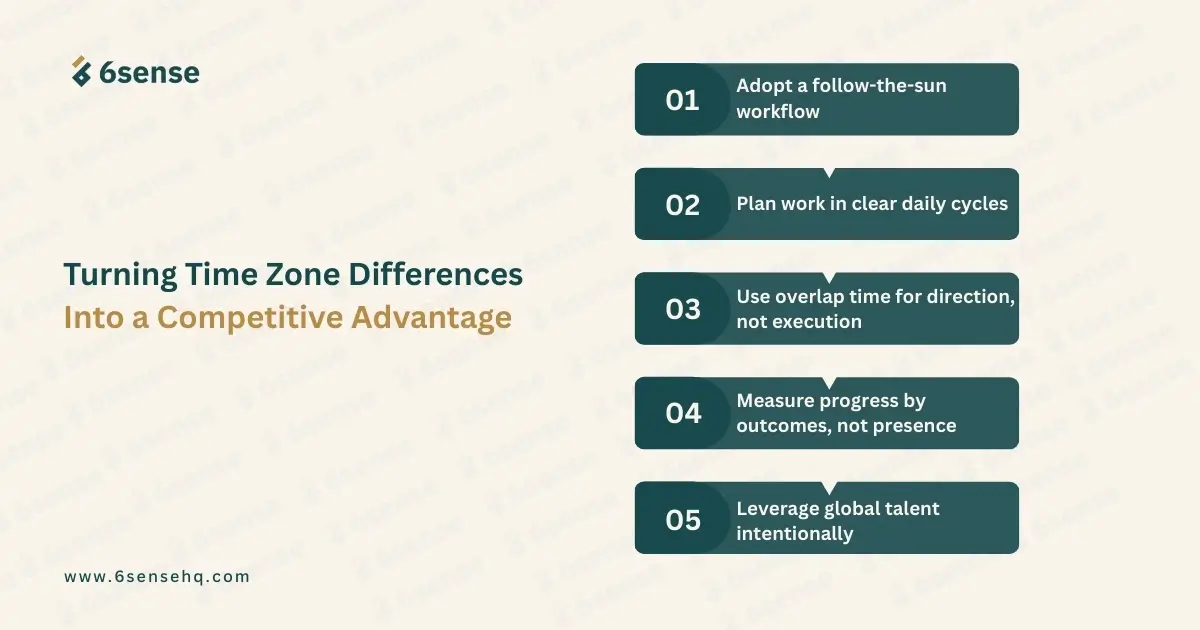
Turning Time Zone Differences Into a Competitive Advantage
Time zone differences don’t have to slow your offshore development. When planned well, they can help your team move work forward almost continuously.
If you want to turn time gaps into momentum, here’s how to use them intentionally:
Adopt a follow-the-sun workflow
Design handoffs so work passes smoothly between regions. When one team signs off, another picks up, helping you shorten project timelines.
Plan work in clear daily cycles
Define what should be completed within each working window. Clear daily goals help your team maintain focus and keep progress steady.
Use overlap time for direction, not execution
Reserve shared hours for planning, sprint alignment, and decisions. Let execution happen independently during local working hours.
Measure progress by outcomes, not presence
Track delivery using key performance indicators instead of hours worked. This keeps your team focused on results and encourages autonomy.
Leverage global talent intentionally
Offshore development gives you access to a global talent pool with diverse perspectives. When aligned well, this diversity improves quality and problem solving.
Final Thoughts: Solving Timezone Issues Starts With Structure
Timezone challenges don’t need more meetings or longer workdays to be solved. They need clear systems that respect how global teams actually work.
When you plan for async execution, define overlap intentionally, and measure progress by outcomes, offshore development becomes predictable and scalable. Your team gains momentum instead of waiting on availability.
If your offshore projects still feel slower than they should, it’s usually a sign the system needs refinement, not the people. Small structural changes can unlock smoother collaboration and stronger delivery.
If you want to review your current setup or tighten how your team operates across time zones, let’s talk. A short strategy call can help you identify gaps and build a workflow that keeps your projects moving forward with confidence.