


How to Transition to Offshore Teams Without Losing Control
Optimize your 2026 offshore strategy with a Mirror Stack, Zero Trust security, and AI to scale execution while saving 40-70%.
9 min read
Loading…
Offshore ROI in 2026: calculate true TCO, payback & NPV, dodge rework traps, and scale faster, grab the checklist now!
Written by: Nasif Sid Created on: 25 Feb 20267 min to read

In 2026, offshore ROI isn’t just about saving on wages. U.S. companies see the best results when they focus on Total Cost of Ownership (TCO), account for speed-to-market advantages, and enforce QA and management practices that prevent costly rework.
Leaders who align offshore teams with business goals and track payback and net present value (NPV) see the clearest returns. With the U.S. talent market tightening, fully loaded employment costs skyrocketing, and the need for specialized skills, offshore teams can be the perfect solution.
However, only if you account for management overhead, transition costs, and quality. In this guide, you’ll get the tools, formulas, benchmarks, and a proven checklist to confidently calculate, compare, and maximize your offshore ROI.
In 2026, talent access will be the biggest hurdle, not capital. With 90% of organizations dealing with IT skills shortages, the need for offshore teams will be more critical than ever. The median U.S. tech salary is around $112,667, and this makes expanding your in-house team hard to justify, especially when you’re racing against the clock.
The conversation around offshore talent has changed. It's not just about cutting costs anymore it’s about creating value. Offshore teams are now helping businesses ship faster, scale quickly, and redirect onshore talent to more strategic, customer-facing tasks. When you combine the right ROI math with disciplined delivery practices, you’ll see the best results, avoiding costly mistakes.
Start by considering fully loaded costs, not just base salary. In the U.S., the real cost of an employee typically runs 1.4x to 2.5x the base salary when you factor in benefits, taxes, tools, and overhead. So, if a tech worker earns $112,667, the total cost of that worker might be $158,000 to $282,000 annually, before bonuses or overtime.
Now, offshore rates are lower, but hidden costs can quickly inflate TCO by 50-100% if you don’t plan for them. These include:
Even the lowest hourly rate can end up being the most expensive if you skip over management and quality assurance.
Here’s the thing: offshore TCO is more than just the vendor’s hourly rate. There are several hidden costs that need to be accounted for:
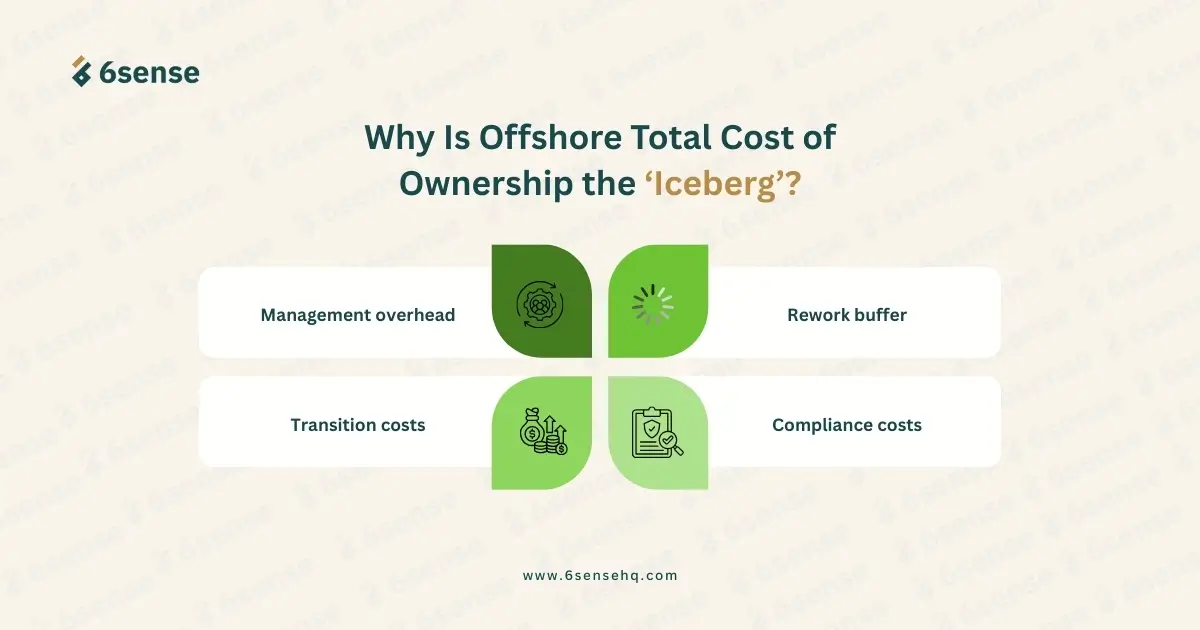
A simple offshore TCO formula looks like this: TCO = (Vendor Rate × Hours) + Management Overhead + Transition Costs + Rework Buffer + Compliance Costs.
Offshore gives you immediate access to AI, data, and platform skills that might be too expensive or unavailable in the U.S. Offshore teams can often be onboarded in 1-2 weeks, while U.S. hiring can take months. This is huge when you’re trying to fill critical skill gaps and avoid delays that can cost you opportunities.
Using follow-the-sun models allows you to pass work back and forth between U.S. and offshore teams in different time zones. This reduces your end-to-end delivery time by 30-50%. When market windows are tight, this speed-to-market advantage can actually make up for the cost difference between offshore and onshore teams.
Another huge advantage of offshore teams is the ability to scale quickly. You could go from 5 to 50 developers in just a few weeks to meet tight deadlines. Even if you don’t need to scale that much, the ability to staff up or down quickly improves your flexibility, increases portfolio throughput, and reduces stranded costs.
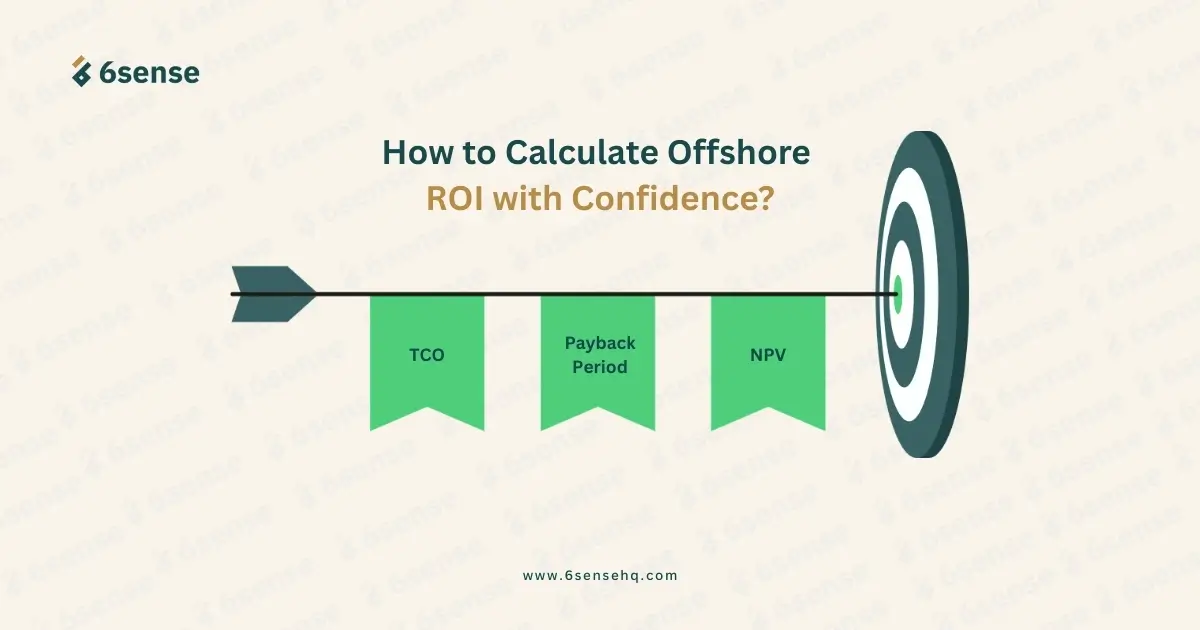
To measure offshore ROI, you need to use three main lenses: TCO, Payback, and NPV.
Let’s break it down with a simple formula:
6sense's data-driven approach has shown 454% ROI over three years, proving how pairing data insights with offshore teams can significantly amplify returns.
Regional wage dynamics are a factor when calculating TCO. For example:
In 6sense HQ’s estimates, using well-designed offshore teams can save up to 52% of payroll, even when factoring in regional wage inflation.
Let’s go over the key financial metrics you need to understand when measuring offshore ROI:
| Framework | What It Answers | Primary Inputs |
| TCO | True all-in cost | Vendor Rate × Hours, 10-20% management overhead, transition, rework buffer |
| Payback | How quickly you recover cash | Transition costs, monthly net savings |
| NPV | Does it create value over time | Net savings by month, discount rate, transition costs |
While cost is important, the real value offshore teams bring comes from:
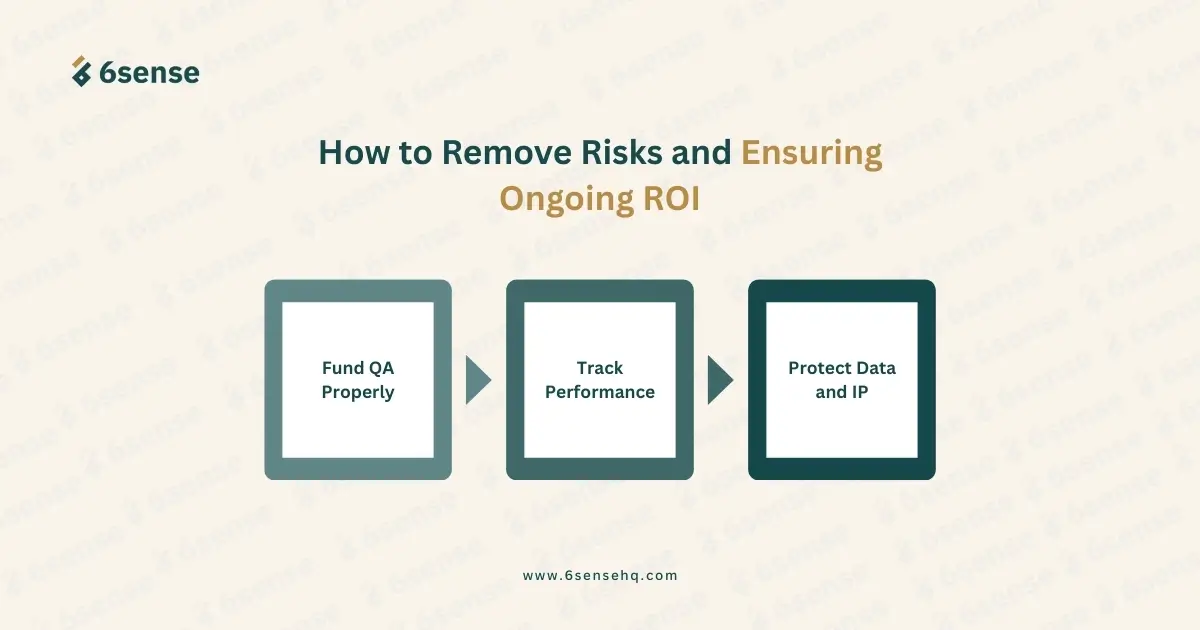
To make sure you’re getting the most out of your offshore engagement, you need to:
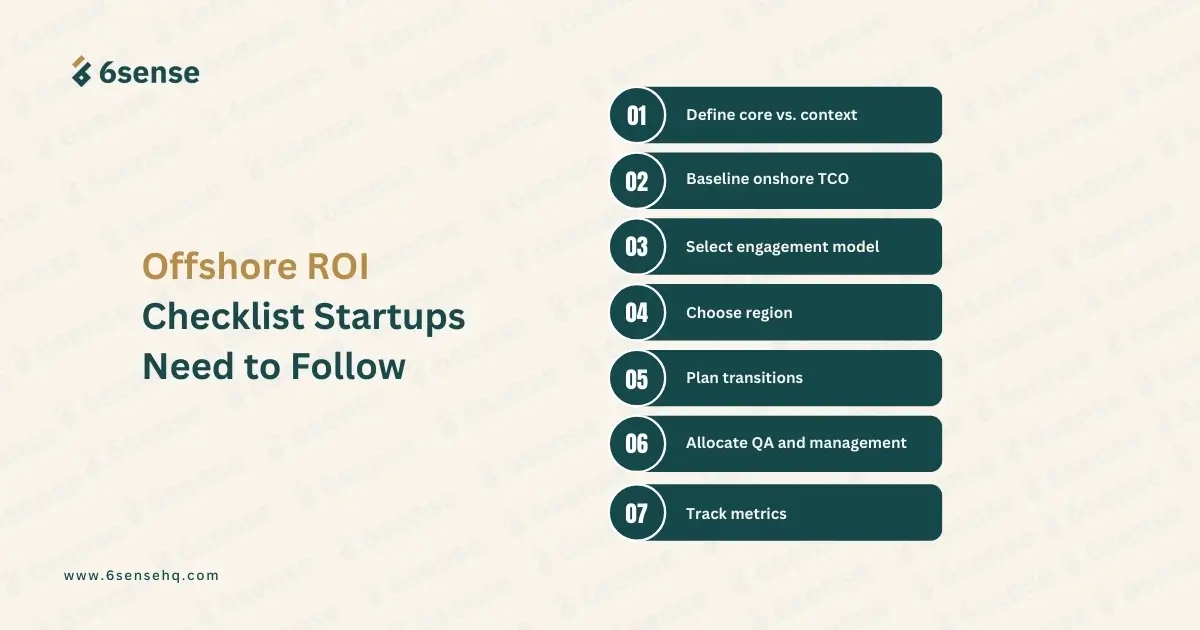
Here’s a simple checklist to make sure you start off on the right foot:
6sense offers product-trained offshore engineering teams that integrate seamlessly with your culture and processes. We’ll help you create a tailored plan that reduces risk while maximizing ROI.
Maximizing offshore ROI in 2026 is about more than saving costs it’s about creating value. U.S. teams that track TCO, invest in QA, and use tools like payback and NPV will see the clearest returns. Key drivers like access to talent and speed-to-market are what really make offshore teams valuable.
If you want to scale without scaling your costs, 6sense can help. We provide offshore engineering teams that are product-trained and aligned with your business goals.
Book a demo call today and let’s discuss how we can help you get started!
Optimize your 2026 offshore strategy with a Mirror Stack, Zero Trust security, and AI to scale execution while saving 40-70%.
9 min read

Stop scrolling, start hiring: 15 best offshore dev sites for 2026 with rates, vetting process, and quick picks. Tap in!
14 min read

Top offshore mobile app dev firms for US: prices, trends, and tips to pick the perfect partner. Tap in to compare now!
6 min read