


How to Build Dedicated Development Team in 2025
Learn how to build a dedicated development team, choose the right roles, compare costs, and manage collaboration for faster, scalable product growth.
6 min read
Loading…
When your project demands consistency, skill, and speed, should you trust a freelance developer or build a dedicated team?
Written by: Nasif Sid Created on: 9 Oct 20256 min to read
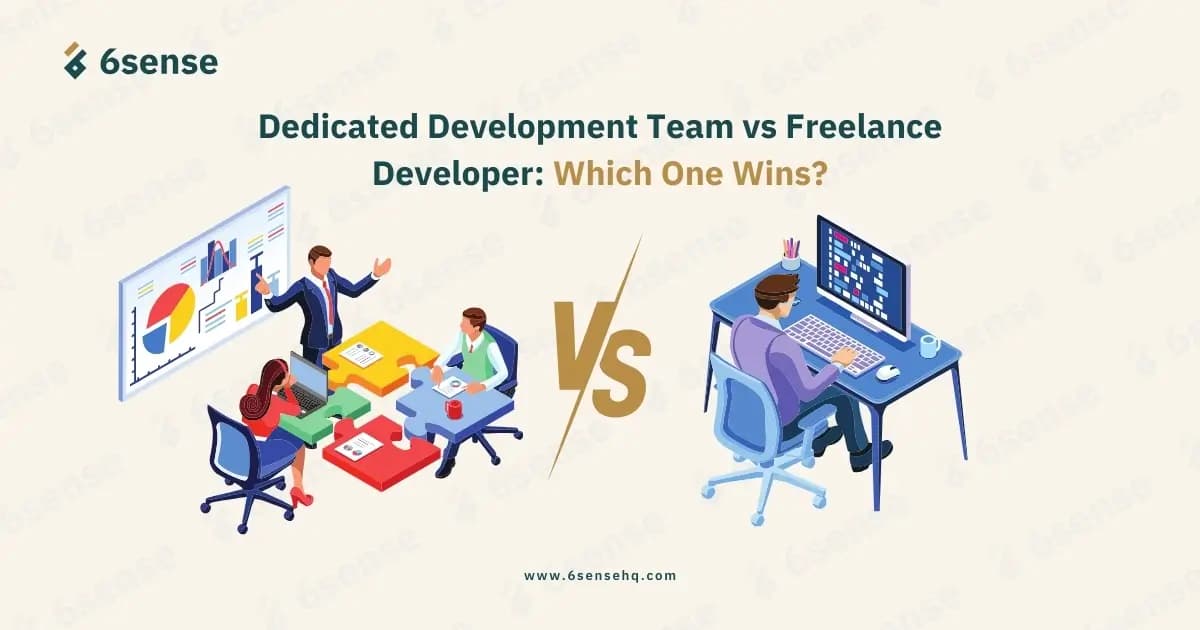
A dedicated development team is the better choice if you're building a long-term, scalable product, while freelance developers work best for quick, one-off tasks.
Moreover, dedicated teams offer consistency, collaboration, and full commitment to your project. Freelancers, on the other hand, are flexible and budget-friendly but may lack reliability or deep involvement. Choosing the wrong model can lead to delays, wasted money, or missed opportunities.
In this blog, we’ll break down the key differences between a dedicated team vs freelance developer, help you understand when to use each, compare costs and risks, and guide you toward the best option for your goals.
A freelancer is a solo expert hired for short-term tasks, working independently and often for multiple clients. A dedicated software development team is a full, structured group focused only on your project, offering long-term support and collaboration.
| Aspect | Freelancers | Dedicated Development Teams |
| Team Structure | Individual professional | Group of developers, designers, QA, PMs |
| Engagement Type | Per task or hourly | Long-term, project-based |
| Work Focus | Multiple clients at once | Fully focused on your project |
| Management | You manage them directly | Managed by a project lead or agency |
| Integration | Works separately | Integrated into your workflows and communication tools |
| Scalability | Limited to one person | Easily scalable with more resources |
| Best For | Small, defined tasks |
If you care about long-term value, a dedicated development team usually wins on cost, quality, and stability, even if it seems more expensive upfront.
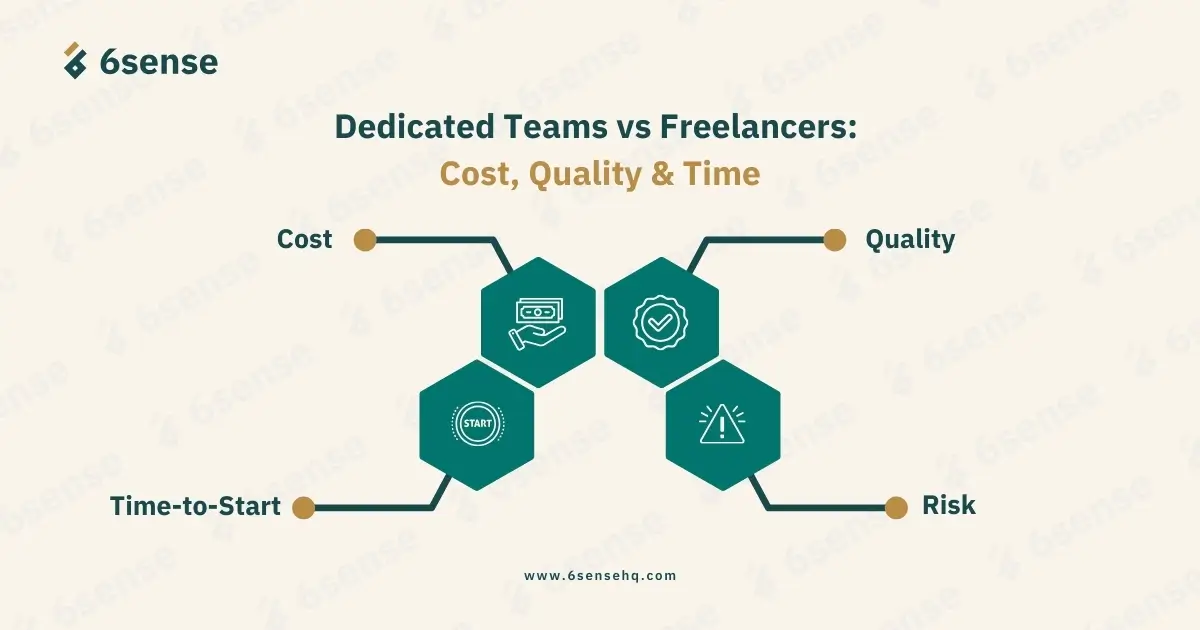
Freelancers usually charge lower hourly or project-based rates. However, managing multiple freelancers, coordinating deliverables, fixing inconsistencies, or handling missed deadlines can quietly increase total costs over time.
This is especially common when working with offshore developers on a task-by-task basis without shared processes or long-term accountability. In contrast, dedicated development teams come with a higher monthly cost, but that investment covers coordination, quality control, and continuity, often resulting in lower overall spend in the long run.
Freelancer quality can be hit or miss. It depends entirely on the individual’s skills and standards. Dedicated teams follow shared processes, do peer reviews, and have QA support. It leads to more consistent, high-quality work, especially on complex or long-term projects.
Freelancers are fast to hire and start, often jumping in within a day or two. Well, dedicated teams may take a bit longer to onboard, but once they’re in, they work faster as a group with proper planning, tools, and communication already in place.
With freelancers, there’s a higher risk of delays, sudden dropouts, or poor handovers. Dedicated teams offer more stability; they’re managed, accountable, and committed to your project. You won’t be left hanging mid-project or scrambling to find replacements.
Choose freelancers when you need quick help for small jobs, not when you're building something big or long-term. They’re great for flexibility, but not for deep collaboration or ongoing support.
You have a clear, one-time task: Freelancers are perfect for jobs like fixing a bug, designing a logo, or building a landing page. If the task is well-defined and short-term, hiring a freelancer is quick and cost-effective.
You need a very specific skill: Need someone who’s great with React Native, blockchain, or a niche CMS? Freelancers often specialize in one area and can jump in fast without much training or setup.
You’re working with a tight budget: Freelancers usually cost less upfront. If you’re a startup or early-stage company with limited funds, a freelancer can help you move forward without major financial commitment.
You want speed and low commitment: If you're testing an idea, MVP, or short project, freelancers let you get started quickly without signing long contracts or building full teams.
You don’t need deep involvement: When the task doesn't need a lot of back-and-forth or collaboration, freelancers can deliver results without taking much of your timeline.
Your project needs teamwork: If your project has designers, software developers, PMs, and multiple moving parts, freelancers may not fit in smoothly. They work solo and aren’t built for cross-functional collaboration.
You need long-term commitment: Freelancers often move on after finishing their part. If your project needs ongoing updates, support, or maintenance, you may end up constantly rehiring or retraining people.
You can’t afford delays: Freelancers sometimes juggle many clients, get sick, or drop off without notice. If your project is time-sensitive, this risk could hurt your launch or reputation.
You don’t have time to manage: You’ll likely need to manage freelancers closely, assigning tasks, tracking progress, and reviewing work. If you want hands-off execution, this can be draining.
Quality and consistency really matter: Different freelancers may use different code styles or tools. This can create problems down the road if you need to scale or maintain the product efficiently.
Go with a dedicated team when your project is big, ongoing, or needs tight coordination. They’re not just workers; they become part of your product journey.
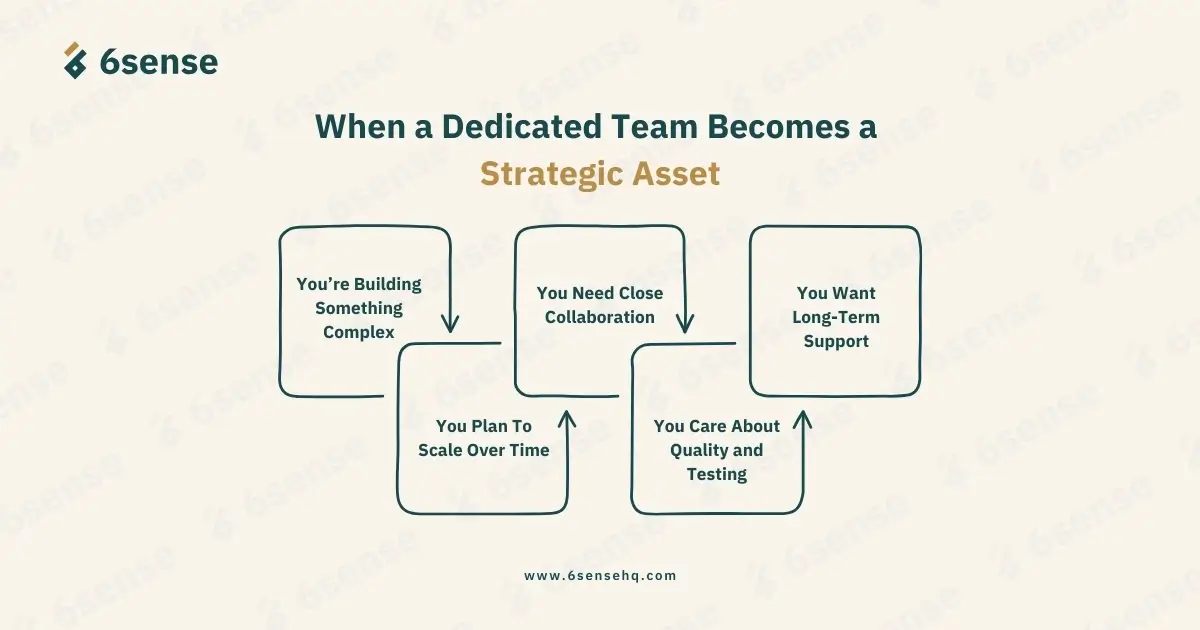
If your project involves multiple features, platforms (like web and mobile), or third-party integrations, a dedicated team is the better choice. They handle complexity more effectively through structure, planning, and a full-time focus on your product.
From MVP to full-scale product, a dedicated team grows with you. You can add dedicated developers, designers, or QA as needed, all without starting from scratch or training new people each time.
Have a product manager, stakeholders, or internal team that needs to stay in the loop? A dedicated team syncs with your workflows, joins your stand-ups, and communicates daily, just like your in-house staff would.
Dedicated teams follow proper QA processes, code reviews, and use shared tools for better results. If your product handles sensitive data or needs to be stable and secure, this kind of structure really pays off.
Unlike freelancers who leave after the job’s done, dedicated teams stick around. They’re there for updates, fixes, and new features, making sure your product keeps running and growing after launch.
If your project is long-term, complex, or requires reliable support, consider a dedicated team. For quick, low-budget, or one-off tasks, freelancers are the better fit. Here's a simple guide to help you choose based on your situation:
| Scenario | Best Choice |
| Launching an MVP on a tight budget | Freelancer |
| Building a feature-rich SaaS platform | Dedicated Team |
| Fixing bugs on an existing app | Freelancer |
| Scaling product post-funding | Dedicated Team |
| Need fast UI redesign or quick prototype | Freelancer |
| Ongoing product development with support | Dedicated Team |
You can also consider a hybrid model, use a dedicated team for core software development and freelancers for short-term or overflow tasks (e.g., QA, UX audits, content updates). Just make sure you have clear communication and project management in place.
Choosing between a dedicated team vs freelance developer depends on more than just your current project; it’s about your long-term goals. Freelancers are great for quick fixes, small jobs, or when you're on a tight budget.
But if you're planning to grow, need full support, or want a team deeply involved in your product, a dedicated team is the better pick. Think about what your business really needs: short-term help or long-term partners. That decision can save you time, money, and headaches down the road.
Need expert help building your product? Talk to 6sense Technologies, your reliable tech growth partner.
Learn how to build a dedicated development team, choose the right roles, compare costs, and manage collaboration for faster, scalable product growth.
6 min read

Racing against the clock to ship your MVP? A dedicated development team gives you immediate access to skilled engineers, predictable output, and a streamlined build process. So you can validate your product faster without getting stuck in hiring cycles or management overhead
6 min read

| Complex, long-term development |
This breakdown of the dedicated development team structure shows exactly who you need, why you need them, and how each role keeps your product moving without friction.
8 min read