


How to Build Dedicated Development Team in 2025
Learn how to build a dedicated development team, choose the right roles, compare costs, and manage collaboration for faster, scalable product growth.
6 min read
Loading…
Find out how the dedicated software development team model boosts project success with flexibility, control, and expert tech talent on demand.
Written by: Nasif Sid Created on: 29 Jul 202512 min to read

When you want to build software fast and with experts, a dedicated software development team model is the best choice. It’s when you hire a full team from outside who work only for your project like your own employees.
Well, you get skilled developers, designers, testers, and managers without worrying about hiring or office costs. This model helps you launch your app quickly, scale your team anytime, and stay focused on your business while they handle the tech work.
In this blog, I’ll walk you through what this model is, who needs it, when it works best, when it doesn’t, and more. Let’s buckle up!
A dedicated software development team model means you hire a full team from an external company to work only on your project, just like your in-house staff, but without the hiring hassle.

In this model, you get developers, designers, testers, business analysts, and a project manager hand-picked for your needs. They focus only on your product, follow your goals, and blend into your workflows easily. Plus, you pay them a monthly fee that covers their salaries and the vendor’s service fee, so costs stay clear and predictable.
This setup is great because it gives you the speed and expertise of outsourcing while keeping the loyalty and understanding of an in-house team.
A dedicated development team works like your own full-time tech team, but instead of hiring each role individually, you get a complete, ready-to-go team from a trusted vendor. To understand how this setup actually works in practice, it helps to look at the dedicated team structure, where roles, responsibilities, and ownership are clearly defined from day one, while you remain in control of the product direction.
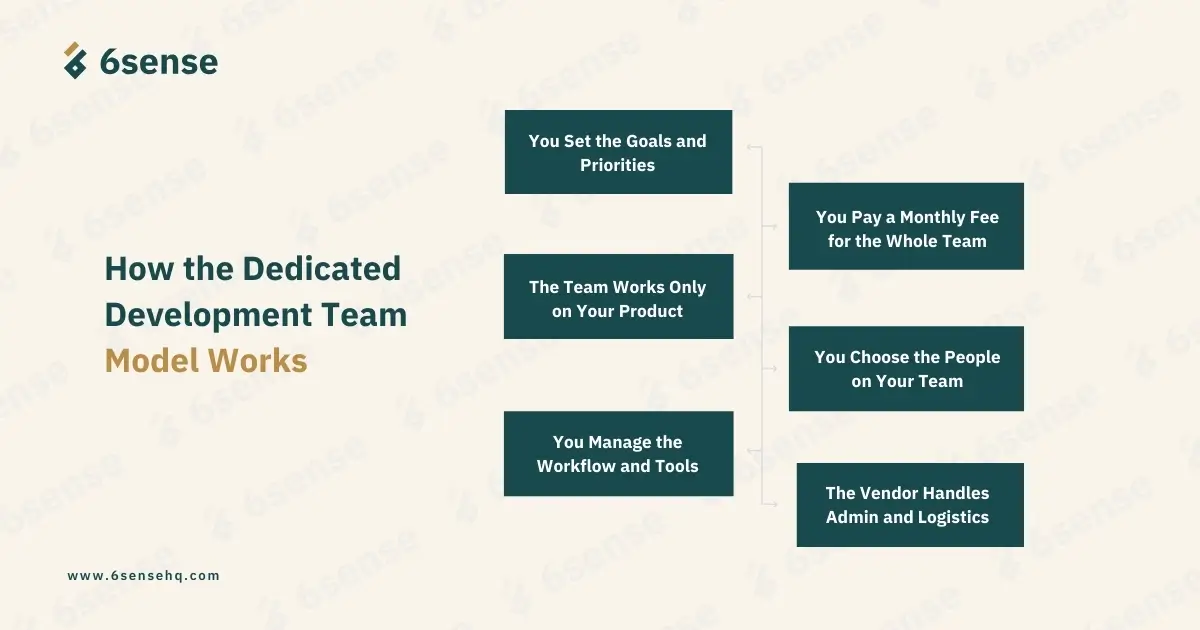
You tell the team what your product needs features, deadlines, and the tech stack. Unlike outsourcing models where vendors manage things behind the scenes, here you’re the one in charge. If you change your mind or want to shift direction, the team adapts with you.
There’s no need to worry about hourly rates or unpredictable billing. You pay a fixed monthly cost that covers all team members, developers, project managers, designers, QA, and more. This gives you budget clarity and room to scale smoothly.
Unlike freelancers or time-and-material contracts, a dedicated team doesn’t jump between clients. They’re all in learning your business, understanding your product deeply, and working long-term to help it grow. This leads to better focus, speed, and quality.
Most vendors let you review resumes, interview candidates, and hand-pick your team. You’re not just buying a service, you’re choosing people who match your company culture, work style, and goals. It’s your team from day one.
You decide how to run the day-to-day, what tools to use (like Jira or Slack), when to meet, and how often to check progress. The team fits into your processes, not the other way around. It’s like managing your own team remotely.
While you focus on building your product, the vendor handles contracts, HR, legal, office space, benefits, and payroll. You skip all the hiring headaches but still get a full-time team ready to go. Easy and stress-free.
If you’re wondering who needs a dedicated development team model, here’s the answer. You need it when you want experts working only for you, without wasting time on hiring, training, or managing many freelancers.
Let me explain each situation clearly:
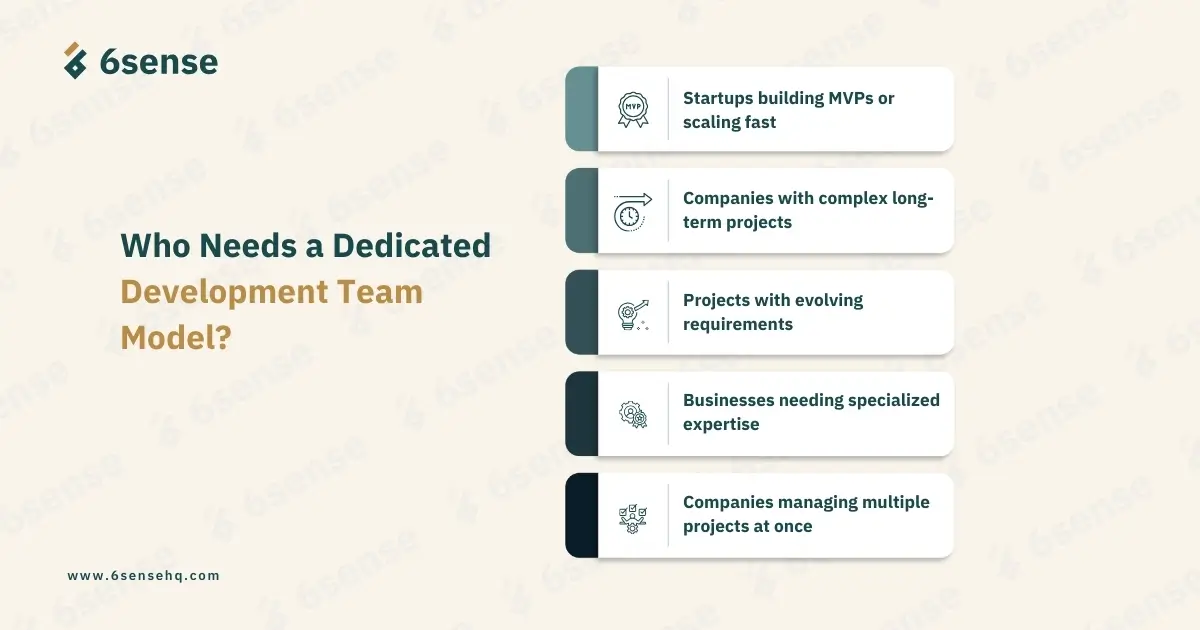
If you’re a startup wanting to launch your MVP quickly or grow fast, a dedicated team helps you build your software product without worrying about hiring, HR, or office costs. You get dedicated developers, designers, and testers ready to start, which saves you time and money and lets you focus on growing your business and getting investors.
If your company is working on big projects like SaaS platforms, cloud solutions, or enterprise tools, you need a stable software team deeply involved in your business. A dedicated team becomes part of your process, understands your goals, and works long-term to build quality products without delays.
When your project requirements keep changing or you’re still finalizing features, a dedicated team gives you flexibility. They adapt to new needs quickly, suggest better solutions, and help you build the product step by step without the stress of renegotiating contracts like with fixed-price freelancers.
If your company lacks skills in AI, blockchain, or mobile apps, hiring a dedicated team gives you access to experts in these fields. You don’t waste time training your staff or hiring one person at a time. You get a full team with the right skills ready to deliver results.
If your in-house team is busy with ongoing work and you want to start new projects, a dedicated team is the solution. They handle extra projects without disturbing your main team, so your company can grow faster and maintain high-quality work in every area.
You will get many advantages of hiring a dedicated development team; they help your business grow faster and smarter.
Let's see each advantage clearly so you understand why this model works so well:
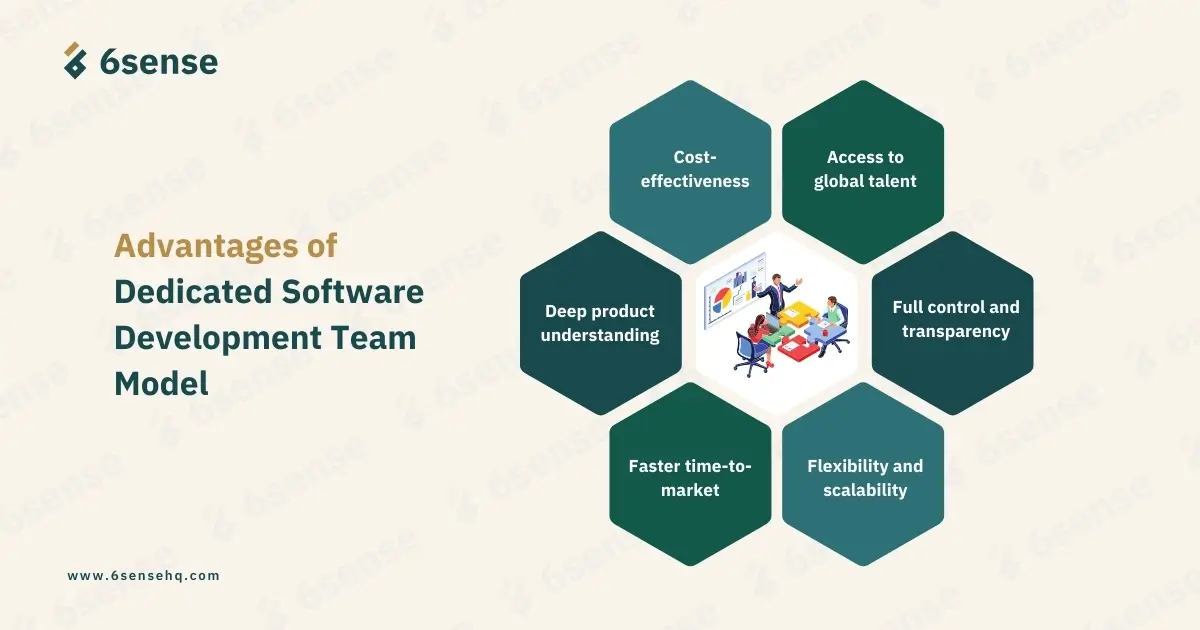
You don’t need to spend time or money on hiring, training, office rent, equipment, or employee benefits. You only pay for the team’s work and skills. It saves you a lot compared to hiring an in-house team. You get experts ready to start immediately, which helps you use your budget wisely and build your product without hidden costs.
With a dedicated team, you can hire talented people from anywhere in the world. You get access to developers, designers, and testers with the exact skills your project needs. You are not limited to your city or country, which means you get better quality work at a reasonable price and find niche expertise easily for your product.
You can manage the team directly or ask the vendor’s project manager to do it for you. You see everything happening in your project through tools like Jira or Trello. This keeps you updated daily, gives you control over tasks and priorities, and makes sure there are no surprises or miscommunications during development.
You can easily add more people to the team when your project grows or reduce the team size if needed. This flexibility saves you from the trouble of hiring or firing employees. The team adjusts based on your project stage so you always have the right number of people working efficiently to meet your goals.
Because the dedicated team works only on your product, they focus better and deliver faster. You can build prototypes, test features, and launch your product quickly. This helps you stay ahead of competitors, reach your customers sooner, and start earning revenue without long delays in development.
When a team works with you long-term, they understand your business goals, development processes, and customer needs deeply. It reduces the time needed for onboarding and explanations.
They build better features and suggest improvements because they know your vision well, leading to a high-quality product that matches your market.
The dedicated software development team model can be great for long-term work, but it’s not always the right fit. If your project is short, simple, or needs tight control, this model may create more issues than benefits.
Here are some key disadvantages you should consider:
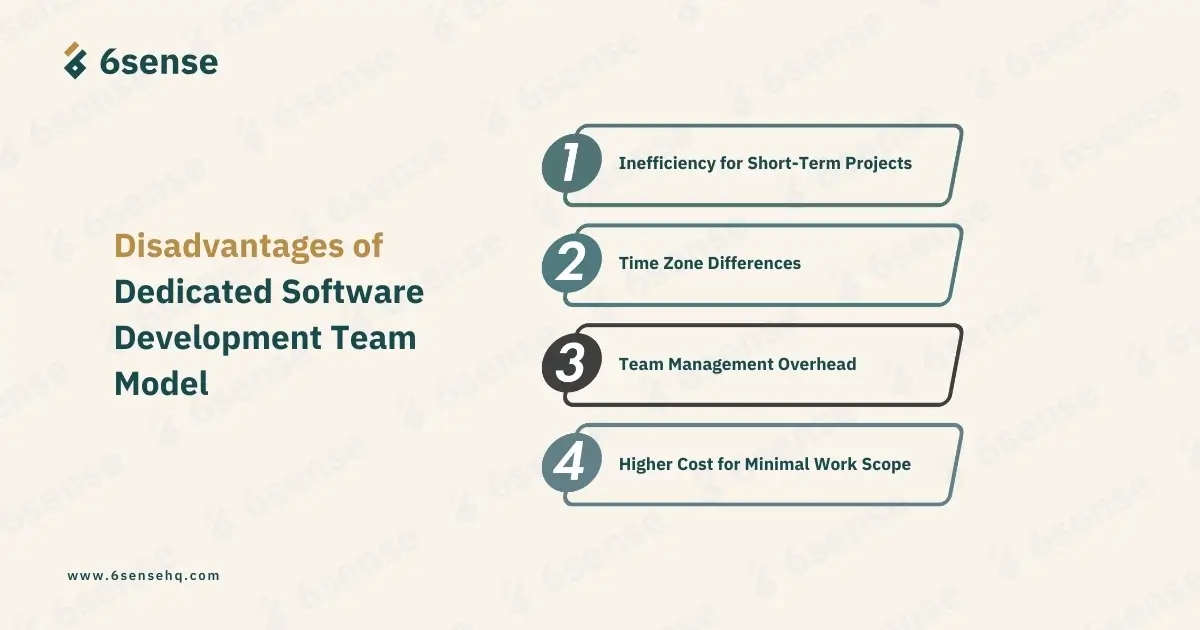
If your project has a clear scope and a fixed deadline, a dedicated team may not be the best choice. You might end up paying for more time and resources than you actually need. In this case, a fixed-price or time-and-material model is usually cheaper and more efficient.
You’ll get better control over costs without committing to long-term contracts.
Working with a team in a different time zone can slow things down if it’s not handled properly. You may face delays in replies, missed meetings, or late project updates. This can affect progress and make communication harder. Unless you set up strong coordination, these gaps can lead to frustration and project delays.
If the vendor doesn’t handle project management actively, you’ll have to do it yourself. This means managing daily tasks, checking on progress, and handling issues. If your internal team is already busy, this can be a big burden. It can take time and focus away from your other important tasks.
Sometimes, you don’t need every team member to work full-time. But with a dedicated team model, you still have to pay for them. This makes the model less cost-effective for smaller or slower projects. If the workload is light or changes often, you could end up spending more money than necessary.
The dedicated team model works best when your project needs long-term focus, ongoing changes, or specific skills that your in-house team doesn’t have. But it’s not always the right fit, especially for short, low-budget, or clearly defined projects.
Here’s a simple comparison:
| When It Works Best | When It Doesn’t Work |
| When your project needs flexible, ongoing changes | When your project has a fixed scope and a short deadline |
| For large, long-term work that needs full team focus | When your budget is tight and full-time roles aren’t needed |
| When you need skills your in-house team doesn’t have | When all project needs are already clear and a fixed-price model is more suitable |
| For startups that need to move fast without hiring a full in-house team | When you only need experts for a short time, and staff augmentation is a better fit |
| When you want the freedom to scale the team or shift roles during the project | When the project doesn’t need team changes or ongoing flexibility |
You should implement the dedicated team model when your project is long-term, needs ongoing changes, or requires skills your in-house team doesn’t have. It’s also great if you want to scale fast without building a full internal team.
Here’s how to do it the right way:
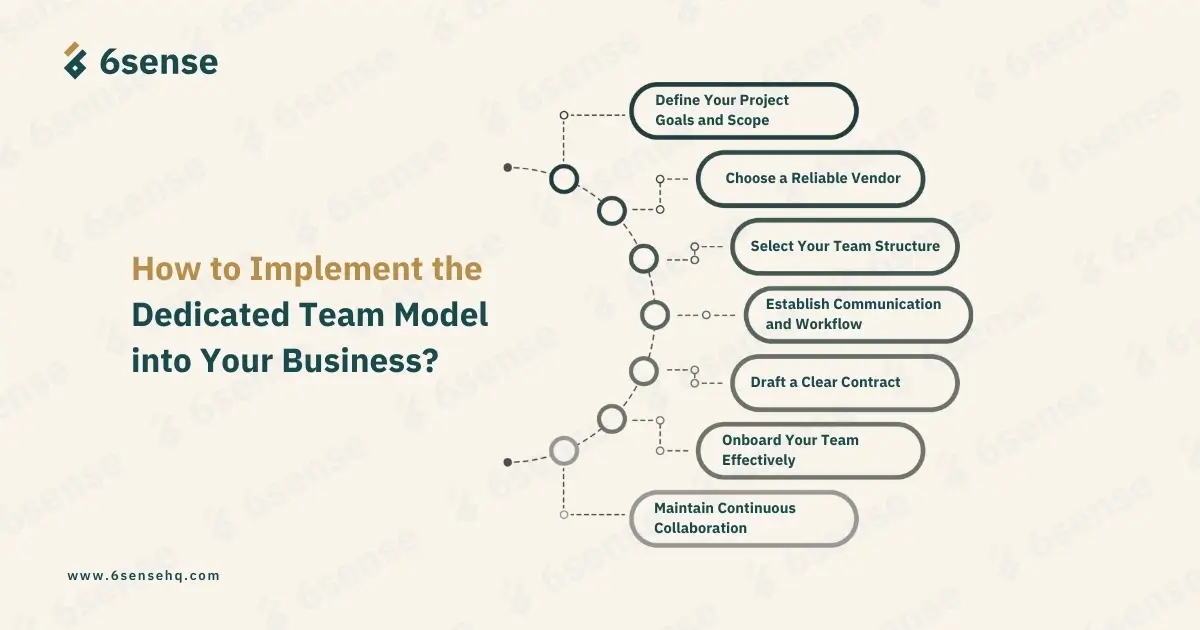
Even if your project will change over time, you still need a clear starting point. You should outline what you're trying to build, the main features, and your target users.
Well, this helps you and the vendor pick the right team members with the right skills. A clear vision also makes it easier to adjust plans as you go, without losing direction.
Choosing the right vendor is key. You should check their past work, client feedback, and tech skills. Make sure their way of working matches your company’s style. A good vendor will be transparent, flexible, and easy to communicate with.
Don’t rush, take time to compare a few options so you can pick a partner who fits both your goals and your culture.
You need to decide what kind of roles your project requires, like developers, a project manager, testers, or DevOps experts. Think about how many people you’ll need in each role. Your vendor can help guide this, but you should also look at your budget and project needs.
Remember, the goal is to build a team that can deliver, without hiring people you won’t use.
Good communication keeps everything running smoothly. Set up simple workflows from day one decide how tasks will be assigned, how progress will be tracked, and when meetings will happen. Daily stand-ups and weekly check-ins can help you catch issues early.
Make sure the team knows how to give feedback and who to talk to when something’s unclear.
A solid contract protects both sides. You should clearly define how the pricing works, what the deadlines are, and what each team member is responsible for. Don’t forget to include IP protection and confidentiality terms.
Moreover, the more specific the agreement is, the fewer problems you'll face later. It also builds trust between you and the vendor.
Once your team is ready, help them understand your business and product. Give them background info, introduce key people, and explain how your company works. This helps the team connect with your vision and speeds up their productivity.
The more context they have, the better they’ll perform and make decisions that align with your goals.
Don’t treat the dedicated team like outsiders. You should keep them involved, share updates, and include them in team discussions. Make them feel like part of your company.
Therefore, this builds trust, improves motivation, and leads to better results. When the team feels connected to your business, they’re more likely to stay committed and deliver high-quality work.
If you're looking to grow fast and stay ahead of the competition, the dedicated software development team model could be a smart move. It works best for long-term, complex projects that need strong teamwork and technical expertise.
While it’s not the right fit for every situation, it gives you real value when you need flexibility, speed, and trusted results. Just make sure it matches your goals, project size, and budget before moving forward.
Let 6sense HQ help you build your dream tech team fast, reliable, and perfectly tailored to your needs.
Learn how to build a dedicated development team, choose the right roles, compare costs, and manage collaboration for faster, scalable product growth.
6 min read

Racing against the clock to ship your MVP? A dedicated development team gives you immediate access to skilled engineers, predictable output, and a streamlined build process. So you can validate your product faster without getting stuck in hiring cycles or management overhead
6 min read

This breakdown of the dedicated development team structure shows exactly who you need, why you need them, and how each role keeps your product moving without friction.
8 min read