


How to Build Dedicated Development Team in 2025
Learn how to build a dedicated development team, choose the right roles, compare costs, and manage collaboration for faster, scalable product growth.
6 min read
Loading…
Tired of hiring delays? The advantages of hiring dedicated development team include instant access to expert talent and reduced overhead.
Written by: Nasif Sid Created on: 13 Aug 20258 min to read

When you need to build fast, stay flexible, and keep costs low, hiring a dedicated development team is your most brilliant move. It gives you instant access to expert talent, faster delivery, and full control without the hassle of full-time hiring.
I’ve seen how this model helps businesses like yours focus on what really matters; growth and innovation. You get a full team that works just like your in-house crew, but they’re already trained, ready, and aligned with your goals from day one.
In this blog, I’ll walk you through everything you need to know the real advantages of hiring a dedicated development team, why it matters, how to pick the right one, and what to remember before you start.
By the end, you’ll know if it’s the right fit for your next big move. Let’s start!
Hiring the right dedicated team gives you faster delivery, access to expert skills, consistent quality, and full control, without the delays or overhead of building an in-house team. It’s how you stay ahead without stretching your resources thin.
You get a team that understands your product, works in your time zone, and fits right into your tools and communication flow. They bring long-term consistency to your codebase, align with your goals, and help you scale smoothly, even under pressure.
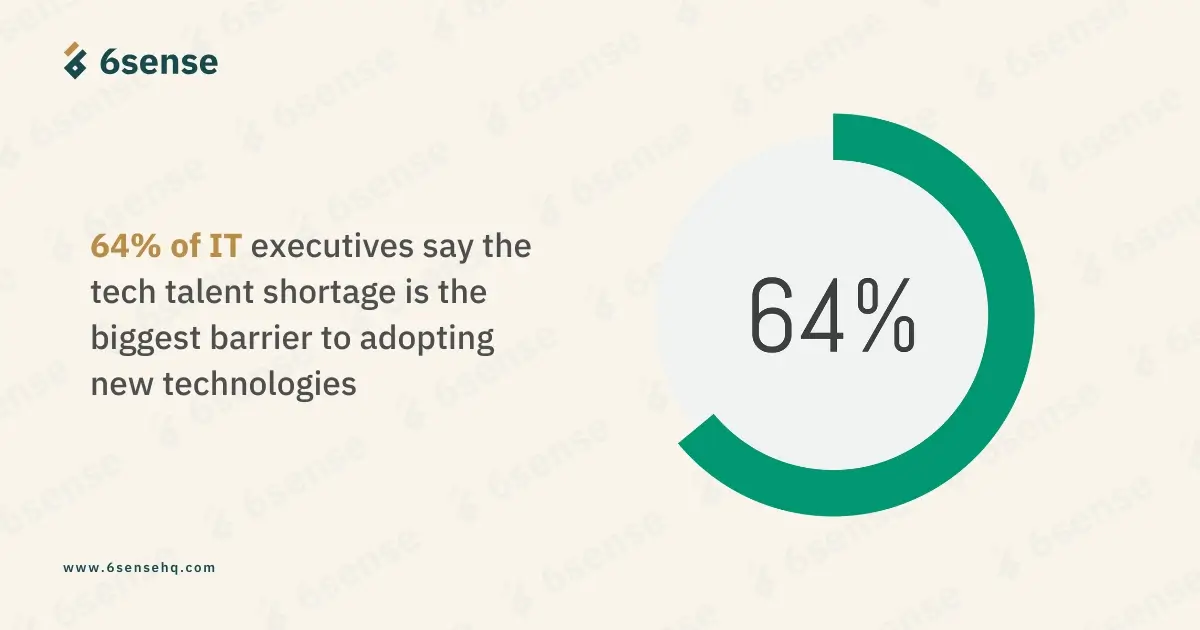
Here’s a fact: 64% of IT executives say the tech talent shortage is the biggest barrier to adopting new technologies (Gartner). With a dedicated team, you skip that bottleneck and get:
The right team doesn’t just build your product—they help you scale it.
A dedicated development team is unique because it works only for you, just like your in-house team, but without the hiring hassle. You get complete focus, better communication, and long-term value that typical outsourcing models just can’t match.
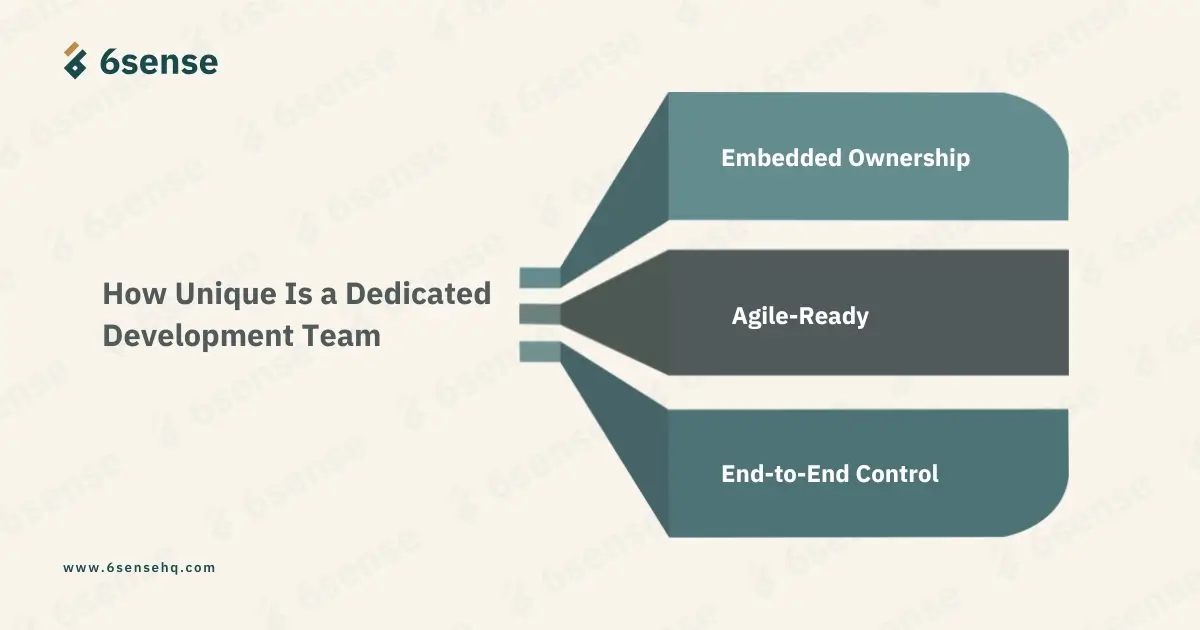
With a dedicated team, you’re not just outsourcing tasks; you’re adding people who feel like part of your company. I’ve seen how they adapt to your vision, your tools, and your values. They don’t just build code; they take ownership like it’s their own product.
You can quickly pivot, test ideas, and launch updates faster. These teams already work with agile methods, daily standups, sprint cycles, and backlog grooming. So when you're ready to move fast, they’re already in sync and ready to adjust instantly.
From planning and design to testing and deployment, everything stays in your hands. You guide the strategy, and your team handles the execution. I’ve worked this way, and it’s smoother, more transparent, and you never feel like you're in the dark.
If you want skilled people, faster delivery, and full control without high costs or delays, then a dedicated development team is the way to go. I’ve seen how this dedicated development team model helps businesses grow smart, fast, and steady.
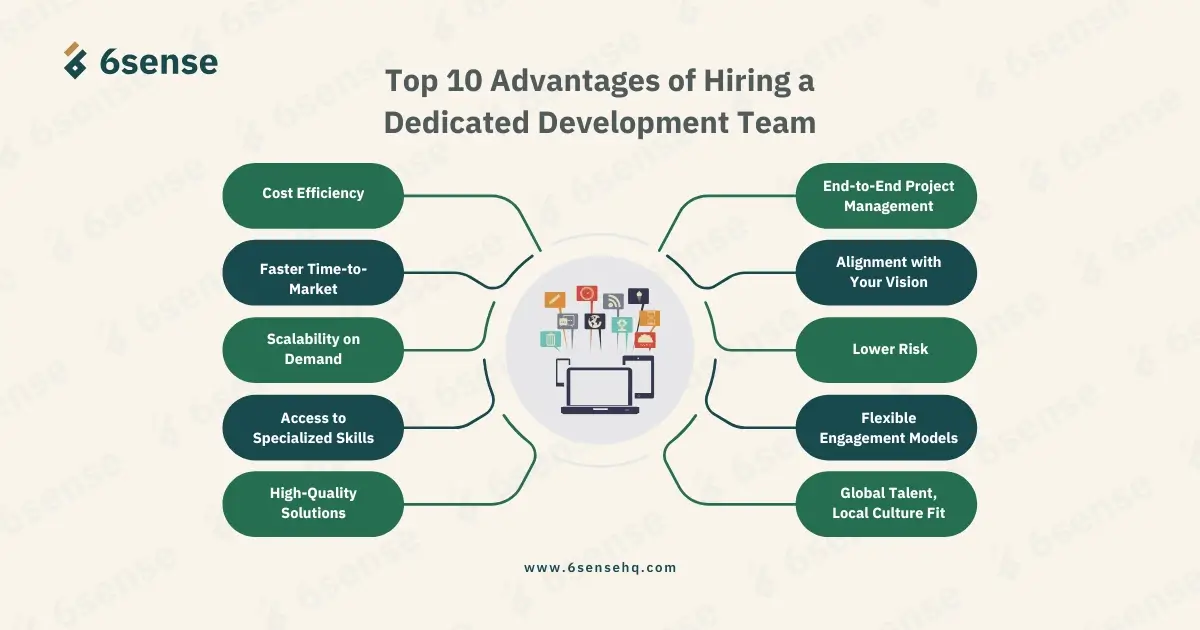
You don’t have to worry about office space, equipment, or full-time employee benefits. When you hire dedicated developers, especially from places like Bangladesh, you get experienced developers at a much lower cost. I’ve worked with teams that saved up to 60% in project budgets, without cutting corners on quality.
You can skip the slow hiring process and start building right away. These teams are already set up, trained, and ready. You tell them what you need, and they start sprinting. This means you can launch MVPs or updates weeks faster than usual, which gives you a real edge in competitive markets.
Projects change; sometimes fast. One week you need a designer, next week two more backend engineers. With a dedicated team, you can scale up or down easily, depending on your needs. I’ve seen startups add new features or pivot quickly just because their team was that flexible.
You don’t need to spend months looking for DevOps, AI, or UI/UX experts. Dedicated teams already have this talent. You gain direct access to individuals who have completed similar projects and possess the expertise to deliver. It’s like having a custom-built tech team, without the wait.
Dedicated teams follow proven coding standards, strong QA processes, and modern tools. That means fewer bugs, better performance, and cleaner code. From what I’ve seen, you get a more stable product that’s easier to maintain, and clients love that kind of reliability.
You won’t need to chase people or micromanage. Dedicated teams usually include project managers or scrum masters who handle day-to-day planning and tracking. They share regular updates, handle blockers, and keep everything on time. That lets you focus on strategy, not task lists.
The longer a team works with you, the better they understand your business and product goals. I’ve seen dedicated teams become so aligned that they suggest improvements even before you ask. It’s more than just delivery; it’s strategic input that shapes your roadmap.
Because you set clear goals and get regular updates, surprises are rare. You stay in control with defined KPIs, clear timelines, and honest reporting. A dedicated team cares about quality and timelines as much as you do, and that reduces delays, bugs, and costly rework.
Not every project needs a full team all the time. You can hire per sprint, part-time, or full-time. This is great for startups or evolving products where needs change often. I’ve helped teams adjust on the fly without breaking budgets or workflows.
Today’s dedicated teams work across time zones and still fit your culture. Most are used to adapting to your hours, tools, and communication style. You can be in New York and work with a team in Bangladesh, and still feel like you're all in the same office. It just works.
Hiring a dedicated team can save you time and money, but only if you choose the right one. I’ve seen great results from well-picked teams and problems from rushed decisions. Here’s what you need to check first.
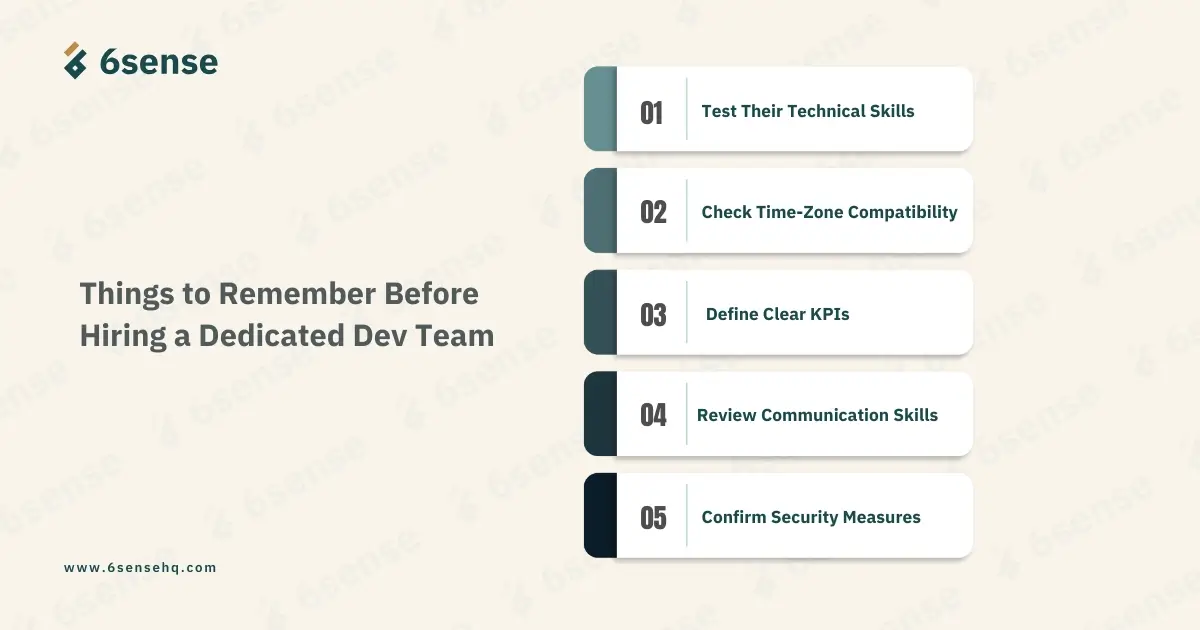
Before you commit, ask for a small pilot task or coding test. This shows how they solve problems, write code, and work under pressure. I always do this; it helps me avoid teams that look good on paper but fall short in real projects.
If you need fast feedback or real-time collaboration, make sure their work hours match yours. I’ve worked with great teams in different time zones, but only when we agreed on daily sync hours. Without that, delays pile up fast.
Don’t go in blind; set expectations from day one. Define metrics like bug rate, sprint velocity, and release dates. When I track these, I spot issues early and stay in control. A good team will help you set these up.
Smooth communication avoids delays and misunderstandings. Make sure the team speaks your language clearly and knows how to use your tools like Slack, Jira, Zoom, whatever you use. I always test this in the first call; it’s that important.
If your project involves private data or intellectual property, ask how they protect it. NDAs, secure servers, access control; get it in writing. I never share sensitive info unless I’m confident they’ve got real security in place.
If your business is growing rapidly or handling complex technical projects, hiring a dedicated development team is a smart move. I’ve seen it work best when you need speed, flexibility, and access to reliable tech talent.
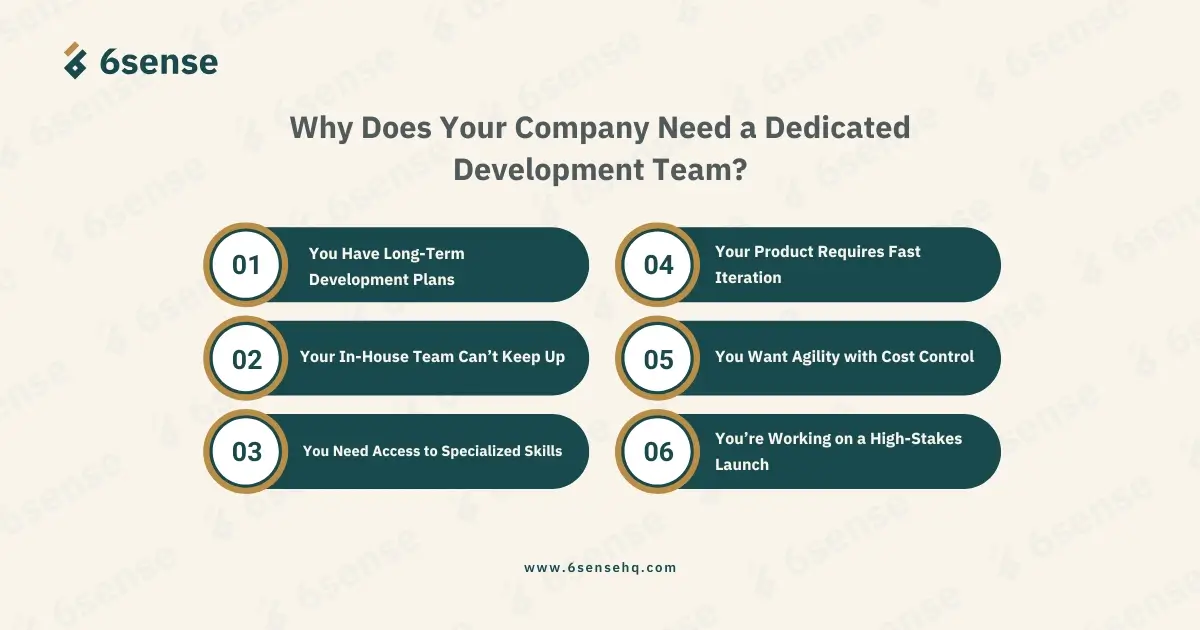
If your project will run for more than 3-6 months, it makes sense to bring in a stable, long-term team. I’ve used dedicated teams to avoid the back-and-forth of switching freelancers or agencies. It keeps your product and codebase consistent.
Your internal developers might be great, but stretched too thin. That’s when a dedicated team fills the gap without burning out your current staff. Companies like 6sense HQ offer fully managed dedicated teams that plug in smoothly and keep your roadmap moving.
Not every project needs a generalist. You might need someone with experience in AI, DevOps, or SaaS architecture. Instead of hiring full-time experts, a dedicated development team gives you what you need. I’ve done this to cut down hiring delays.
In fast-moving markets, speed matters. A dedicated team works in agile sprints, pushing updates quickly and responding to changes fast. Whether you're building an MVP or improving features weekly, I’ve found DDTs are way more responsive than traditional outsourcing.
Hiring full-time staff means long-term costs and HR overhead. With a dedicated team, you get flexibility and budget control. For example, 6sense Technologies allows you to scale teams up or down as needed, so you only pay for what your project really needs.
Launching a fintech app or re-platforming your enterprise software? These aren’t beginner projects. You need a team that can handle pressure, deliver quality, and own delivery timelines. A DDT lets you build with confidence, without second-guessing your team’s ability.
If you're serious about building great digital products, you can’t afford delays, skill gaps, or slow delivery. That’s why I believe the advantages of hiring a dedicated development team go far beyond just saving money. You get speed, focus, expert talent, and the flexibility to scale up or down anytime.
I’ve seen how this model helps companies bring their ideas to life faster and with more confidence. It’s not just a backup plan; it’s a smart way to stay ahead in today’s fast-moving tech world.
Need a reliable team you can count on? Let's talk and build together.
Learn how to build a dedicated development team, choose the right roles, compare costs, and manage collaboration for faster, scalable product growth.
6 min read

Racing against the clock to ship your MVP? A dedicated development team gives you immediate access to skilled engineers, predictable output, and a streamlined build process. So you can validate your product faster without getting stuck in hiring cycles or management overhead
6 min read

This breakdown of the dedicated development team structure shows exactly who you need, why you need them, and how each role keeps your product moving without friction.
8 min read