Build a Zero-Miscommunication Culture In Offshore Team | 6sense HQ
How to Build a Zero-Miscommunication Offshore Team
Stop offshore misfires, get a zero-miscommunication playbook that scales: async updates, clear ownership, faster shipping.
Written by: Nasif Sid Created on: 24 Feb 2026•6 min to read
Building a zero-miscommunication culture across offshore teams isn’t just about better messaging. It’s about clarity, structure, and trust that scales.
If your team is scattered across time zones, communication breakdowns aren't just likely. They’re expected unless you plan around them.
In this guide on how to build a zero miscommunication culture across offshore teams, you’ll learn exactly what causes teams like yours to fall out of sync and how to fix it before it slows you down.
From smarter async updates to trust-driven workflows, this isn’t about micromanaging. It’s about giving your offshore teams the structure to succeed.
After all, effective communication is the cornerstone of any successful team, especially when your team spans cities, countries, or continents. Let’s walk through how to build clarity into your offshore operations and keep it there.
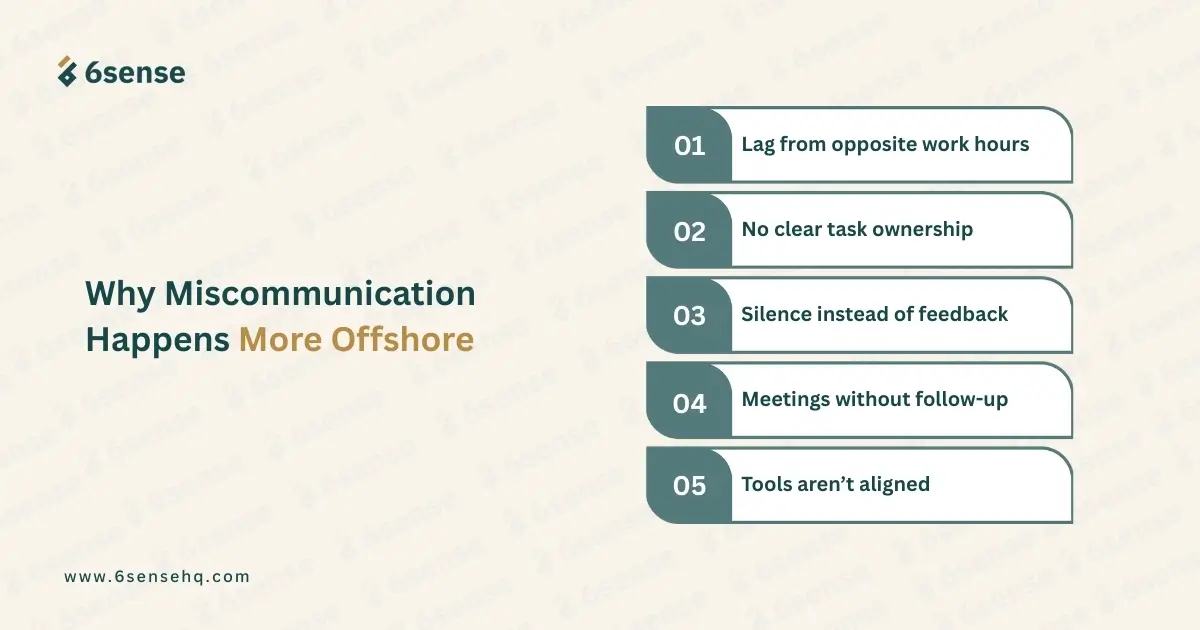
Why Miscommunication Happens More Offshore
Working with offshore teams adds extra layers to communication. Time zone differences, vague direction, and cultural differences make it harder for teams to stay in sync without a plan.
It’s rarely one big failure. Most problems start as small misunderstandings that stack up over time. Here’s where things usually break down:
Lag from opposite work hours
When your day starts as theirs ends, answers can take 24 hours. That delay slows feedback, stalls progress, and piles up blockers.
No clear task ownership
Without defined owners, tasks drift. Offshore team members need clarity on who’s doing what and what “done” really means.
Silence instead of feedback
In some cultures, people won’t push back or ask for help. That silence causes delays unless you create space for honest questions.
Meetings without follow-up
Live calls help, but without notes and next steps, people leave with different takeaways.
Tools aren’t aligned
When different teams use different platforms, updates fall through the cracks.
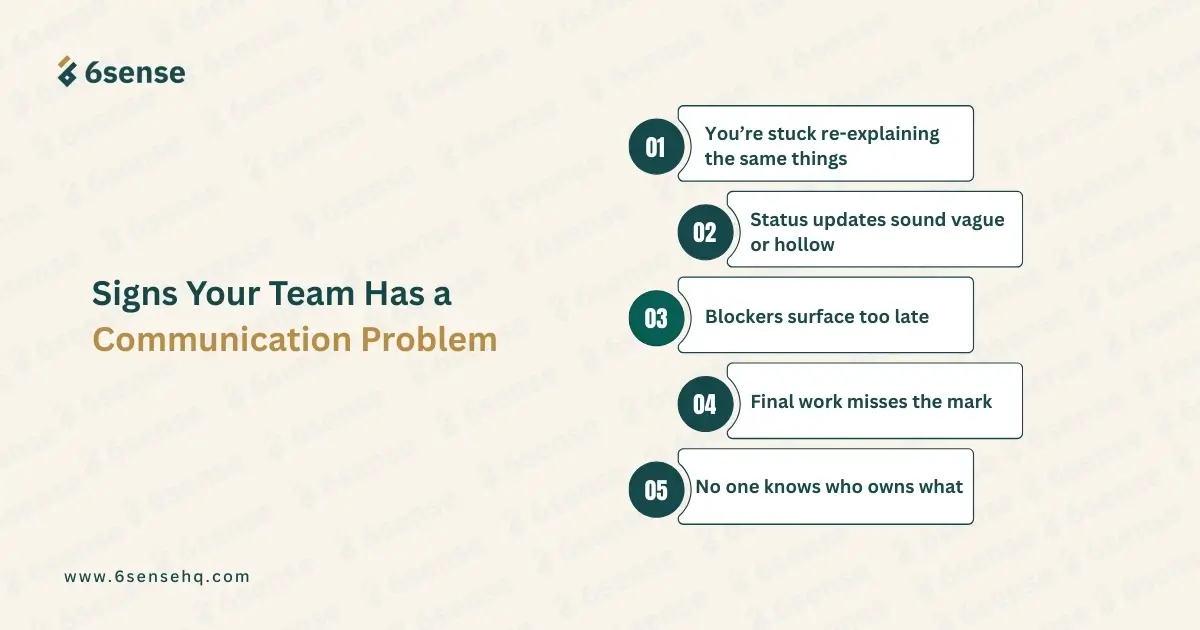
Signs Your Team Has a Communication Problem
You don’t need a full-blown crisis to know something’s off. Most communication issues show up in small, repeating patterns. The earlier you spot them, the easier they are to fix.
Here are the red flags to watch for:
You’re stuck re-explaining the same things
When your team keeps circling back on instructions you’ve already shared, it means the message isn't landing. Not that they aren’t trying.
Status updates sound vague or hollow
If updates include phrases like “in progress” or “nearly done,” you can’t make real decisions. That vagueness hides blockers and slows delivery.
Blockers surface too late
When problems only show up after causing delays, your team likely doesn’t feel confident raising concerns early.
Final work misses the mark
If the output doesn’t match expectations, you’re probably not aligned on project goals. That’s a communication issue, not just a delivery issue.
No one knows who owns what
Tasks without clear owners stall. Accountability keeps remote teams on track even when they're spread across time zones.
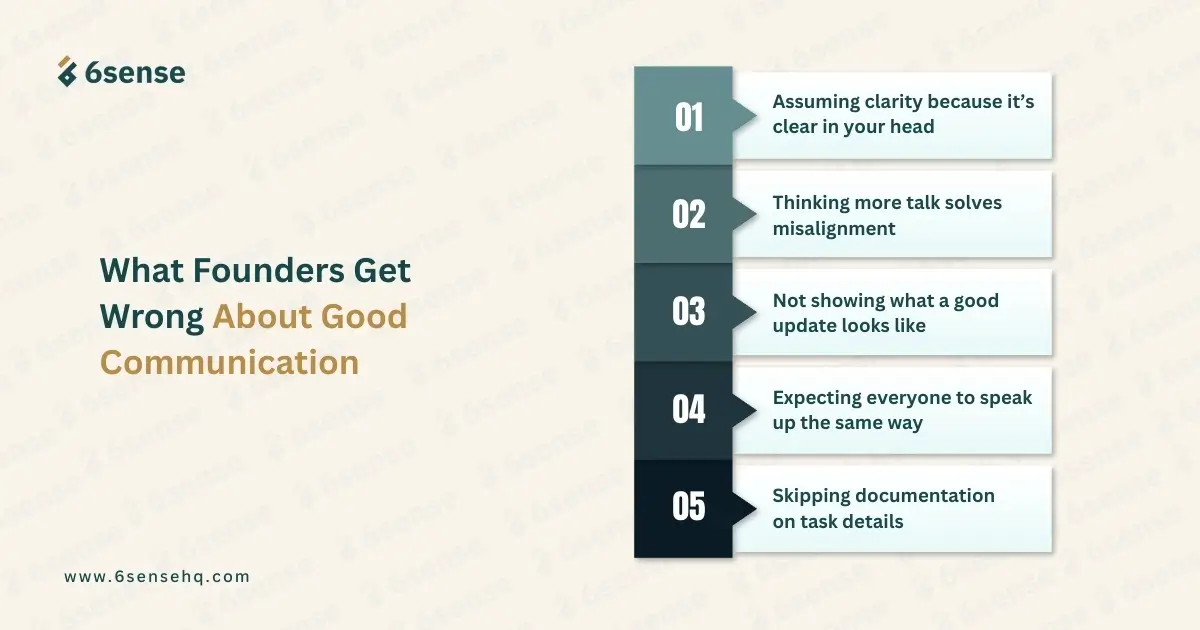
What Founders Get Wrong About Good Communication
Many communication issues start with how direction is shared at the top. When goals and expectations are not framed clearly, teams struggle even if they are capable and engaged.
Here are the common mistakes that create confusion:
Assuming clarity because it’s clear in your head
When the full context lives with you, the team may build something that sounds right but misses the point. Shared understanding takes more than just saying it once.
Thinking more talk solves misalignment
More Slack threads or meetings can overload the team. Without structure, communication styles clash and things still get missed.
Not showing what a good update looks like
If you don’t model the kind of reporting you expect, people guess. That’s how misalignment creeps in and slows down decision-making.
Expecting everyone to speak up the same way
Some team members stay quiet, especially in global setups. If you don’t invite feedback actively, important issues stay buried.
Skipping documentation on task details
When you’re not writing down decisions or clearly assigning tasks, people fill in the blanks. That leaves your project management open to drift.
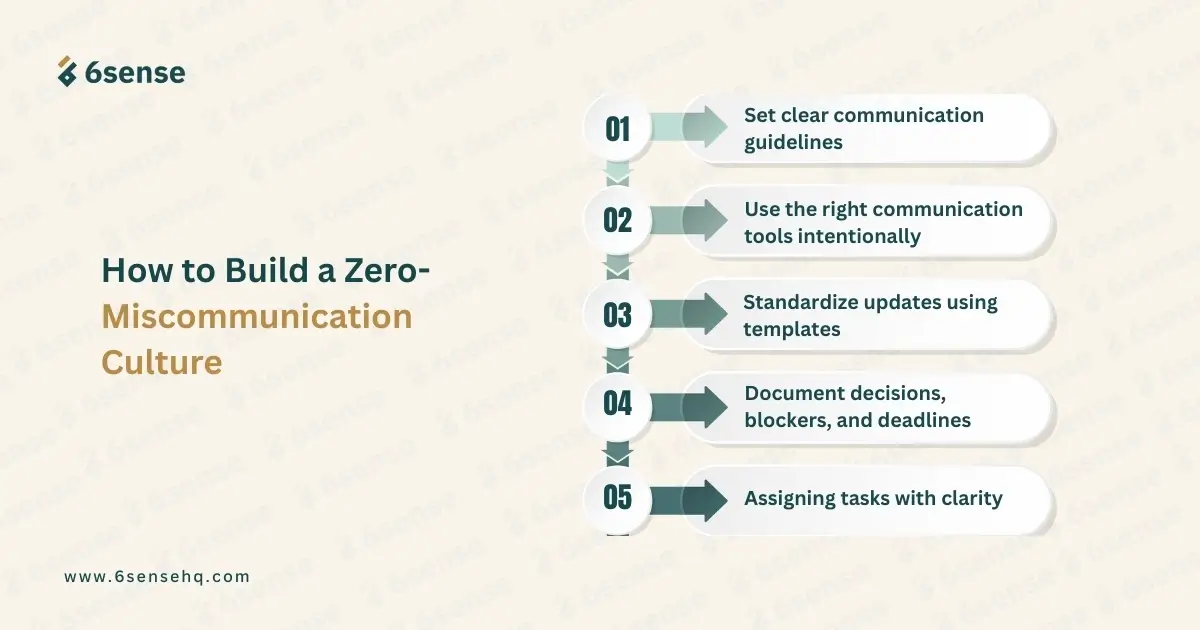
How to Build a Zero-Miscommunication Culture
Offshore collaboration becomes much smoother when your team knows exactly what to communicate, how often, and where it lives. Clarity comes from structure, not from more messages.
Here’s how to build that structure inside your company:
Set clear communication guidelines
Decide what gets shared, where, and how often. For example, quick status updates in Slack, deeper decisions in Notion, and blockers flagged in daily check-ins. Consistency builds trust.
Use the right communication tools intentionally
Stick to a small stack. Choose tools that support both async and real-time updates. Slack or Microsoft Teams for messaging, Zoom for complex syncs, and Notion or Confluence for reference documentation.
Standardize updates using templates
Help your team avoid guesswork. Create update templates that include what's done, what's next, and where help is needed. This removes ambiguity and makes reporting easier.
Document decisions, blockers, and deadlines
You don’t need to write everything down, but critical items should live in shared systems. This improves visibility and keeps your team moving without waiting on reminders.
Assigning tasks with clarity
Use project management tools like Jira, Trello, or ClickUp to assign owners and define “done.” Make sure everyone knows who’s responsible, and what a complete task looks like.
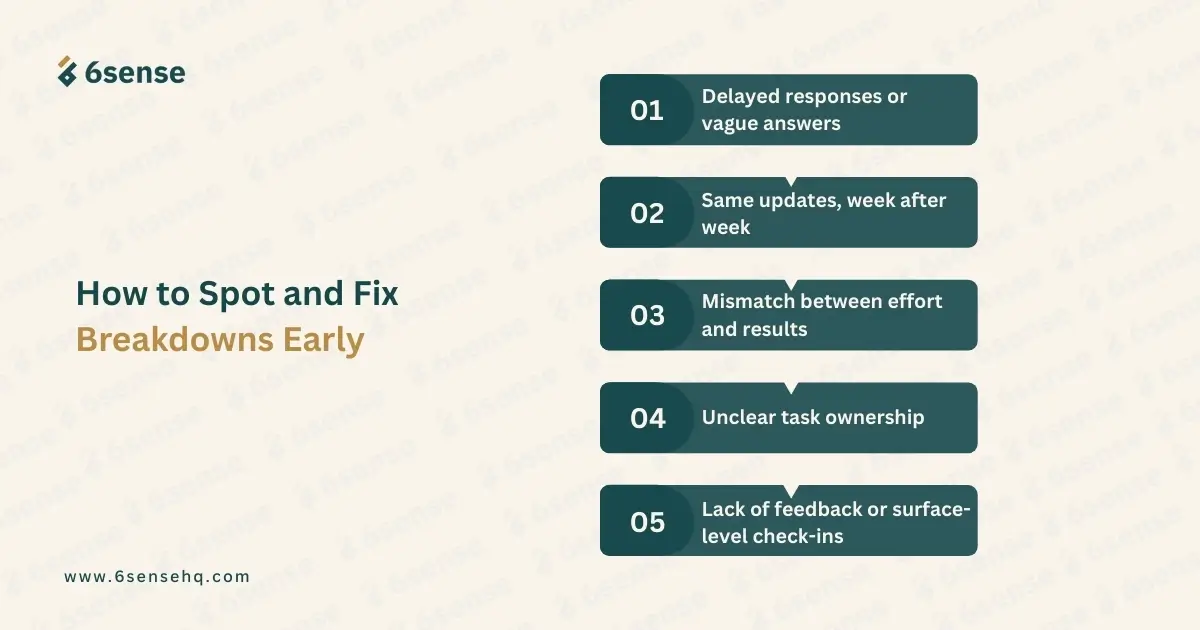
How to Spot and Fix Breakdowns Early
When offshore teams start drifting off course, the signals show up in how they communicate. If you know what to watch for, you can step in before things fall apart.
Here’s how to catch issues before they slow you down:
Delayed responses or vague answers
Silence or confusion often signals discomfort or blockers. If replies slow down, check in before it turns into real friction.
Same updates, week after week
Repetitive reporting usually means progress has stalled. That’s a sign your team needs more direction or support.
Mismatch between effort and results
Use project management tools to track progress and compare expected outcomes to what’s being delivered. This gives you clarity on both delivery and focus.
Unclear task ownership
If multiple team members are unsure who owns a deliverable, accountability is slipping. Define roles and keep ownership visible.
Lack of feedback or surface-level check-ins
If everything feels fine on the surface but output says otherwise, communication is too shallow. Ask real questions. Push for specifics.
Final Thoughts: Zero Miscommunication Starts at the Top
Miscommunication doesn’t have to be the cost of going offshore. Most problems come from unclear systems, not distance or time zones. If your offshore teams aren’t aligned, it’s usually because expectations, tools, or updates aren’t structured well enough.
The good news? You don’t need to overhaul everything. You just need the right communication habits, backed by systems your team actually uses. That’s what creates a zero-miscommunication culture and it starts with leadership.
If you want to review your current setup or see where breakdowns might be forming, we’re happy to help. A short strategy call could save your team weeks of rework and frustration.
Book a free strategy call to review your current setup and build a system that actually works for your team.