


How to Transition to Offshore Teams Without Losing Control
Optimize your 2026 offshore strategy with a Mirror Stack, Zero Trust security, and AI to scale execution while saving 40-70%.
9 min read
Loading…
Offshore deadlines slipping? It’s rarely talent or time zones, learn 9 real causes and a simple system to keep delivery on track.
Written by: Nasif Sid Created on: 20 Feb 20267 min to read

Most offshore development projects miss deadlines because expectations are misaligned from day one. And without the right structure, even talented teams fall behind.
Your company might have outsourced to save costs, build faster, or access a global talent pool. But instead, you're chasing updates, pushing deadlines, and losing time you can’t afford to waste.
The truth? It’s not always the offshore team’s fault. In most cases, the problem is a mix of vague requirements, poor communication flows, and lack of real accountability on both sides.
In this blog, we’ll break down exactly why offshore development projects miss deadlines and more importantly, how to fix it. Whether you’re already working with an offshore partner or planning to start, this guide will help your startup build better, move faster, and finally stay on schedule.
Most offshore development delays aren’t caused by time zones or talent gaps. They come from misalignment, unclear ownership, and poor planning.
Many offshore development projects fall behind, but the usual explanations don’t always reflect what’s actually happening. Some assumptions seem logical but don’t hold up in practice.
Here are a few common myths that lead companies in the wrong direction:
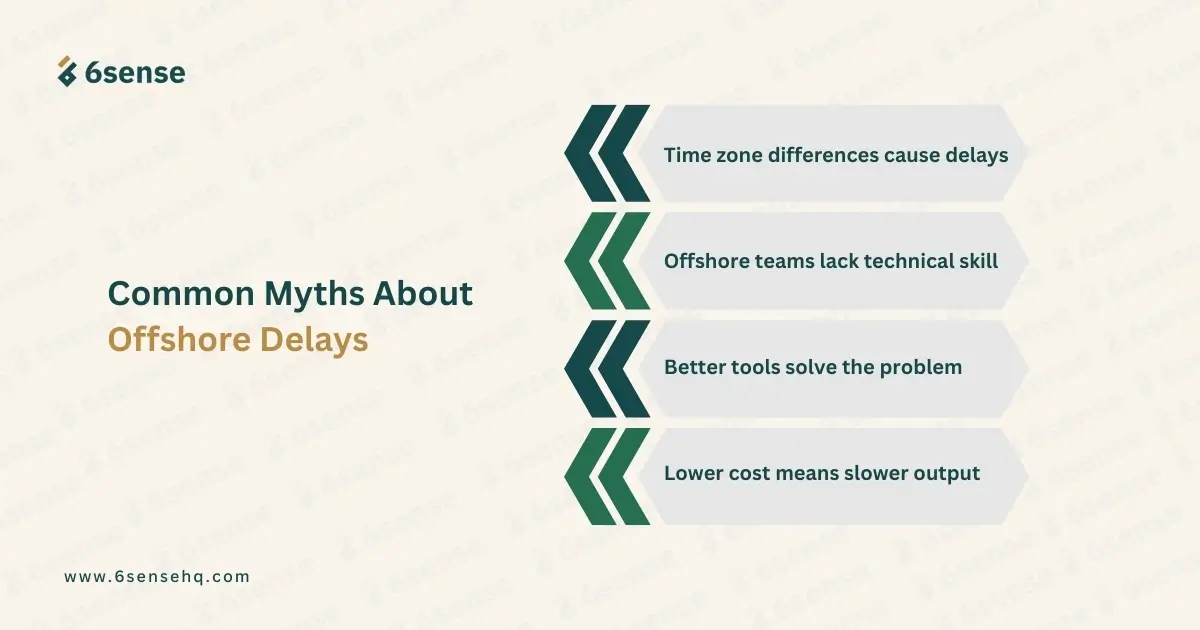
Time zone differences cause delays Time zones can be a challenge, but they’re manageable. When asynchronous workflows are set up properly, they don’t delay delivery.
Offshore teams lack technical skill Many offshore teams are highly capable. Delays often come from misaligned scope, unclear requirements, or shifting priorities on the client side.
Better tools solve the problem Tools like Jira or Slack can improve visibility, but without ownership and clarity, they won’t fix delivery issues.
Lower cost means slower output Cost and speed aren’t directly linked. Efficient offshore teams can move fast if expectations, scope, and process are clearly defined.
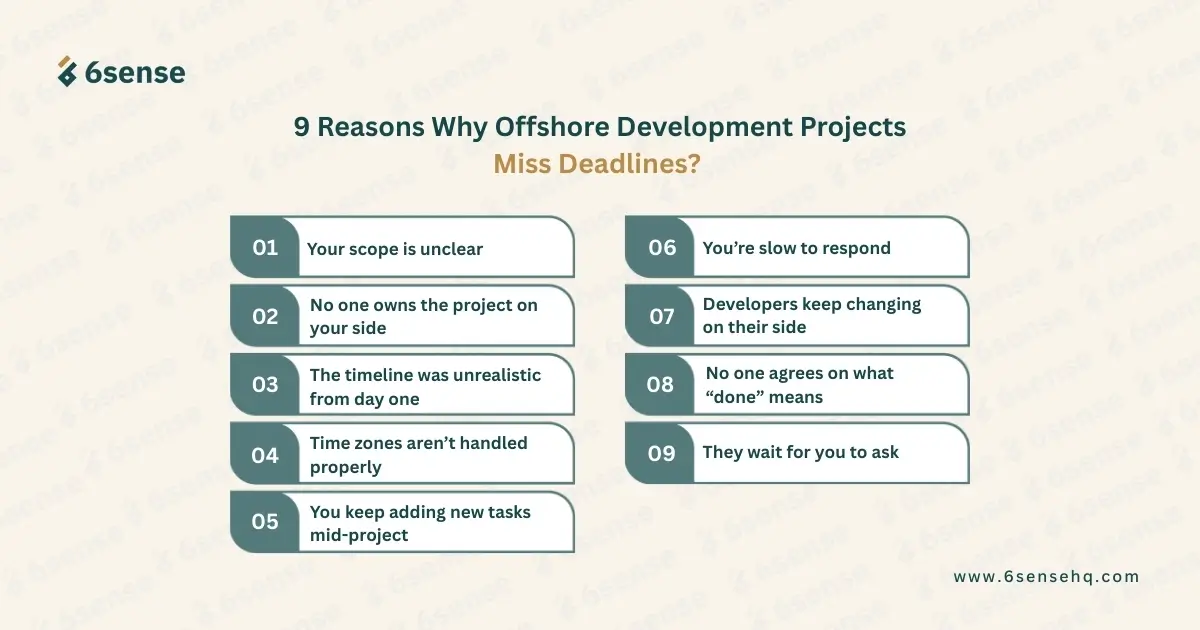
Offshore projects miss deadlines because things aren’t clear from the start. When expectations are not aligned, your team is set up to fail before the work even begins.
Here’s what usually goes wrong:
When your offshore development team misses deadlines, the impact goes far beyond the timeline. Every delay puts pressure on your runway, your reputation, and your momentum. For startups and growing companies, time isn’t just money. It’s momentum. And every delay quietly erodes the foundation you’re building.
Most offshore delays come from things you can control. You don’t need more tools or more check-ins. What you need is a clear system that your team and your offshore partner can follow from day one.
Here are steps you can take to avoid missed deadlines and keep your project moving.
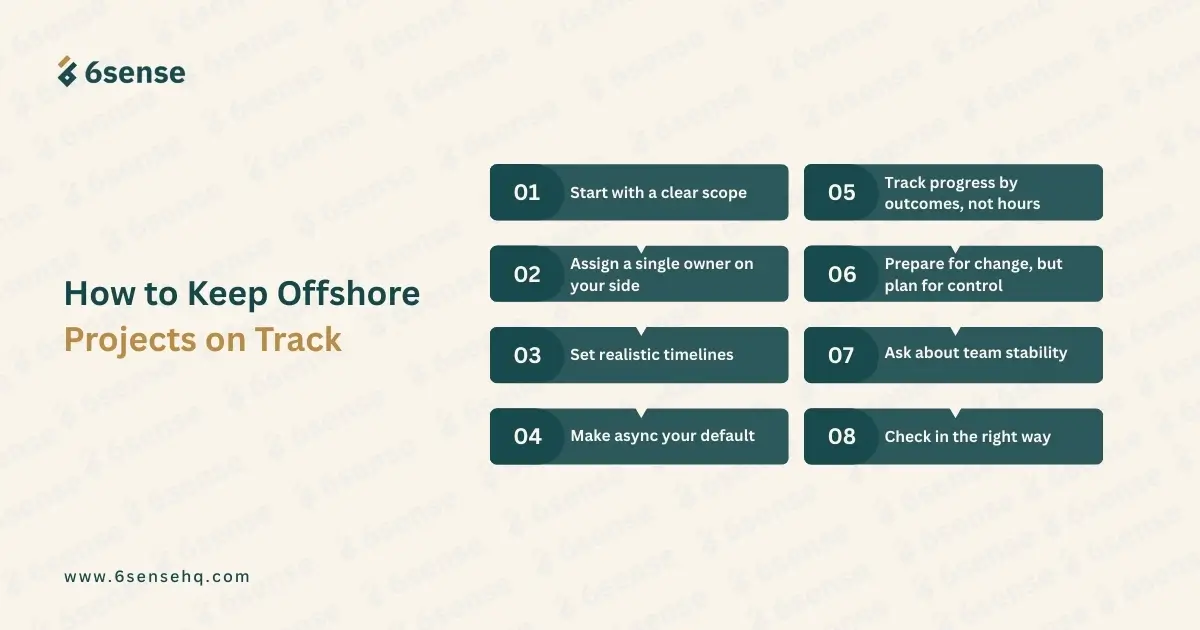
Before you write any code, define what success looks like. Make sure your offshore team understands the problem, not just the features. A strong kickoff saves weeks of back-and-forth later.
Your offshore team needs one person to go to for answers. That person should set priorities, approve changes, and remove blockers. Without this, tasks pile up and deadlines slip.
It’s tempting to push for speed. But aggressive timelines almost always fail. Build in buffer time. Agree on what can be delivered in each sprint and hold both sides accountable.
Don’t rely on real-time calls. Use tools that support async work like Loom for updates and Notion or Google Docs for shared plans. This saves time and makes handoffs smoother.
Focus on what’s getting done, not how long it’s taking. Use tools like Jira or ClickUp to track delivery. Look at output, blockers, and backlog health weekly.
Things will shift. That’s normal. But every change should go through a quick scope and timeline check. If you’re not updating the plan, you’re flying blind.
Before you start, ask how long the devs have been with the company. Ask what happens if someone leaves mid-project. Stability matters more than price when timelines are tight.
Don’t just ask, “How’s it going?” Ask what’s done, what’s blocked, and what needs input. Your check-ins should unblock progress — not just fill the calendar.
If your startup wants to avoid missed deadlines, it starts with choosing the right offshore team. Not all vendors are built the same. You need a partner who delivers consistently, not just one who talks a good game.
Here’s how to approach it in three stages:
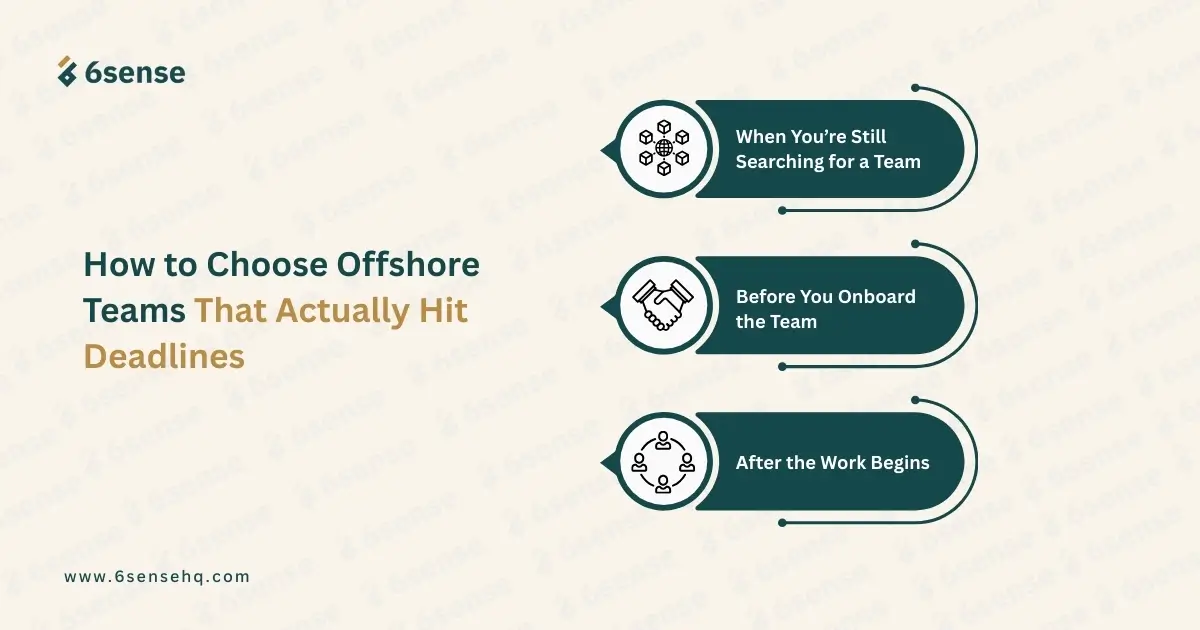
Before you sign anything, test for structure and accountability.
Once you’ve narrowed it down, focus on how they plan and communicate.
Once the project starts, don’t just hand it off and hope.
Missed deadlines aren’t just a delivery issue. They’re often a sign of deeper cracks in how teams are chosen, onboarded, and managed. If your project feels like it’s always behind, the fix isn’t about working harder. It’s about working smarter from the very first step.
Choosing the right offshore team should feel like adding capacity, not adding chaos. And if you’ve already started and things feel off, you don’t need to scrap everything. You just need a better framework.
Now’s a good time to look at how your setup compares to what works. Are your expectations clear? Is accountability in place? Is the process built for your goals?
If not, or if you’re unsure, we can help you reset it.
Optimize your 2026 offshore strategy with a Mirror Stack, Zero Trust security, and AI to scale execution while saving 40-70%.
9 min read

Stop scrolling, start hiring: 15 best offshore dev sites for 2026 with rates, vetting process, and quick picks. Tap in!
14 min read

Offshore ROI in 2026: calculate true TCO, payback & NPV, dodge rework traps, and scale faster, grab the checklist now!
7 min read