


6sense HQ vs DevToDollars: Best MVP Partner in 2026
Compare 6sense HQ and DevToDollars on MVP speed, team models, proof, pricing, and post-launch support to pick the right fit.
15 min read
Loading…
Unsure how much your SaaS MVP may cost? Learn what affects pricing, how to plan your budget, and avoid overspending.
Written by: AKM Ahsan Created on: 6 Mar 20266 min to read
When you’re starting a SaaS product, building everything at once can waste time, money, and effort before you even know if people want it. That’s where a Minimum Viable Product (MVP) comes in.
A SaaS MVP is the simplest working version of your software that solves a key problem and lets real users interact with it. Building an MVP helps you test your idea early, gather real feedback, and make smarter decisions without overspending. Instead of guessing what users want, you see it in action.
In this blog, you’ll learn how to estimate the cost of MVP for Saas, what affects pricing, and real examples so you can budget with confidence.
When you’re planning to build a SaaS MVP in 2026, the cost can vary a lot, and that’s completely normal. For a broader pricing overview, it helps to understand how much MVP development typically costs across different product types, complexity levels, and development approaches. The price depends on how many features you want, how complex those features are, and who you hire to build it.
According to Stella Garber in Forbes, even simple MVPs can start around $30,000-$50,000 once you factor in design, development, and basic infrastructure.
Today’s SaaS MVPs can range from around $25,000 for a basic version to $150,000+ for more advanced builds that include dashboards, payments, and analytics. More complex, enterprise‑ready MVPs with custom architectures and integrations can cost even more.
The main takeaway here is that your budget needs to match the scope and goals of what you want to test and validate before building a full product.
When planning your Startups MVP Development cost, some specific features and choices make a big difference in cost, especially early decisions about what goes into the product and what stays out.
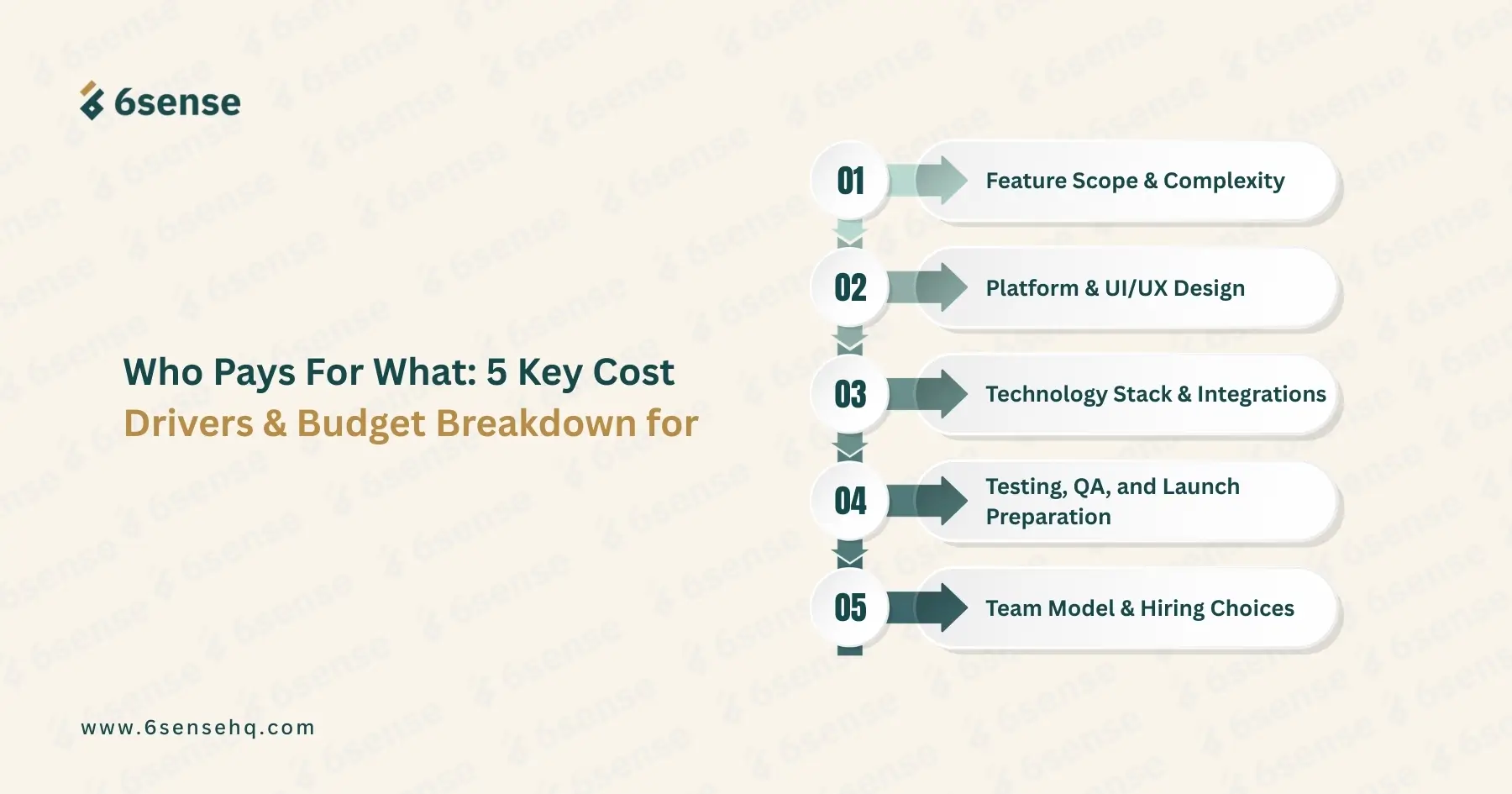
The single biggest cost driver is what you decide to build. Each extra feature, like advanced dashboards, complex user roles, or custom integrations, adds more development time and testing. To create a more accurate estimate, examine how different feature types influence MVP development costs, including the additional design, engineering, integration, and QA work each feature requires. Simple core workflows cost less, while advanced modules push the price up fast. Early over‑planning can inflate costs without adding validation value.
Design isn’t just looks; it dictates how complex your product feels and works. Detailed UX flows, polished UI, animations, and responsive layouts take more hours to build and refine. Complex design work ensures better user experience, but it also stretches timelines and developer effort, increasing the overall budget.
Your tech choices matter. Using custom code stacks, advanced APIs, or third‑party services (like payments, analytics, security tools) adds backend complexity. Integrations with external systems require careful planning and testing, which increases development time and cost compared to simpler or no‑code/low‑code solutions.
MVP Testing isn’t optional. Quality assurance, bug fixes, and launch validation take real hours. Poor QA leads to post‑launch fixes that cost even more. A thorough testing phase ensures reliability and reduces expensive rework, but you must plan for it in your budget.
Who builds your MVP influences price heavily. Hiring an in‑house team usually costs more due to salaries and overhead, while freelancers and agencies vary by region and expertise. Your contract structure also matters, so founders should compare fixed-price and hourly MVP development models based on scope certainty, flexibility, and the likelihood of requirements changing during development.
For lean MVP for startups, many founders choose remote devs or hybrid teams to optimize cost without sacrificing quality.
Estimating your affordable SaaS MVP development budget isn’t just guessing a number; it’s about planning what you really need to build and validate that plan with real business thinking.
In a Reddit discussion among SaaS founders, many founders stress that budgeting should start with clarity, simple setup, and early validation, not feature lists and sunk costs. For example, one seasoned startup founder said, “Build what users will pay for, not what you think looks cool”, because the market always tells you the truth early.
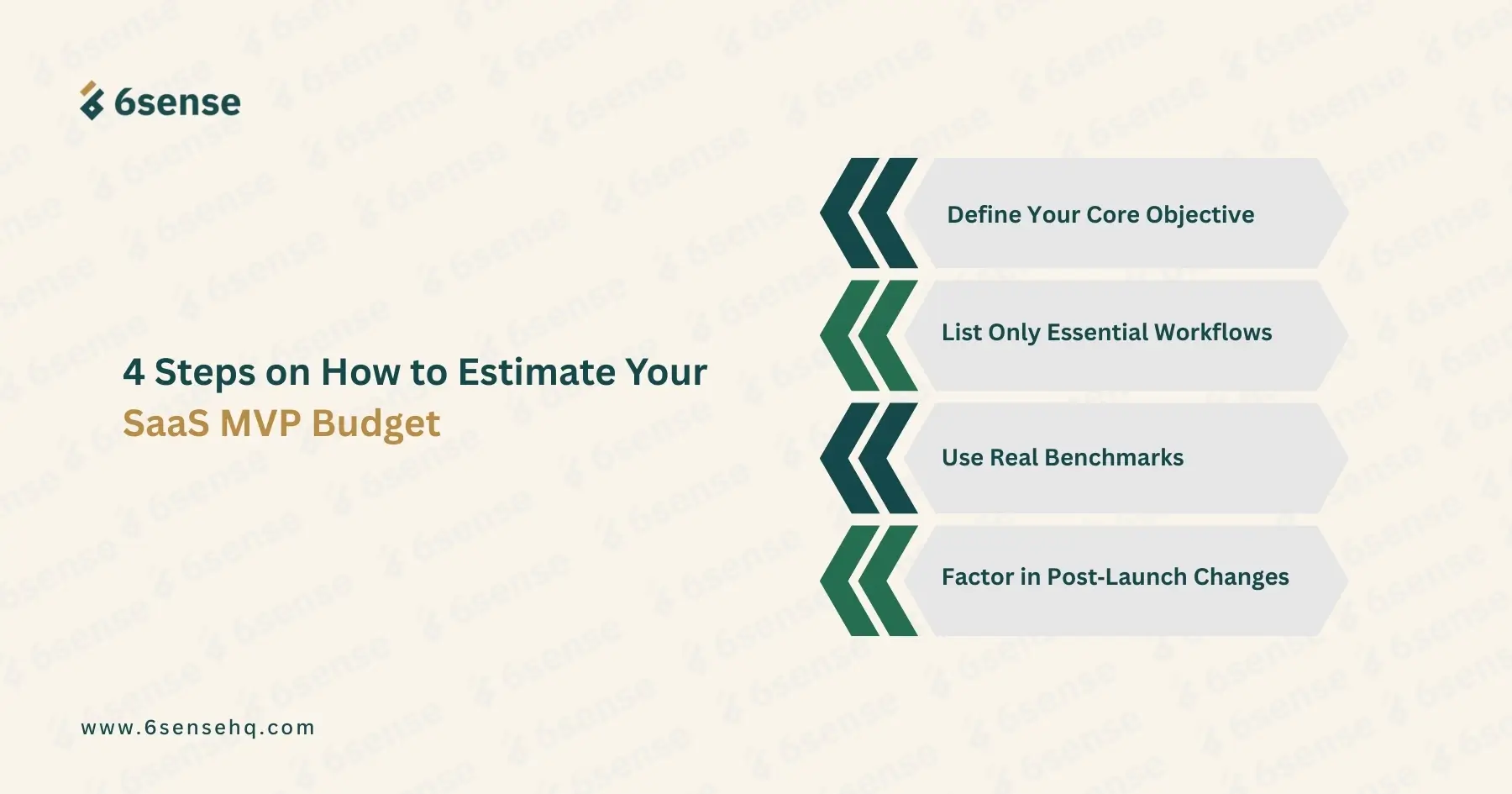
Start by clearly writing what your MVP must do, no assumptions or future hope lists. Think in simple terms: “Enable a user to complete X and get value Y.” Keeping the goal focused on one measurable outcome helps you cut unnecessary work and control the budget.
Document the steps a user must take to achieve that one outcome and nothing more. Map this as a journey from first screen to success (e.g., signup → core action → confirmation). Leaving out optional workflows keeps both cost and time down. Removing low-priority workflows, reusing proven components, and simplifying integrations are some of the most effective ways to reduce MVP development costs without weakening the core product.
Look at real cost ranges people share online, from $5 k for bare no‑code prototypes to $50 k+ for more solid SaaS MVPs and adjust based on where you plan to build and which tools you use. Talking to freelancers or a trusted MVP development agency helps ground your estimates with real quotes.
Remember: launch isn’t the finish line. Founders often spend budget after release on bug fixes, small UX tweaks, and early customer feedback adaptations. A simple cushion (10-20 % of your development budget) helps you avoid surprise stress.
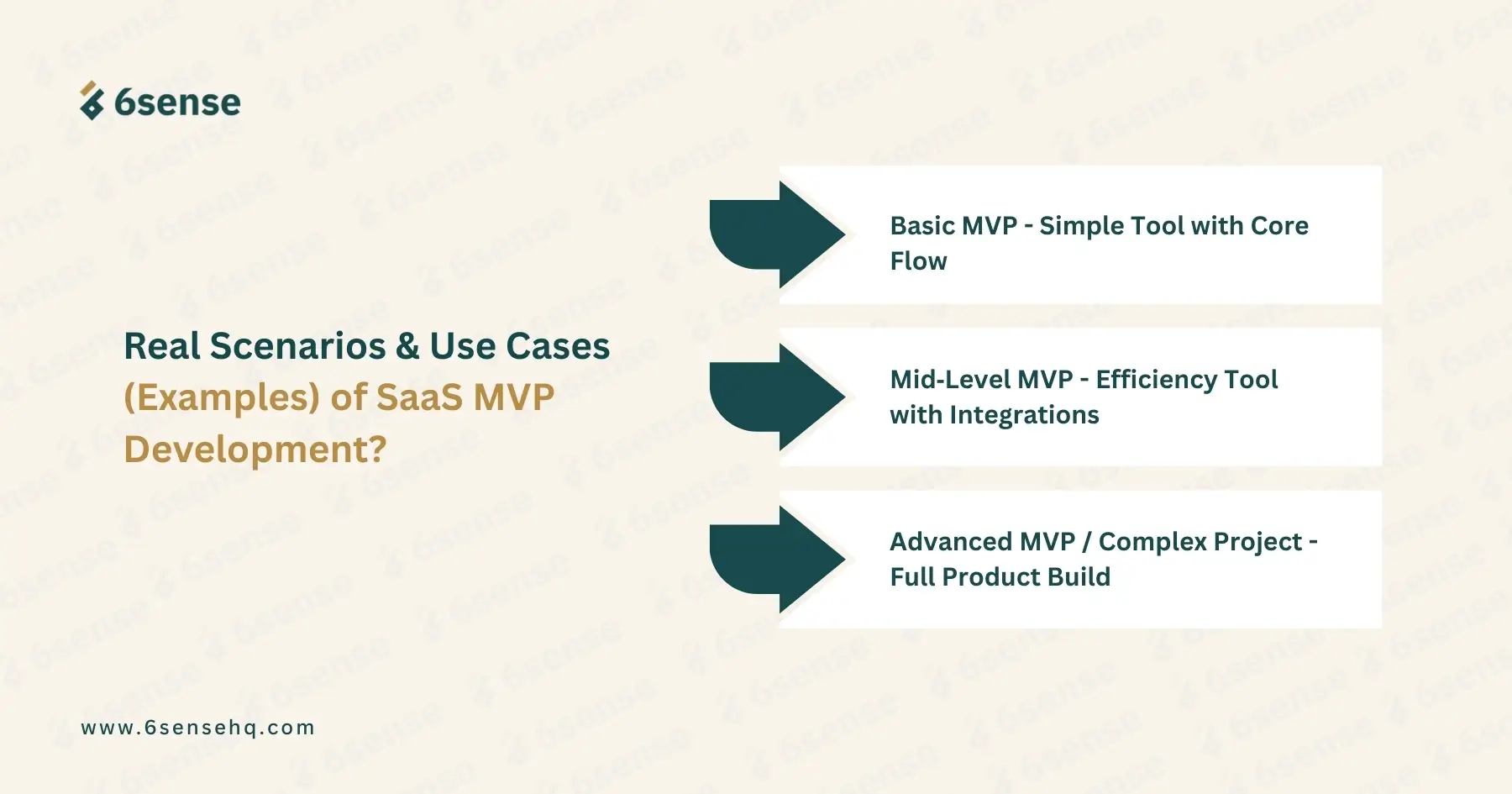
For very lean builds, start with just the essentials. A good example is ITCAN, a simple workflow app built to manage approvals and project tracking. 6sense HQ delivered this with a clear core feature set and straightforward UI, no bloated extras, letting clients validate value fast and stay within budget.
Mid‑range builds often include a few more workflows and external services. Breaking Mars started as an internal MVP automation tool with basic lead automation, LinkedIn API handling, and campaign routines. A focused 6‑member team built it over months with just the right mix of features to test value before scaling it further.
When products are bigger and more ambitious, like enterprise platforms, costs climb. Cloud Accounting was a complete financial tool built with a 9‑specialist team over eight months. It supported many business workflows, payroll, transactions, taxes, and was designed to scale with security in mind, reflecting a much higher investment.
Key Insight: As you can see, scope and depth drive cost. Smaller, tightly focused MVPs keep budgets lean by validating the core value first, while larger platforms with many features and users require more planning, team effort, and investment.
Building a SaaS MVP isn’t just about guessing a number; it’s about making smart choices early, staying focused on what really matters, and setting a strong foundation for future growth. Successful MVPs balance feature clarity, design simplicity, and real user feedback so you learn from real interactions, not assumptions.
As you plan your budget, make sure you match spending with what validates value, not what merely looks impressive. Keep your roadmap clear, prioritize your goals, and don’t overspend before you prove your idea.
Take the next step and book a call with our expert team now!
Compare 6sense HQ and DevToDollars on MVP speed, team models, proof, pricing, and post-launch support to pick the right fit.
15 min read

Compare 6sense HQ alternatives for MVP development in 2026 and find the best software team for your startup budget and goals.
17 min read
Learn whether one developer can build an MVP in 2026 with cost, scope, AI tools, low-code tips, risks, and launch advice.
22 min read