


How to Transition to Offshore Teams Without Losing Control
Optimize your 2026 offshore strategy with a Mirror Stack, Zero Trust security, and AI to scale execution while saving 40-70%.
9 min read
Loading…
AI is changing the rules of offshoring, shifting it from a cost-saving tactic to a strategy for innovation and speed.
Written by: Nasif Sid Created on: 12 Sept 202510 min to read
When businesses combine offshoring with artificial intelligence (AI), they unlock a smarter, faster, and more cost-effective way to get things done. Offshoring in the age of AI gives access to global talent, while AI takes care of repetitive tasks; together, they help companies work around the clock, cut costs, and stay competitive.
By blending the strengths of people and technology, companies can automate everyday work while still relying on human expertise for decision-making, creativity, and customer care. This combo doesn’t replace jobs; it transforms how work is done.
Forward-thinking companies like offshore development partners are already using it to speed up delivery, reduce burnout, and grow sustainably.
In this blog, we’ll break down how offshoring and AI work hand-in-hand, where they shine, what challenges to watch out for, and how your business can use both to build a more agile and future-ready team.
Let’s start!
AI helps automate tasks and save time, while offshoring gives access to skilled talent at lower costs. Together, they allow companies to grow faster, reduce workload, and stay competitive in a fast-moving world.
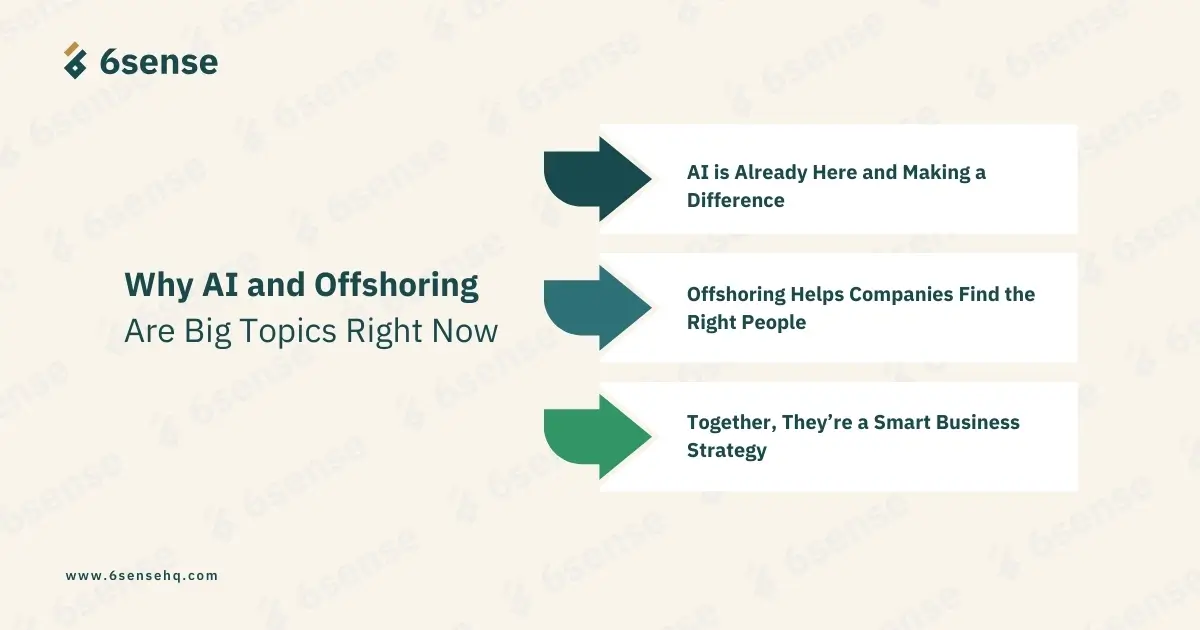
Tools like ChatGPT and other AI systems can write content, summarize reports, generate code, and analyze data. What used to take hours or a team of people can now be done in minutes with AI. That’s a big shift for any business.
Hiring offshore means you can work with talented people around the world. It’s a smart way to get skilled workers without the high costs of local hiring. Many companies now run 24/7 by having teams across different time zones.
Using AI and offshoring together means tasks are done faster and cheaper. AI handles the repetitive parts, and people (onshore or offshore) focus on thinking, solving problems, and talking to customers. It’s all about balance, and it works.
Offshoring still works because people bring problem-solving, creativity, and human understanding, things AI can’t do on its own. While AI is great at automating tasks, it still needs human guidance. That’s where offshore teams come in.
Today, offshore companies are not just about saving money, but also about working with skilled professionals in areas like software development, customer support, accounting, and digital marketing. These teams are no longer just doing simple jobs; they’re managing AI tools, solving real business problems, and working as part of the core team.
Offshoring also gives businesses flexibility. You can grow your team fast or reduce costs during slow periods without the long hiring process at home. It’s smart, scalable, and still essential.
AI is changing the way we work by doing tasks faster and helping people focus on more important things. It handles the routine stuff, while humans bring context, creativity, and decision-making to the table.
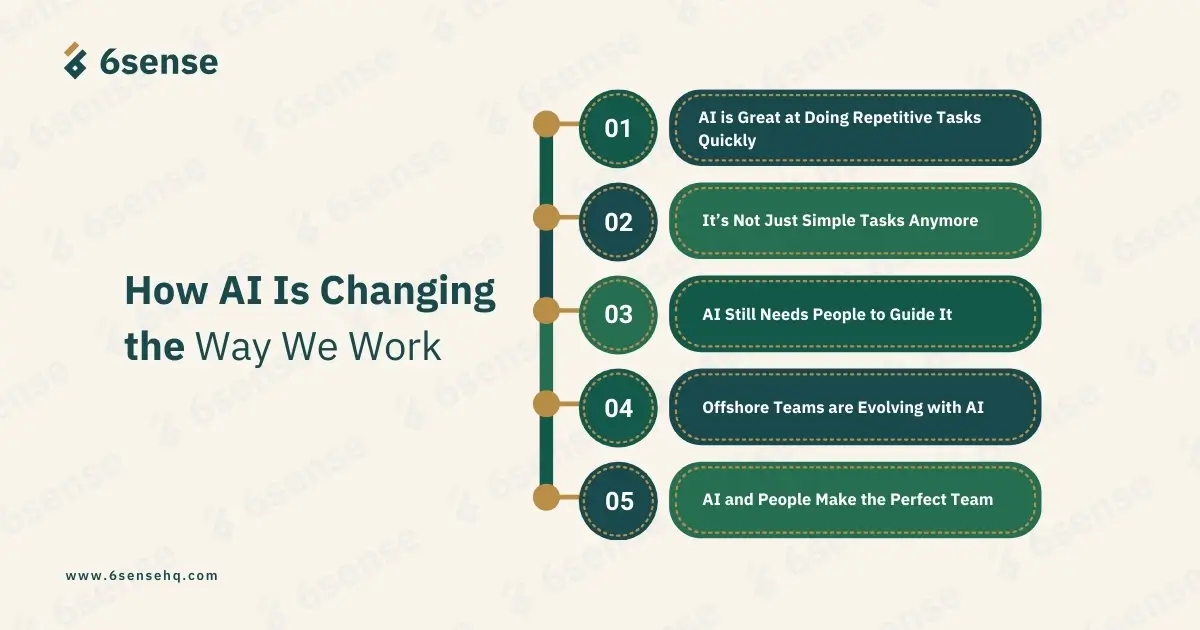
One of the biggest strengths of AI is handling boring, time-consuming work. It can scan thousands of records, sort data, or summarize long reports in seconds. This saves people hours of effort and helps teams work faster.
Instead of doing the same tasks over and over, employees can now focus on solving problems, being creative, and making smart decisions.
In the past, AI was mostly used for routine jobs like answering basic questions or filling in spreadsheets. But today’s AI can do much more. Tools like ChatGPT can write emails, research topics, and even help write code.
This means AI is now involved in real work, not just support tasks. Teams need to understand how to work with AI, not worry about being replaced by it.
Even though AI can do a lot, it doesn’t always get things right. It can miss details or misunderstand what a business really needs. That’s why human input is still very important.
People, whether onshore or offshore, check AI’s work, add insights, and make sure it matches the company’s goals. AI can be fast, but people make it accurate and useful.
Offshore teams aren’t just doing simple tasks anymore. They’re learning to use AI tools, manage platforms, and understand data. Many now work closely with AI to improve workflows, find solutions, and support clients.
As AI grows, offshore teams are also growing their skills to stay valuable and competitive. The goal is not to replace them, but to help them do more, better.
AI speeds things up, but people bring the thinking. Imagine AI creating a draft email and your team making it sound human. Or AI sorts numbers while your team spots the important trends.
This teamwork leads to better results. Companies that mix AI with human skills, both locally and offshore, are getting ahead. It’s not man versus machine; it’s man and machine working better together.
Humans and AI work best when they support each other. AI does the heavy lifting with data and speed, while humans add meaning, creativity, and emotional understanding. They make better decisions, improve accuracy, and get better results.
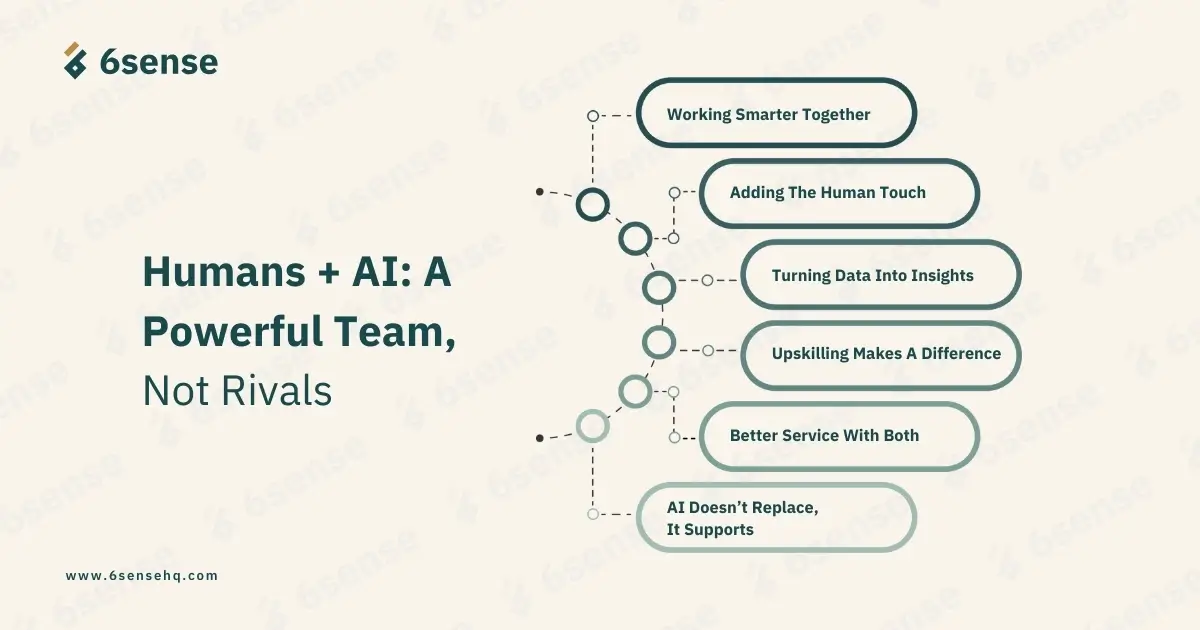
AI can handle large amounts of data quickly, but it lacks the judgment to know what matters most. Humans help make sense of AI’s output and guide it in the right direction.
This teamwork allows businesses to make faster, more intelligent choices with fewer mistakes.
AI can write emails or messages, but it often misses tone, empathy, and cultural details. Human teams, especially offshore professionals, review and adjust the messages so they sound natural and respectful.
Well, this is key to building trust with customers and clients.
AI tools can analyze spending, customer trends, or system activity, but only people can understand what the data means for a business. Offshore teams trained in finance or analytics can turn AI’s numbers into clear insights and helpful actions.
Companies that invest in teaching AI tools to their offshore teams get better results. Trained teams can work faster, handle more complex tasks, and bring fresh ideas. This also builds stronger job satisfaction and keeps talent engaged and future-ready.
AI can answer simple questions instantly, but people are still needed for the hard ones. Offshore support teams use AI to handle routine tasks, and then step in for custom help or problem-solving. It makes support faster and more helpful overall.
The best results come when humans and AI work side by side. AI takes care of the time-consuming parts, and people focus on creativity, strategy, and quality. This balanced approach leads to higher productivity, better decisions, and happier teams.
As AI and offshoring grow, companies must also focus on fair pay, healthy work environments, and good communication. Ethics, empathy, and respect are just as important as tools and AI technologies when building successful global teams.
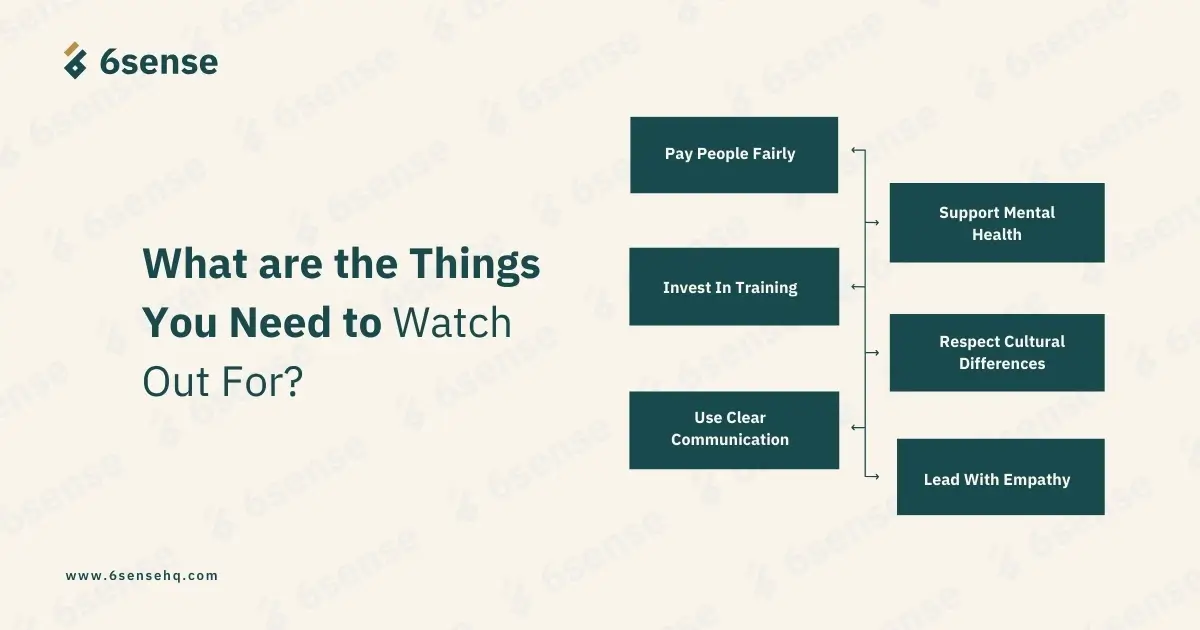
Fair wages matter. Some offshore workers are underpaid, even while doing essential jobs like data labeling or content moderation. Companies need to ensure equal pay for equal work. Paying fairly builds loyalty, boosts motivation, and improves the quality of work; it’s not just the right thing to do, it’s good business sense.
Roles like content moderation can be emotionally hard. Workers may deal with sensitive or disturbing content daily. Companies should offer access to mental health resources, regular breaks, and supportive managers. Caring for team well-being creates a safer, healthier, and more productive environment.
Offshore teams need proper training to do their best work, especially when working with AI tools. Companies should give clear guidance, hands-on support, and ongoing learning opportunities. Well-trained teams make fewer mistakes, work faster, and stay longer. Note that training is always worth it.
Every country has its own work style, customs, and communication preferences. Being respectful of these differences builds stronger teamwork and reduces misunderstandings. Simple steps like learning about holidays or adjusting meeting styles can help global teams feel included and valued.
Remote and global teams can’t work well without clear communication. It’s important to set expectations, use simple language, and keep everyone in the loop. Tools like Slack or Zoom help, but what really matters is being clear, kind, and consistent in every interaction.
Onboard Teams Properly
A strong onboarding process sets the tone for success. It helps offshore teams understand the company culture, tools, and goals from day one. Good onboarding includes training, introductions, and time to adjust; it helps new hires feel ready and welcome.
At the heart of every successful offshore partnership is empathy. Managers who listen, understand challenges, and give regular feedback build better relationships. It’s not just about productivity; it’s about creating a team that feels respected, supported, and ready to grow.
Offshore teams need proper training, not just tools, to use AI effectively. Giving access to AI platforms is a good start, but without the right skills, teams can’t use them well.
That’s why smart companies focus on teaching their offshore teams how to work with tools like CRM automation, AI coding assistants, and data analysis software. This helps teams become faster, more accurate, and more confident in their roles.
It also increases motivation and makes work more rewarding. At 6sense HQ, offshore software development services, we believe in building teams that grow with technology. We train and support our offshore experts with fundamental skills, so they’re not just part of the process; they lead it.
Combining offshore teams with AI tools helps companies save money and grow faster. You can do more with fewer resources, speed up results, and stay flexible without sacrificing quality. It’s a smart way to scale sustainably.
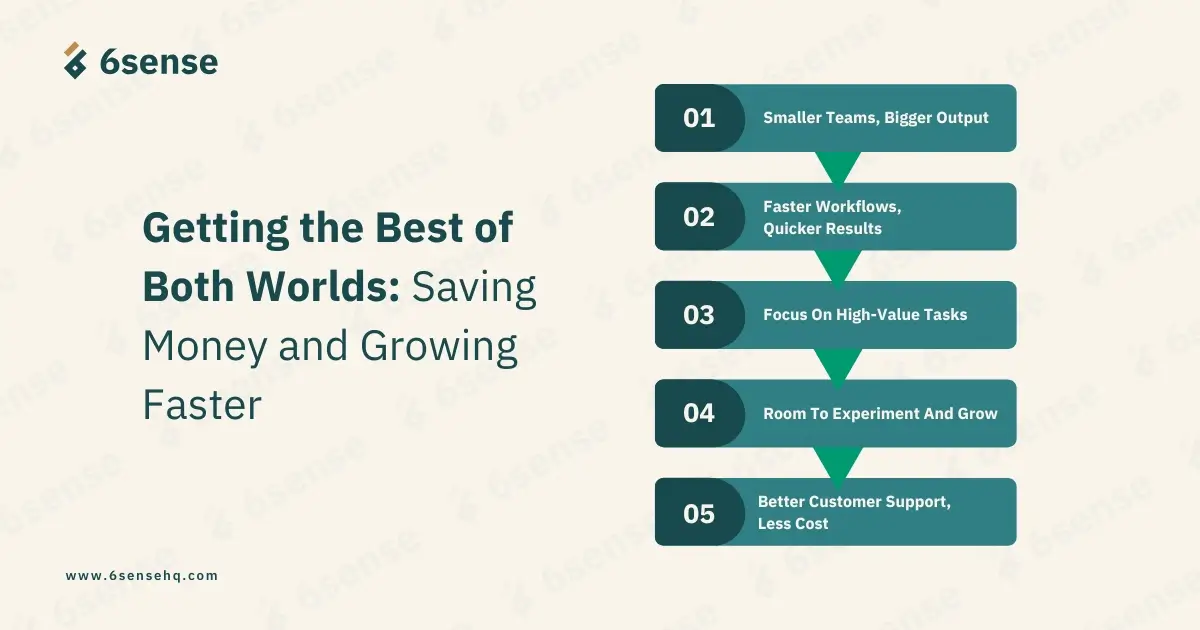
With the help of AI, offshore teams can do more with less. Tasks that once needed large teams can now be handled by a few skilled people supported by automation. It allows companies to stay lean while still meeting deadlines and goals. It’s a great way to control labor costs without slowing down the business.
AI helps complete repetitive tasks faster, like answering FAQs, sorting data, or generating drafts. When offshore teams are trained to use these tools, turnaround times get even faster. This speed means customers are served quickly, projects move faster, and businesses can take on more work without delays.
When AI handles simple tasks, your team, both onshore and offshore, has more time for important work. Strategic thinking, creative problem-solving, and relationship-building become the focus. This shift not only improves work quality but also helps companies innovate and plan for long-term success.
Using offshore teams with AI gives businesses room to try new ideas without risking big budgets. Whether it's launching a new service, testing software, or improving customer service, this model allows faster experiments. If something works, you can scale it quickly. If not, you haven’t wasted much.
A great example is using AI chatbots alongside offshore support teams. The chatbot can answer common questions 24/7, and the human team handles tricky cases. Customers get quick help, and support costs stay low. This smart setup improves service quality without hiring a huge team.
Offshoring in the age of AI is not a competing choice; they work better together. While AI handles repetitive tasks and speeds up operations, offshore teams bring the human skills needed to guide, adjust, and manage those tools effectively. This combination helps businesses reduce costs, improve quality, and stay flexible in a fast-moving world.
Companies using this approach are building stronger, more agile teams without overloading internal staff. With the proper training and tools, offshore professionals can work side-by-side with AI to deliver great results.
Looking to grow smarter, faster, and leaner? Hire an AI-powered offshore team right now!
Optimize your 2026 offshore strategy with a Mirror Stack, Zero Trust security, and AI to scale execution while saving 40-70%.
9 min read
Stop scrolling, start hiring: 15 best offshore dev sites for 2026 with rates, vetting process, and quick picks. Tap in!
14 min read
Offshore ROI in 2026: calculate true TCO, payback & NPV, dodge rework traps, and scale faster, grab the checklist now!
7 min read