


How to Transition to Offshore Teams Without Losing Control
Optimize your 2026 offshore strategy with a Mirror Stack, Zero Trust security, and AI to scale execution while saving 40-70%.
9 min read
Loading…
Offshore or local in 2026, learn the real cost speed and risk tradeoffs and pick the right hybrid team model for your product.
Written by: Nasif Sid Created on: 19 Feb 202610 min to read
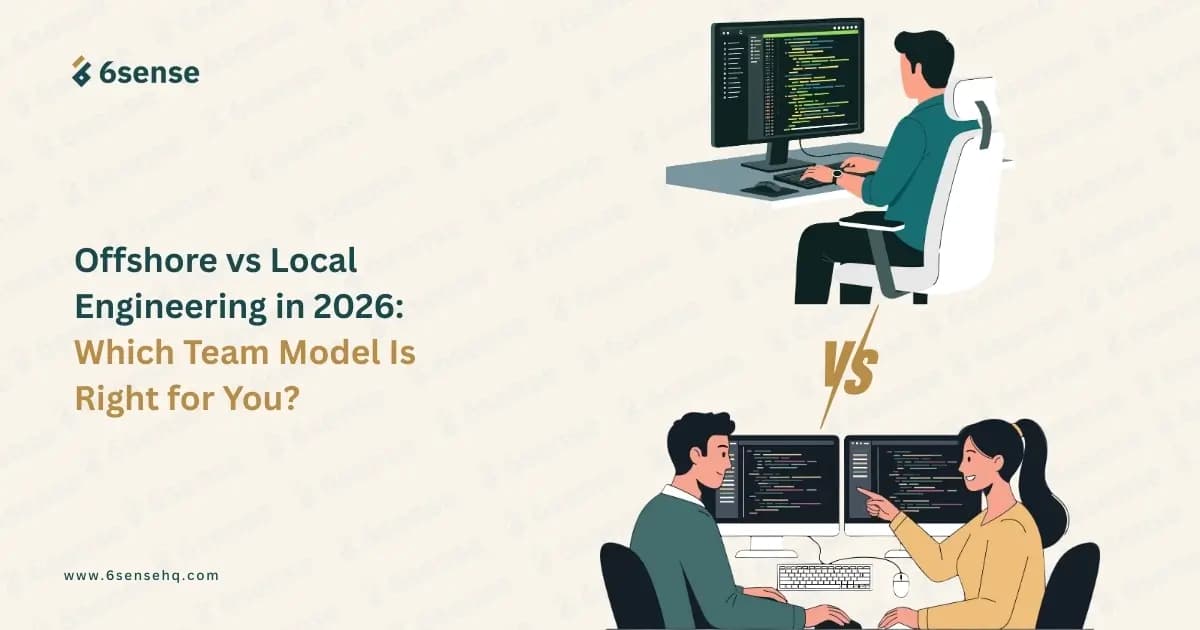
In 2026, U.S. teams will need to carefully balance offshore and local talent to stay competitive. The shortage of skilled engineers and rising costs are pushing U.S. companies to rethink how they build their teams. Right-shoring, a hybrid approach, helps solve this challenge by keeping core work like architecture and sensitive projects local, while leveraging offshore teams for execution and scalability.
Offshore talent offers cost savings and the ability to extend your runway, while local teams provide important advantages in compliance, IP protection, and real-time collaboration. This approach ensures that U.S. teams can scale effectively, remain agile, and maintain security.
Choosing the right mix of local and offshore talent depends on several factors, including scope, compliance needs, and how quickly you need to scale your engineering efforts. In this guide, we’ll walk through the pros and cons of both offshore and local teams and show you how to choose the right model for your business needs.
When deciding between offshore and local engineering teams, it’s important to understand how cost, speed, and risk differ between the two. Here's a quick breakdown to help guide your decision:
| Factor | Offshore | Local (U.S.-based) |
| Fully loaded senior cost | Typically $65K–$72K | $165K–$350K+ |
| Savings potential | 39%–60% savings vs. U.S. teams | N/A |
| Talent pool | Broad, faster access | Scarce, especially for senior roles |
| Time zone | Varies, but many offshore hubs align with U.S. time zones (LatAm) | U.S. time zones |
| Compliance fit | Requires extra controls and residency reviews | Strong for ITAR/EAR and U.S. data |
| Security posture | Higher risk, requires Zero Trust and strict security practices | Easier to manage security controls |
| Onboarding speed | 1–2 weeks | Longer hiring cycles |
Offshore engineering has evolved from a simple cost-saving measure to a powerful strategic tool for scaling teams, accessing specialized skills, and accelerating development. Here’s a closer look at the advantages and potential risks of offshore engineering in 2026.
When it comes to sensitive projects or high-stakes work, local U.S.-based engineering teams are often your best choice. While offshore teams can help reduce costs and scale quickly, local teams provide crucial advantages in compliance, security, and real-time collaboration that offshore teams can't always match.
When choosing between local and offshore teams, it’s essential to consider compliance and security. Here's a quick comparison of the key factors to keep in mind:
| Factor | Offshore Teams | Local (U.S.-based) Teams |
| Compliance Needs | Must ensure data residency and legal compliance (e.g., GDPR, local laws). | Easier to manage for ITAR/EAR and other U.S. regulatory needs (e.g., government contracts). |
| Security Practices | Higher risk, requires Zero Trust and strict security practices. | Easier to manage security protocols; local teams are closer to company security standards. |
| IP Protection | Requires specific IP protection clauses, confidentiality agreements, and U.S. governing law. | Easier IP protection with local legal control; fewer concerns over data leaks. |
| Data Privacy | Potential challenges with data protection laws and enforcing consistent practices | Easier to ensure data privacy laws are followed; local teams are governed by U.S. laws. |
| Vetting Process | Requires additional background checks and clearance for sensitive projects. | Local vetting processes can be more aligned with U.S. standards and regulations. |
| Onboarding | Needs to implement secure onboarding processes (e.g., identity checks, device security).. |
Deciding between offshore, local, or hybrid models depends on your project’s needs. Here's a quick guide to help you choose the right approach.
| Stage | Offshore | Local (U.S.-based) | Hybrid |
| Early-Stage Startup | Best for executing backlogs and saving costs. | Too expensive and slow for scaling quickly. | Local leadership with offshore teams to extend runway and speed up execution. |
| Post-Series B Scale-Up | Ideal for platform work, QA, and cost control. | Local leadership for architecture and product oversight. | Offshore for execution, local for product and architecture leadership. |
| Defense and Government Projects | Not suitable due to ITAR/EAR compliance. | Required for compliance and security. | Local teams only for sensitive work. |
| Legacy Modernization | Great for rapid, cost-effective scaling. | Limited due to talent shortages. | Offshore teams for quick scaling and savings. |
| Hardware and R&D | Not ideal without in-person collaboration. |
Background: A fast-growing tech company needed to expand its engineering capacity quickly to meet the growing demand for their AI-powered platform. However, they didn’t have the budget to hire a full local team. They wanted to scale fast without compromising quality or delivery speed.
Solution: The company turned to offshore teams based in Costa Rica, where they found high-quality talent with expertise in AI and data engineering. The team’s time zone alignment with the U.S. also made it easy to collaborate in real-time without the delays of a distant offshore team.
Results:
Why This Worked:
Offshore teams can be a game-changer when you need to scale quickly and keep costs under control. By leveraging nearshore talent (in this case, Costa Rica), the company was able to maintain close collaboration with their U.S. team while also tapping into highly skilled engineers at a fraction of the cost.
At 6sense, we understand that balancing local and offshore talent can be tricky, but it doesn’t have to be. Whether you need scalable solutions, cost savings, or compliance management, we make it simple for you to build the right team.
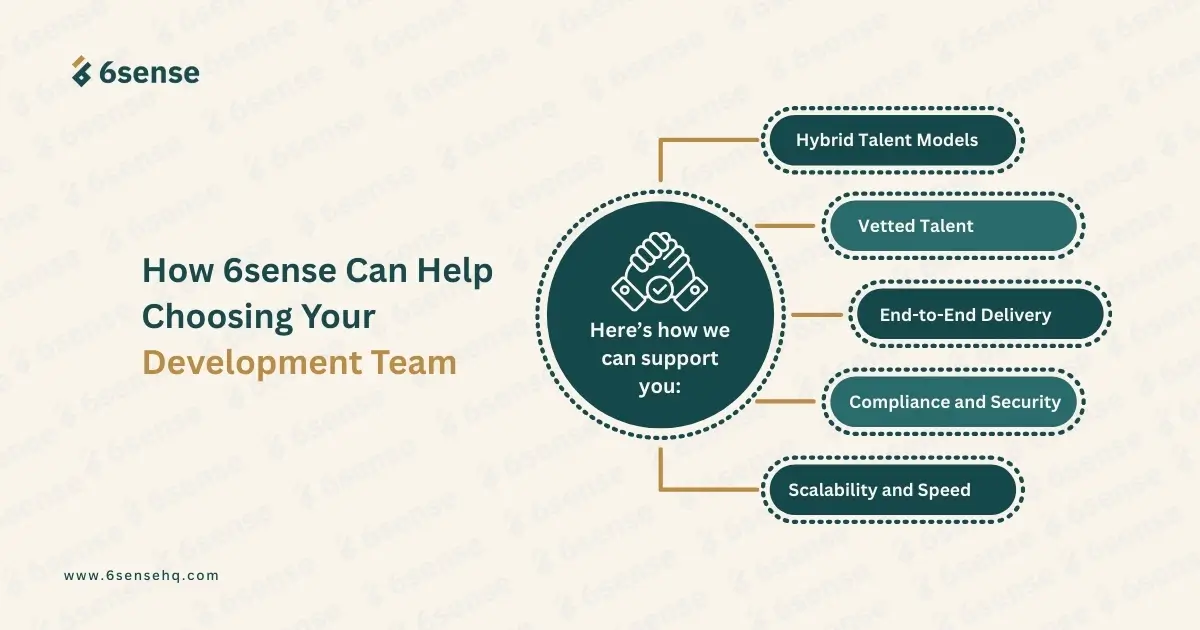
If you’re ready to scale fast, stay compliant, and save costs without compromising quality, 6sense is here to help. Let’s chat about your project, map out a team that fits your needs, and get you started with the right talent.
Book a quick 30-minute consultation with our team to see how we can make your project a success.
In 2026, the choice between offshore, local, or hybrid engineering teams depends on your specific needs, such as cost, speed, and compliance. If you need to scale quickly and cost-effectively, offshore and hybrid models offer significant savings and faster ramp-up times. However, for sensitive work that requires strict compliance or real-time collaboration, local teams are essential.
By choosing the right mix of talent, you can optimize your team’s efficiency, maintain high standards, and stay within budget.
Optimize your 2026 offshore strategy with a Mirror Stack, Zero Trust security, and AI to scale execution while saving 40-70%.
9 min read

Stop scrolling, start hiring: 15 best offshore dev sites for 2026 with rates, vetting process, and quick picks. Tap in!
14 min read
| Scalability | Scale from 5 to 50 in weeks | Takes months to scale teams |
| Easier to implement security measures and quick access to tools for local hires. |
| Best for prototyping and close collaboration. |
| Local teams for physical interaction and iterative design. |
| 24/7 Operations | Ideal for round-the-clock coverage. | Not feasible for 24/7 operations. | Hybrid for follow-the-sun coverage. |
Offshore ROI in 2026: calculate true TCO, payback & NPV, dodge rework traps, and scale faster, grab the checklist now!
7 min read