


How to Transition to Offshore Teams Without Losing Control
Optimize your 2026 offshore strategy with a Mirror Stack, Zero Trust security, and AI to scale execution while saving 40-70%.
9 min read
Loading…
The right offshore team can turn your startup idea into a market-ready product faster and leaner than you think.
Written by: Nasif Sid Created on: 22 Aug 20259 min to read
When you're building a startup, every dollar and day counts. That’s why offshore software development for startups is such a smart move. You can skip the long hiring process and bring in expert developers quickly, just find a trusted offshore company, check their work, and start small.
Think of it this way: instead of spending months trying to hire locally, you can tap into a global talent pool and get your product off the ground faster. Sites like Clutch and GoodFirms and companies like 6sense HQ make it easy to find reliable offshore partners, complete with reviews and real client feedback.
In this guide, I’ll walk you through everything, why offshoring works, when to use it (and when not to), how to hire the right team, and how to make the most of your offshore partnership.
Let’s get started!
Startups face a simple but tough challenge; they need to build fast, but don’t have the time, money, or talent to do it alone.
Founders are usually racing against the clock, trying to launch their product before funds run out or a competitor beats them to market. Local hiring takes months and often costs too much. That’s where offshore software development becomes a smart software solution.
Therefore, with offshore teams, startups can hire skilled developers in days, not months, and save up to 60% in development costs.
Startups don’t need to do everything in-house, especially when building software. Hiring a third-party offshore team can save you time, money, and stress. Here’s why it’s a smart move for fast-growing businesses:
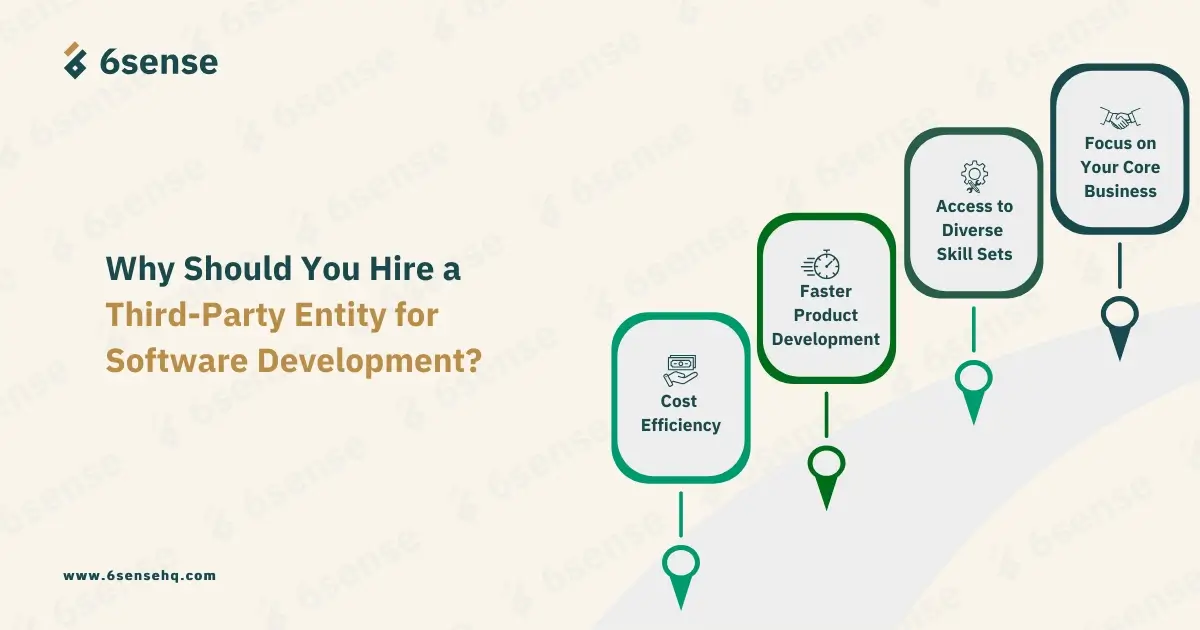
Offshore development lets you build great products without draining your budget. Developers in Eastern Europe, Asia, or Latin America charge much less than in the U.S., often saving you up to 60%.
Plus, you skip costly expenses like office rent, insurance, and HR. That means more of your funding goes into product growth, not overhead.
You don’t have to waste months hiring, onboarding, and training developers. Offshore teams usually include developers, testers, project managers, and DevOps experts; all ready to start immediately. It gives you a full team from day one, so you can launch faster and stay ahead of competitors.
Need someone with blockchain, AI, or fintech experience? Offshore teams often have specialists in skills that are hard (and expensive) to find locally. Whether you need niche tech or just more hands on deck, offshore partners can quickly match your development needs with the right talent.
When you’re not buried in code reviews or daily stand-ups, you can focus on the big picture like pitching to investors, growing your user base, or improving your business model.
Well, a trusted offshore development team handles the tech side, while you drive the vision.
Yes, it really can, if you do it the right way. Many successful startups, like GOAT and Dollar Shave Club, used offshore teams to build great products faster and at lower costs. It helped them scale quickly without burning through cash.
But here's the catch, offshore software development services only work well when you have a clear plan, open communication, and trust with your team. If your goals are unclear or you’re not on the same page, things can easily go off track. Misunderstandings, delays, or poor quality can happen if you don’t manage it right.
So yes, offshore development can absolutely help but only if you treat it as a partnership, not just a transaction.
Offshore software development gives startups a real edge not just with cost savings, but with speed, flexibility, and access to top talent. Here are the biggest benefits that make it a smart choice for early-stage companies:
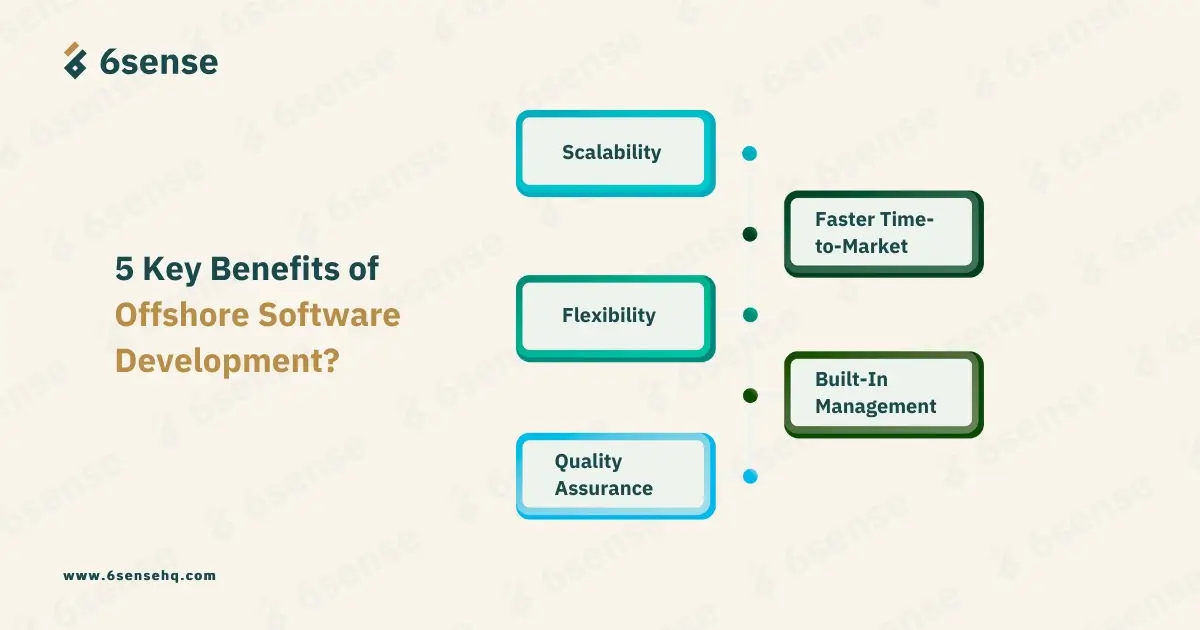
Startups move fast; sometimes you need a big team, other times just a few experts. Offshore development lets you scale your team up or down easily without hiring full-time staff.
You only pay for what you need, when you need it, keeping your development team lean and your costs low.
With teams working across different time zones, your product can move forward even while you sleep. This “follow-the-sun” model speeds up app development. You get quicker releases, faster feedback loops, and a big head start on getting your product to market before the competition does.
Startups pivot; it’s normal. Offshore teams are used to change and can quickly shift gears when priorities change. Need to switch features or tech stacks mid-project?
A good offshore partner can adapt fast, helping you stay agile and responsive as your product grows and evolves.
Most offshore software development companies come with their own project managers and well-structured Agile processes. That means less micro-managing for you. Your offshore partner handles timelines, meetings, and task tracking so you can focus on strategy and vision instead of getting lost in the daily to-dos.
Bugs and crashes are product killers. Luckily, many offshore vendors include QA engineers who test everything before launch. From manual testing to automation, they make sure your app runs smoothly, giving your users a solid experience and saving you from costly post-launch fixes.
Offshore development can be a great option, but it’s not for every situation. Sometimes, sticking with local or in-house resources makes more sense. Here are a few cases where offshore software development might not be the best choice:
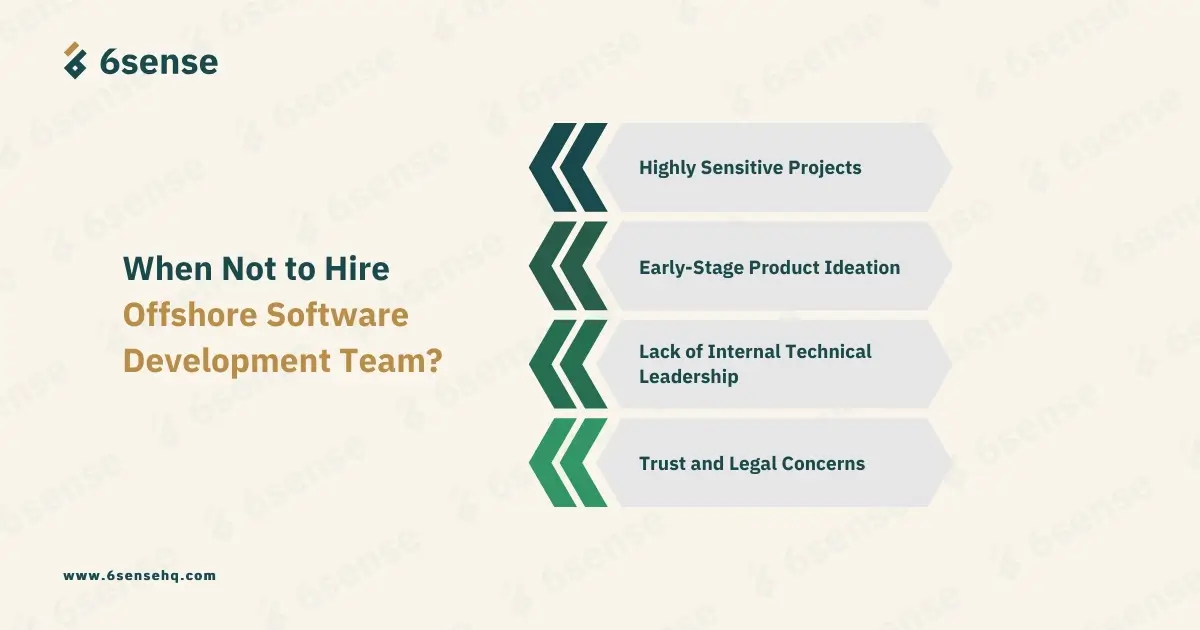
If you’re building something for industries like defense, healthcare, or finance, you might need to follow strict rules about where data is stored and who can access it. In these cases, working with local offshore software developers helps you meet legal and security requirements more easily and gives you more control over sensitive information.
When your startup is still shaping the core idea, quick feedback and lots of back-and-forth are essential. This phase often works better with an in-house team you can talk to daily. Offshore software development teams are great at building, but early ideation and product-market fit might be too messy to manage remotely.
If no one on your team understands how software is built, it’s risky to hire offshore help. Without a tech lead or CTO, you may struggle to explain your needs clearly, review work properly, or manage timelines. A technical leader acts as a bridge without them, things can fall through the cracks.
Offshore development requires trust that you’re sharing your ideas, code, and data with someone far away. If the vendor isn’t well-vetted, you might face issues like unclear contracts, poor communication, or even IP theft.
Always do due diligence, and if you can’t confidently assess legal or security risks, it may not be worth it.
To hire offshore developers, start by clearly defining your goals and choosing a trusted, experienced partner who fits your needs. Here’s how to do it right:
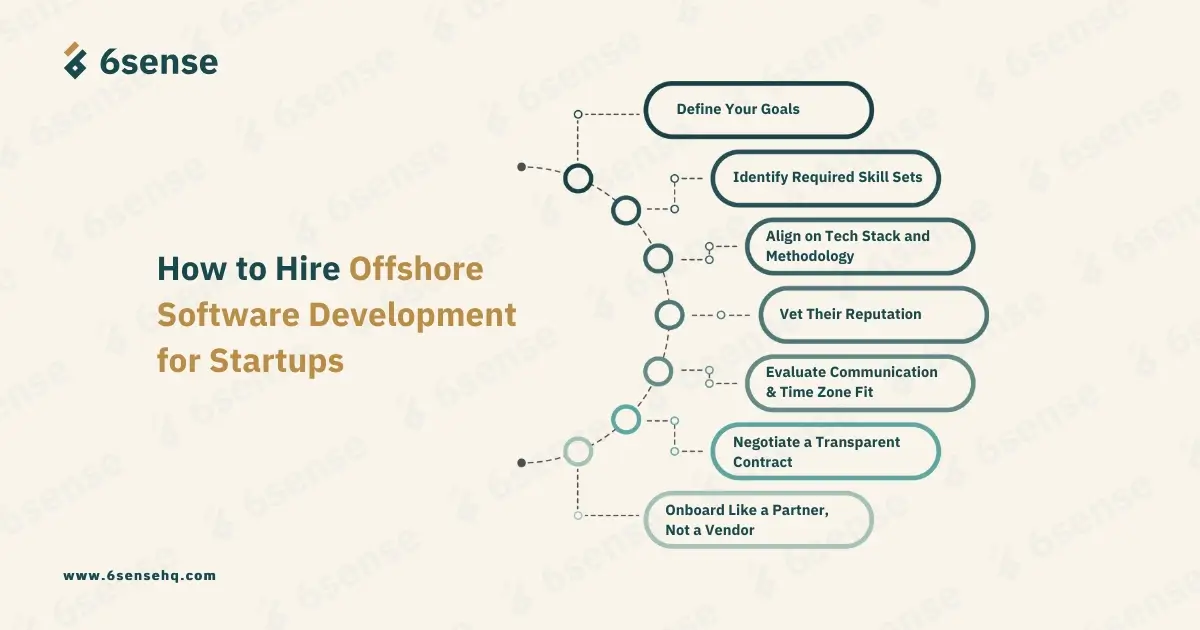
Start by being super clear on what you want. Are you building a brand-new MVP? Adding features to something that already exists? Or maybe scaling fast after product-market fit? Your offshore partner needs to know exactly where you are and where you’re headed.
Note that a clear goal helps both sides stay aligned and avoid miscommunication during the project.
Every product needs the right mix of skills. Do you need frontend developers, backend pros, mobile app specialists, or QA testers? Make a list and check if the team you're hiring has those specific skills.
For example, 6sense offers vetted offshore teams with expertise across JavaScript, Python, cloud platforms, and more, helping you cover all bases right from day one.
Make sure the offshore team works with a tech stack that fits your product’s future. Whether it’s React, Node.js, or Flutter, their stack should support your goals and allow for easy scaling later.
Also, talk about how they manage projects: Agile, Scrum, or Kanban? This keeps the development process smooth and predictable, especially if you’re working across time zones.
Don’t skip this step. Go beyond a nice website, look up reviews on sites like Clutch, GoodFirms, or even their GitHub. Ask for case studies or references from past clients.
Companies like 6sense HQ list their work and client feedback clearly, so you can see real-world results before making a decision. A proven track record builds confidence and reduces risk.
You need to know when and how your team communicates. Will there be enough overlapping work hours? Are they okay with early or late meetings if needed? Also, check what tools they use Slack, Zoom, Jira?
Remember that clear and consistent communication keeps things running smoothly, even when teams are on opposite sides of the globe.
A solid contract protects everyone. Make sure it clearly defines what will be delivered, when it will be done, and how you’ll pay for it. Cover IP rights, security practices, NDA terms, and what happens if things don’t go as planned.
Thus, having everything in writing means fewer surprises and better accountability from day one.
Don’t treat your offshore team like outsiders. Share your product vision, business goals, and user stories. Involve them in discussions, provide clear documentation, and set up regular check-ins.
When you treat them like true partners, they become invested in your success, not just your codebase. That’s when real collaboration happens, and great products get built.
Offshore software development for startups can truly change the game if you approach it the right way. I’ve seen how it helps reduce costs, speed up web development, and give founders the space to focus on growth.
But it’s not just about hiring fast; it’s about choosing the right team, being clear about your goals, and keeping communication strong. If you get those parts right, offshore development can take your startup much further, much faster, without blowing your budget.
Looking to hire offshore teams for startups you can actually rely on? 6sense HQ has the right team. Reach out and let's talk!
Optimize your 2026 offshore strategy with a Mirror Stack, Zero Trust security, and AI to scale execution while saving 40-70%.
9 min read

Stop scrolling, start hiring: 15 best offshore dev sites for 2026 with rates, vetting process, and quick picks. Tap in!
14 min read

Offshore ROI in 2026: calculate true TCO, payback & NPV, dodge rework traps, and scale faster, grab the checklist now!
7 min read