


How to Transition to Offshore Teams Without Losing Control
Optimize your 2026 offshore strategy with a Mirror Stack, Zero Trust security, and AI to scale execution while saving 40-70%.
9 min read
Loading…
Offshore software development isn’t what it used to be, yet many businesses still fall for the same old myths.
Written by: Nasif Sid Created on: 22 Oct 20258 min to read
Offshore software development is often viewed as cheap but risky, and it's easy to see why it has received a bad reputation.
If you've ever browsed Reddit or Quora, you've probably come across stories of missed deadlines, poor code, or teams that just disappeared mid-project. It's enough to make anyone nervous.
And sure, your fears are valid if you are thinking like,
"What if the quality is poor?"
"How do I manage a team halfway across the world?"
"Is my data even safe?"
However, the truth is that the right offshore development itself is not the problem. What creates the fear is misunderstanding how it really works.
Today, the offshore development industry looks very different from what it did even a few years ago. Companies of all sizes are successfully collaborating with offshore teams and achieving positive results.
According to Statista, the global IT outsourcing market is expected to reach 812.75 billion dollars by 2027.
When handled correctly, offshore development allows businesses to tap into skilled global talent, speed up delivery timelines and reduce costs while maintaining high quality and control.
In this blog, we will look at seven common myths about offshore software development and separate fact from fiction so you can make an informed decision with confidence.
Many people believe that offshore software development results in poor-quality work. They fear rushed timelines, messy code, and teams that fail to meet expectations. The lower price tag often leads to the assumption that quality will be sacrificed.
Many offshore companies now hold global certifications, strong development processes, and dedicated quality assurance teams. They follow Agile practices, continuous integration, and multi-level testing to ensure high performance and reliability.
The key is not avoiding offshore, but choosing wisely. Before partnering with any company, always:
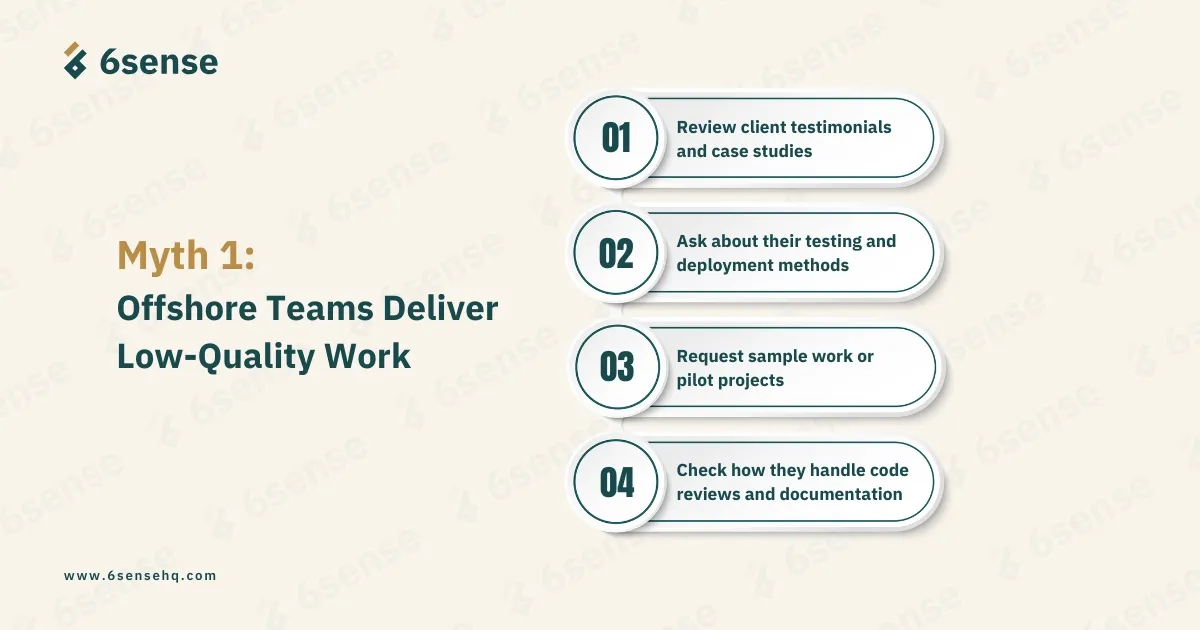
Ultimately, it is not the location that decides quality. It is the people, the process, and how well expectations are managed from the beginning.
One of the biggest concerns people have about offshore development is communication.
When you think of offshore development, communication is often the first worry that comes to mind. The idea of working across time zones, juggling different accents, or waiting hours for replies can make collaboration sound complicated and stressful.
Thankfully, that image is far from the truth. Offshore teams today are well-prepared to work with international clients.
Time zones, once seen as a challenge, can actually become an advantage. While your local team wraps up for the day, your offshore team continues development, keeping work moving almost around the clock.
Smooth communication depends on planning, not distance. You can make collaboration effortless by:
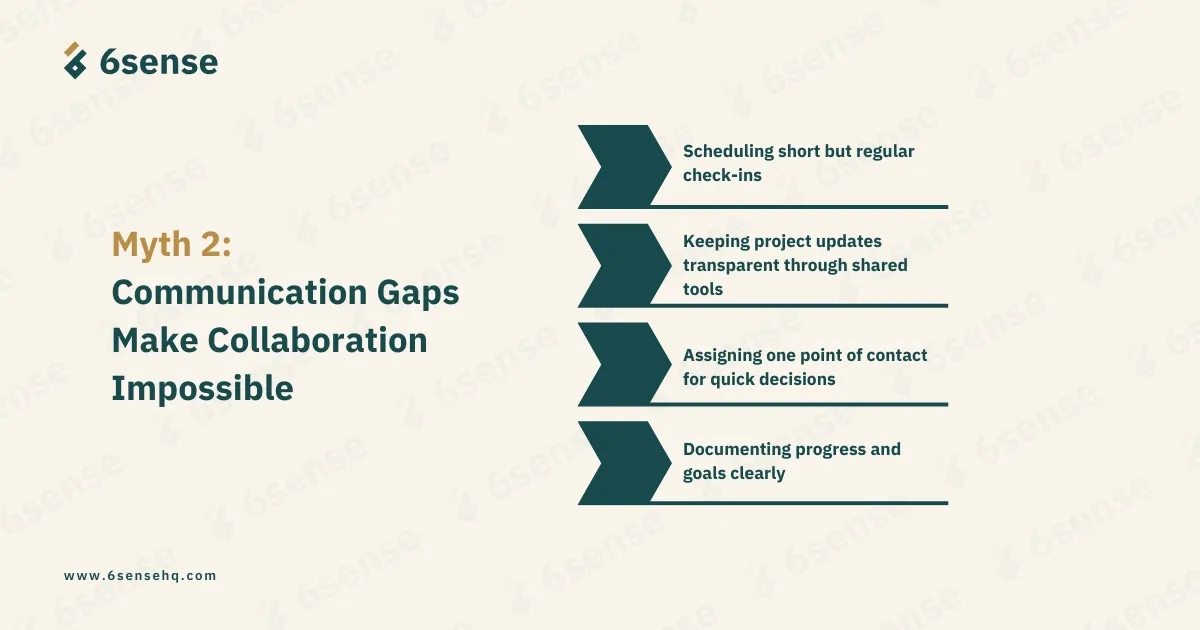
Many companies even find that offshore teams are more responsive and proactive than those sitting in the next office.
A common misconception is that many people think the only reason companies choose offshore software development is to save money. It is often seen as a cheaper alternative rather than a strategic move, which can make it sound like a risky shortcut instead of a smart business decision.
But saving money is just one part of the story.
Offshoring gives businesses access to a global talent pool, allowing them to find specialized skills that might be hard to hire locally. It also offers flexibility in scaling teams up or down depending on project needs.
For many, offshore partnerships are a way to move faster, experiment with new technologies, or enter new markets without overstretching local resources. The goal is not to spend less money but to achieve more with the resources available.
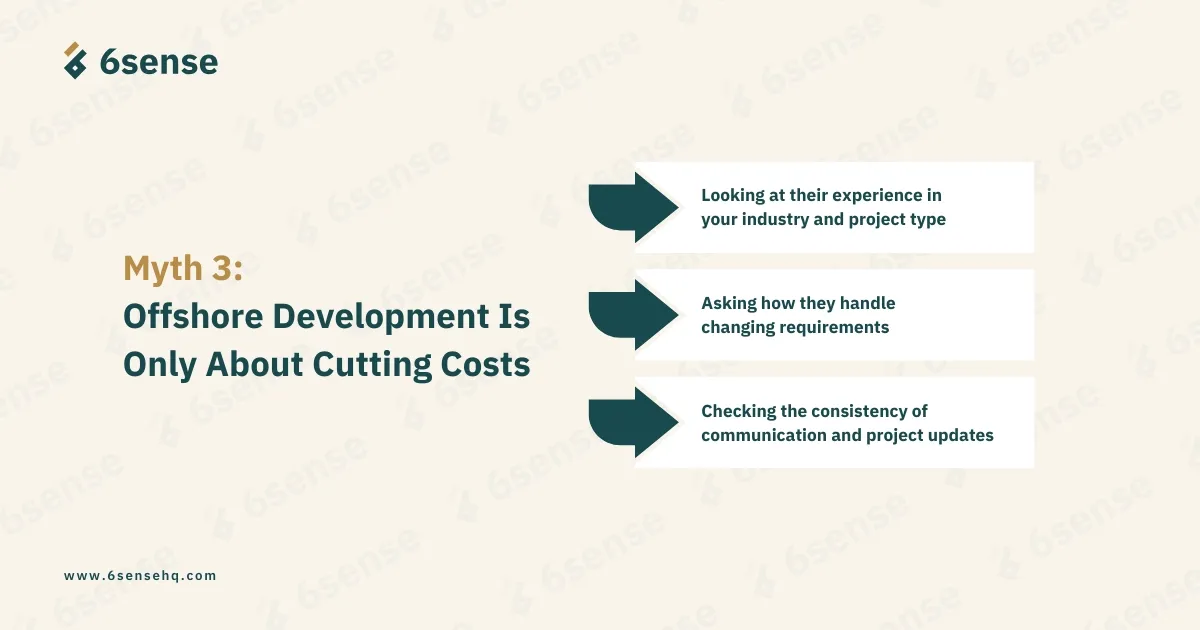
When selecting an offshore partner, consider the overall value they bring. You can do this by:
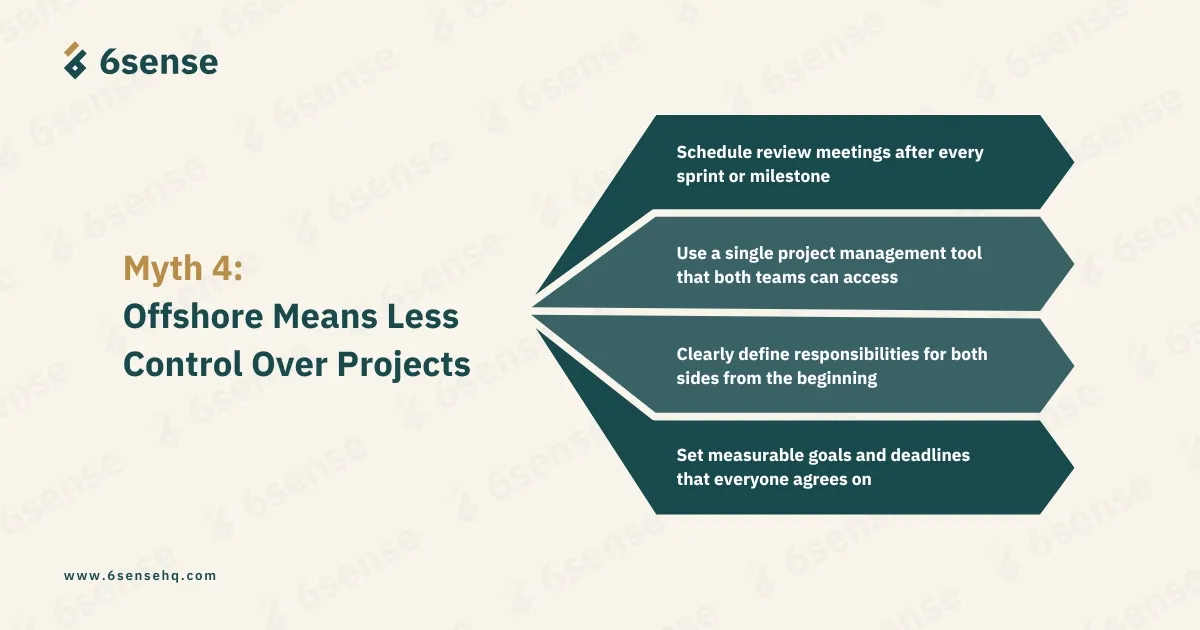
A common fear about offshore development is that once the project starts, control is lost. Many founders like you worry they will not know what is happening day to day, and that their input will be overlooked or ignored.
However, the reality is that control is not about geography. It is about communication, process and trust.
Most experienced offshore teams use project management frameworks like Agile or Scrum. You get regular updates, sprint reviews, daily standups if needed and complete visibility into progress. Tools like Jira, Trello, ClickUp or Asana make it easy to track tasks, timelines and responsibilities in real-time.
Most of companies that use offshore development reported better project transparency compared to traditional outsourcing models.
With the correct setup, you are gaining a structured, collaborative system that works even when teams are miles apart.
To maintain complete control and clarity:
Security is a serious concern for any business, especially when you are working with a team outside your home country.
It is natural to wonder how safe your data is and what happens if your code or product idea gets leaked. These are valid questions, and they often make you hesitate before considering an offshore partnership.
Business owners often worry that intellectual property will be mishandled or stolen once it leaves their internal network.
Offshore teams work under strict NDAs, follow data protection laws like GDPR, and often hold international certifications such as ISO/IEC 27001. These standards are not just paperwork. They guide how teams handle access, encryption, internal tools and client communication.
Before signing a contract, carefully evaluate your partner's security approach. Here are a few practical steps:
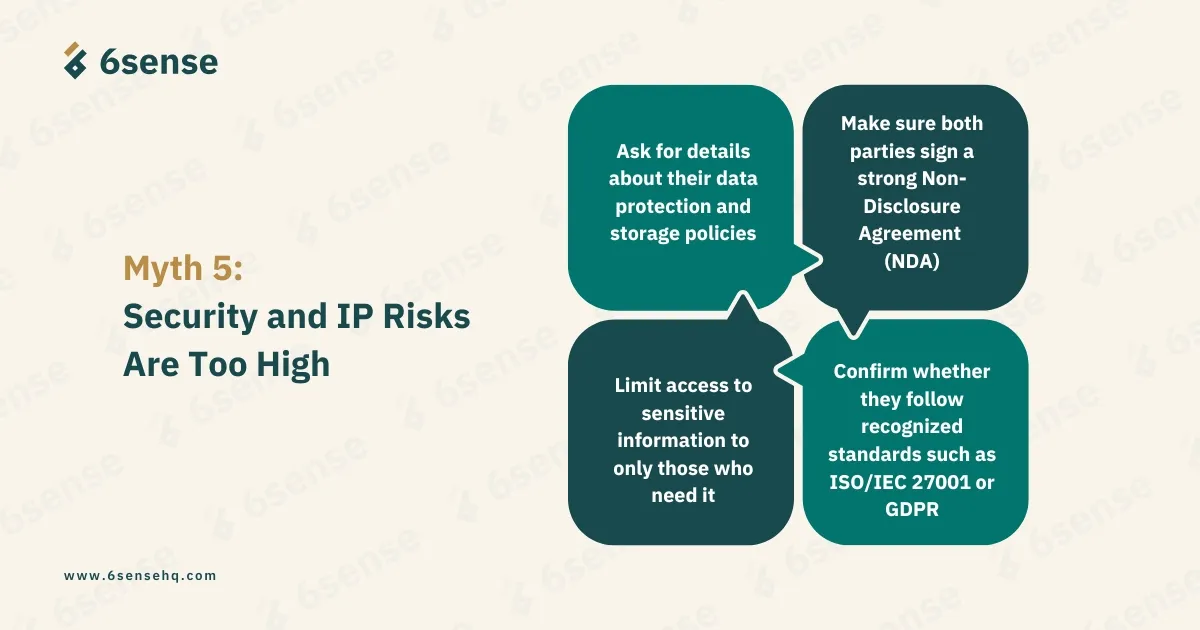
A trusted offshore partner will be open about their security practices and happy to explain how they protect your information.
One of the biggest concerns businesses have is whether an offshore development team will truly understand what they are building and why it matters.
It is easy to assume that a remote team will simply follow instructions without thinking about the bigger picture. This can lead to fears about a poor user experience, unmet expectations, or a final product that feels disconnected from your vision.
But in recent years, the offshore model has shifted from simple outsourcing to strategic partnerships. Reputable offshore firms now invest heavily in onboarding and discovery phases to learn a client's goals, user base, and growth plans.
Because these teams work with clients from diverse industries and regions, they often bring valuable outside perspectives that local teams might overlook.
To make sure your offshore team truly understands your business vision, you can:
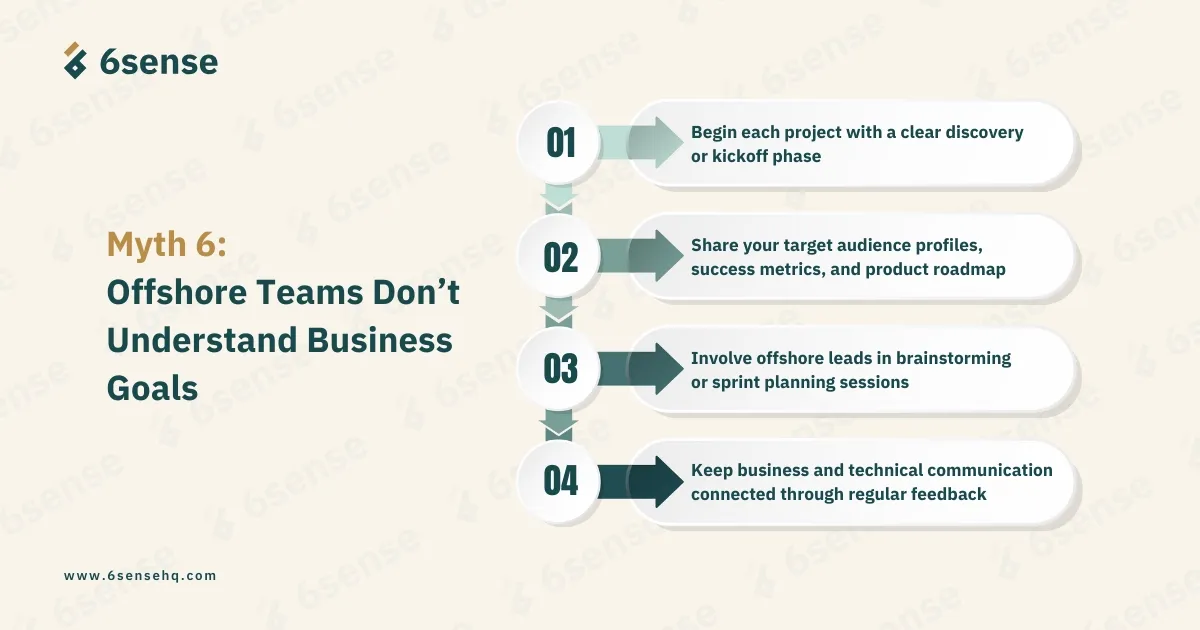
When collaboration is treated as a partnership, offshore teams align naturally with your long-term goals. The result is not just functional software, but products that genuinely support your business vision.
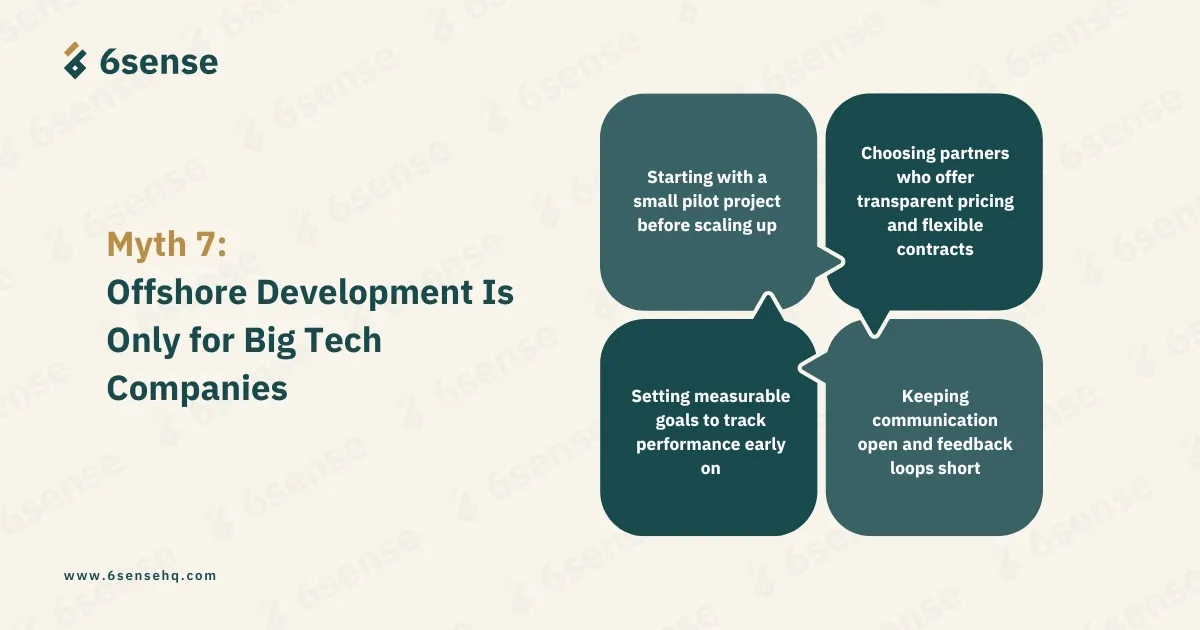
It is easy to assume that offshore development partners are something only large corporations can afford or manage. Smaller businesses and startups often think the model is too complex, expensive, or out of reach for their needs.
But the reality is, offshore development is more accessible than it has ever been.
The reason is simple: it provides access to world-class talent and scalable resources without the high overhead of local hiring.
For startups, offshore teams can be game-changers. Helping them launch products faster, test ideas efficiently, and grow steadily without overextending budgets.
Small and mid-sized businesses can successfully work with offshore teams by:
Offshore software development has its share of myths, and it is easy to see why.
Bad experiences, misunderstandings, and outdated assumptions have shaped the way many people view the idea of working with a remote team. But as we have seen, the reality today is very different.
Modern offshore teams are skilled, professional, and well-equipped to work with businesses of all sizes. They use reliable tools, follow proven processes, and care just as much about your success as any local team would.
Like any partnership, success depends on clarity, communication, and choosing the right people. When those pieces are in place, offshore development can become a powerful way to grow your product and move your business forward faster.
If you have been on the fence, take a step back and reframe your perspective on offshore development. It is not about cutting corners. It is about working smarter, accessing talent globally, and building great things with the right team by your side.
Optimize your 2026 offshore strategy with a Mirror Stack, Zero Trust security, and AI to scale execution while saving 40-70%.
9 min read

Stop scrolling, start hiring: 15 best offshore dev sites for 2026 with rates, vetting process, and quick picks. Tap in!
14 min read

Offshore ROI in 2026: calculate true TCO, payback & NPV, dodge rework traps, and scale faster, grab the checklist now!
7 min read