

6sense HQ vs DevToDollars: Best MVP Partner in 2026
Compare 6sense HQ and DevToDollars on MVP speed, team models, proof, pricing, and post-launch support to pick the right fit.
15 min read
Loading…
Learn how to build a Minimum Viable Product (MVP) to validate your startup idea, reduce costs, and launch your software faster.
Written by: AKM Ahsan Created on: 3 Apr 202610 min to read
If you're a founder thinking about building a software product, one question usually comes up first: Should you build the full product immediately or start smaller?
A Minimum Viable Product (MVP) is the simplest version of a product that includes only the essential features needed to solve a real user problem. The goal is to launch quickly, test the idea with real users, and learn what works before investing heavily in development.
At 6sense HQ, we often see founders make the same early mistake: trying to build a complete product before validating the idea. Over the past few years, our team has helped 40+ startups build MVPs to test their ideas quickly and reduce development risk.
In this guide, you’ll learn what MVP means in software development and why startups build MVPs first. Let’s begin!
If you’re short on time, here are the core insights from this guide:
A Minimum Viable Product (MVP) is the earliest version of a product that includes only the most essential features needed to solve a core user problem. Instead of building a full product immediately, developers create a simple but functional version that allows them to test the idea with real users.
The goal of an MVP is learning. It helps teams understand whether users actually need the product and what improvements are required before investing more time and resources into development.
Entrepreneur Eric Ries, who popularized the Lean Startup approach, explained it well:
This approach matters because many startups fail by building products nobody needs. In fact, CB Insights says about 42% of startups fail because they create products without proper market demand.
Before spending months or years building a full product, companies use MVPs to test ideas in the real world. This approach reduces risk and helps teams learn what actually works. This is why MVP development is so important for startups: it allows founders to validate demand, control costs, and make better product decisions before committing to a full-scale product.
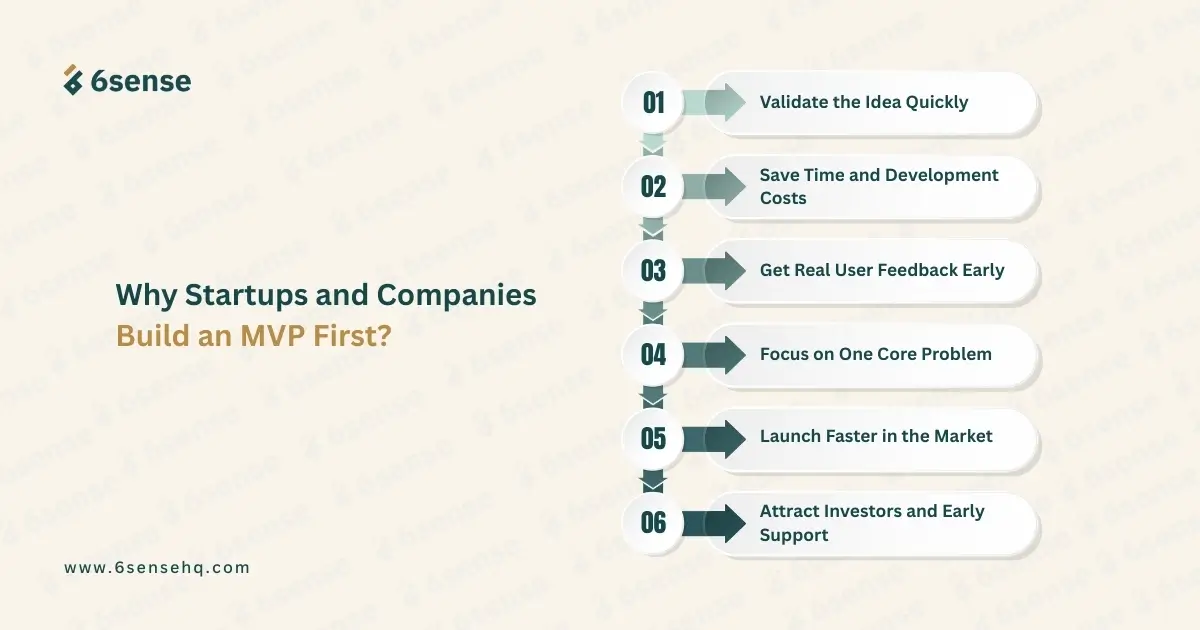
One major reason companies build MVPs is to test whether their idea solves a real problem. Instead of guessing what users want, teams release a simple version and see how people respond. Early feedback helps founders confirm whether the product has real demand before investing heavily in development.
Building a full product with many features takes time and money. MVPs reduce this risk by focusing on essential functionality only. Teams build the smallest working version first. If the idea works, they expand it later. This prevents wasting resources on features users may never need.
User feedback is one of the most valuable things for startups. When an MVP is released to early users, developers learn what works and what doesn’t. These insights help improve the product step by step instead of relying on assumptions.
Many experienced founders recommend that an MVP should solve just one important problem. Instead of adding many features, the product focuses on delivering clear value. It keeps the MVP development process simple and ensures the product remains useful to its target audience.
Speed matters in startups. An MVP allows companies to release their product quickly and start building a user base. This early launch also helps companies learn faster than competitors who spend too long perfecting their product before releasing it.
Investors usually prefer ideas that already show real user interest. An MVP can demonstrate early traction, feedback, or user growth. Even a small number of active users can prove that the product idea has potential and is worth investing in.
Many of today’s most successful companies started with extremely simple MVPs. These early versions helped founders test demand before building full platforms.
The founders of Airbnb started their MVP by renting three air mattresses in their apartment during a conference in San Francisco. They built a simple website, listed the space, and hosted guests themselves. This experiment proved that people were willing to pay for short-term home rentals.
Key Lesson: Start small and validate demand before scaling.
Before building the full product, Dropbox founder Drew Houston created a simple explainer video showing how the product would work. The video attracted thousands of people to the waiting list overnight.
Key Lesson: You can validate demand even before writing code.
Slack began as an internal communication tool used by a small gaming startup team. The founders realized the messaging tool was more useful than the game itself. They turned it into a product and released it as an MVP.
Key Lesson: Sometimes MVPs evolve from internal tools.
An MVP is not just a basic product. It must still deliver real value while remaining simple enough to build quickly.
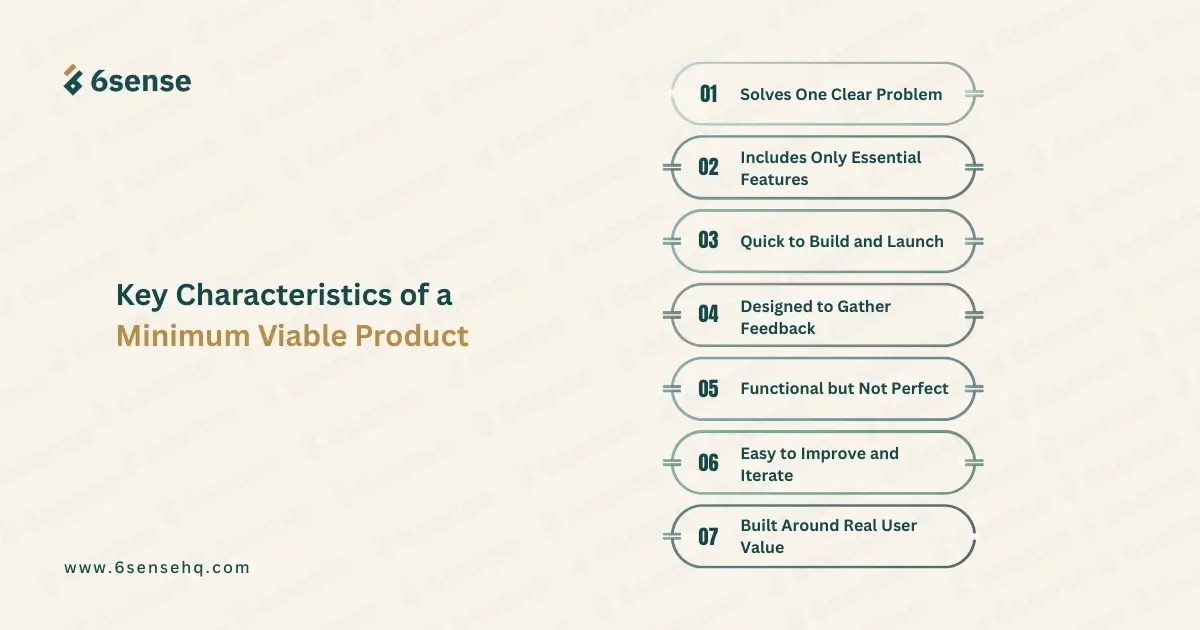
A strong MVP development focuses on solving one specific user problem instead of trying to do everything.
The MVP should contain only the core features needed to deliver the main value.
Speed is essential. The faster you launch, the faster you can start learning.
Every interaction with early users should generate insights that help improve the product.
An MVP does not need to be polished. It simply needs to work well enough to test the idea.
The product should be designed so that new features can be added later.
Even though it is minimal, it must provide genuine value to early adopters and they can experience the real benefits of the MVP.
Different products require different MVP approaches. Several common MVP types help startups test ideas efficiently.
A simple website explaining your product idea. Founders measure interest through sign-ups or waitlists.
The service is delivered manually by humans instead of automated software.
The product appears automated to users but is actually operated manually behind the scenes.
The product focuses on delivering one core feature extremely well.
Some founders validate product ideas using a simple demonstration video before building the actual product.
Although MVPs, prototypes, and proofs of concept are sometimes discussed interchangeably, they serve different purposes. A proof of concept tests whether an idea is technically possible, a prototype demonstrates how the product may look or function, and an MVP is released to real users to validate market demand.
| Aspect | Proof of Concept (PoC) | Prototype | MVP |
| Purpose | Validate technical feasibility | Test design and user interface | Validate real market demand |
| Audience | Internal teams | Internal teams or testers | Real users |
| Features | Minimal technical experiment | Design simulation | Functional product |
| Time | Days to weeks | Weeks | Weeks to months |
| Outcome | Technical validation | UI feedback | Market validation |
| Phase | Typical Timeline | Estimated Cost |
| Product Discovery & Validation | 2–4 weeks | $5k – $20k |
| Product Design (UX/UI + Wireframes) | 3–5 weeks | $10k – $35k |
| MVP Development (Core Features) | 8–16 weeks | $25k – $150k |
| Testing, QA & Iteration | 3–5 weeks | $10k – $40k |
| Launch & Early Feedback Cycle | 2–4 weeks | $5k – $20k |
An MVP allows businesses to test their ideas in the real world before building a complete product. Instead of relying on assumptions, companies can observe how real users interact with the product and what features they actually need.
This early testing stage provides valuable insights into customer behavior. Teams can identify what works well, what needs improvement, and whether the idea has long-term potential. If the concept does not resonate with users, companies can adjust their strategy without losing significant resources.
This approach is especially important because startups often fail when they build products without market demand. Studies show that around 34% of startup failures happen due to poor product-market fit.
By validating ideas early, MVPs reduce risk, improve decision-making, and help businesses develop products that truly meet user needs.
Creating an MVP requires a focused process. Instead of building everything at once, teams follow a structured approach to develop, test, and improve the product.
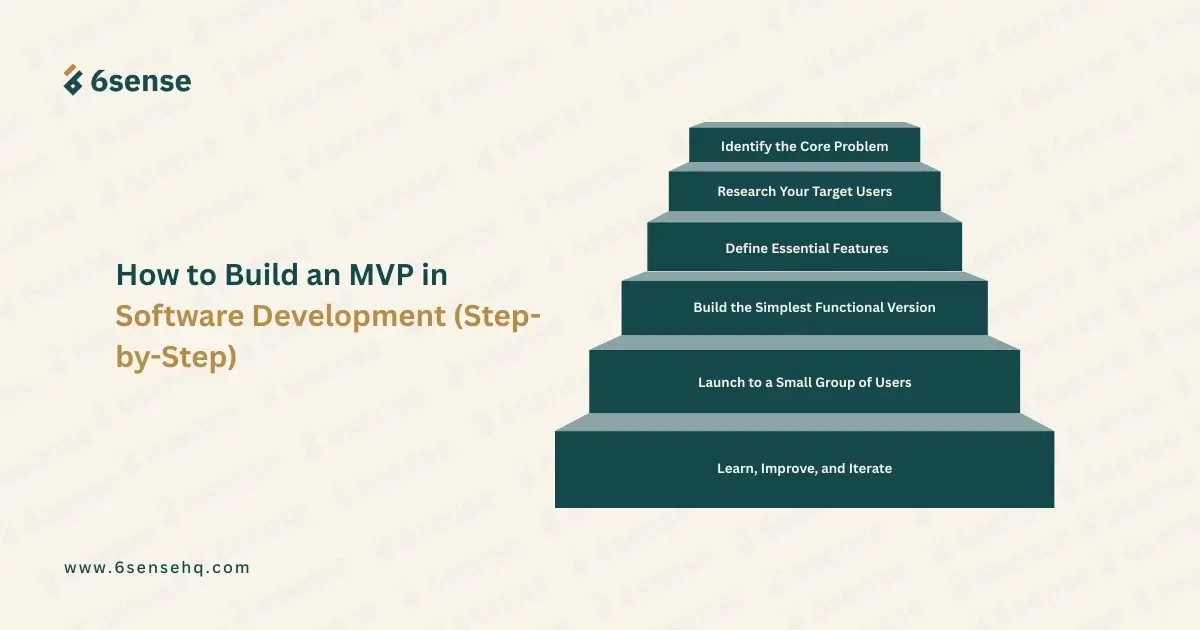
Start by clearly defining the main problem your product will solve. Successful MVPs focus on a single user pain point rather than multiple features. Understanding the problem deeply helps teams build a product that truly matters to the target audience.
Before building anything, talk to potential users. Understand their habits, frustrations, and expectations. These insights help developers design an MVP that addresses real needs instead of assumptions about the market.
List all possible features for your product, then narrow them down to the absolute essentials. Only include the features necessary to solve the main problem. Everything else can be added in future versions.
Develop the smallest version of the product that still works properly. The goal is not perfection but functionality. The product should deliver clear value while remaining simple and easy to build.
Release the MVP to a small group of early users instead of a large audience. This controlled launch helps teams observe how people use the product and identify issues before scaling.
After launching the MVP, collect feedback from users. Study their behavior and identify improvement areas. Based on these insights, update the product gradually and continue refining it with each new version.
Yes. Many founders today build MVPs using no-code tools without writing software from scratch.
Popular tools include:
These platforms allow entrepreneurs to launch MVPs quickly and test ideas before investing in full development teams.
Many teams misunderstand what an MVP should be. They may also face common challenges in MVP development, such as unclear priorities, limited budgets, scope creep, and insufficient user feedback. Avoiding these challenges and other common MVP mistakes can greatly improve your chances of building a successful product.
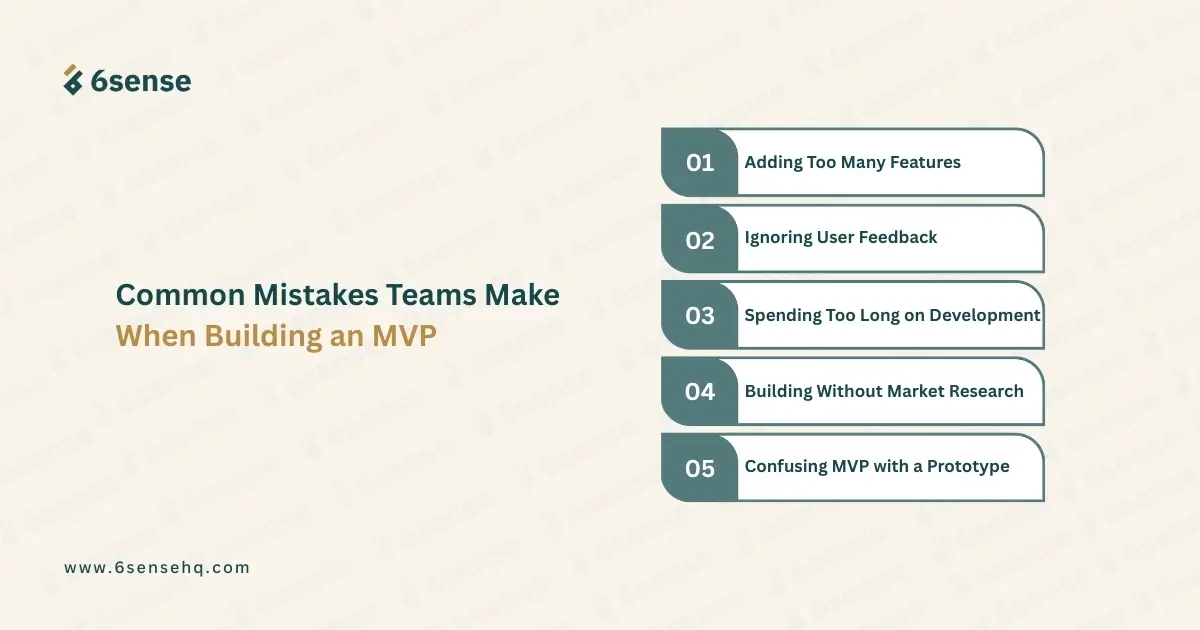
One common mistake is turning the MVP into a full product. Teams sometimes add unnecessary features before launching. This slows development and defeats the purpose of building a minimal product.
Some teams launch an MVP but fail to listen to users. Feedback is the main reason for building an MVP. Ignoring it means missing valuable insights that could improve the product.
An MVP should be built quickly. Spending months perfecting design or adding extra features removes the advantage of rapid learning and early testing.
Creating an MVP without understanding the target audience can lead to poor results. Teams must study users and their problems before building the product.
An MVP is a working product that users can interact with. A prototype is only a concept demonstration. Confusing the two often leads to unrealistic expectations and weak product validation.
A Minimum Viable Product is one of the smartest ways to start building software products today. Instead of investing large amounts of time and money upfront, businesses launch a simple version first and learn from real users.
This approach helps reduce risk, validate ideas quickly, and improve products through continuous feedback. Many successful startups began with small MVPs before growing into large platforms used worldwide.
If you are planning to build a new digital product, start small and focus on solving one real problem first. Learn from users, improve gradually, and scale once the idea proves its value.
Talk to the expert product team at 6sense HQ and turn your idea into a working software product today.
Compare 6sense HQ and DevToDollars on MVP speed, team models, proof, pricing, and post-launch support to pick the right fit.
15 min read
Compare 6sense HQ alternatives for MVP development in 2026 and find the best software team for your startup budget and goals.
17 min read
Learn whether one developer can build an MVP in 2026 with cost, scope, AI tools, low-code tips, risks, and launch advice.
22 min read