


6sense HQ vs DevToDollars: Best MVP Partner in 2026
Compare 6sense HQ and DevToDollars on MVP speed, team models, proof, pricing, and post-launch support to pick the right fit.
15 min read
Loading…
Avoid MVP failure! Learn to dodge the 7 most common development mistakes to save time, reduce risk, and scale your startup faster.
Written by: AKM Ahsan Created on: 15 Mar 202611 min to read
Building a successful MVP is critical for startups because it allows you to validate your ideas, test your market, and save time and money by focusing on what really matters. Following a structured MVP development framework and methodology also helps teams connect validation, prioritization, development, testing, and iteration instead of treating them as separate activities. In this blog, we’ll cover 7 crucial MVP development mistakes and how to avoid them.
If you’re ready to turn your startup idea into a market-ready product, you can’t afford to overlook these pitfalls. Failing to understand and correct these mistakes can not only delay your launch but also cause irreversible damage to your product’s success.
Avoiding these mistakes now will save you time, money, and frustration down the road. Let’s dive into these essential lessons and make sure your MVP development sets you up for success.
An MVP (Minimum Viable Product) is the simplest version of your product that allows you to test your idea and gather feedback from real users without wasting time or resources. It focuses on the core features that solve the main problem you're targeting and validate your concept.
As a startup, building an MVP is critical because it lets you test your assumptions early, get feedback fast, and avoid investing heavily in features that might not be what your users actually need. Even if you opt for fundraising, MVP approaches achieve 40% higher success rates in securing subsequent funding rounds than those following traditional development paths.
The goal is to learn quickly, refine your product, and build on what works. Understanding the MVP development process from validation to launch helps founders organize that learning into clear, repeatable steps. Without an MVP, you risk spending months developing a product that no one wants.
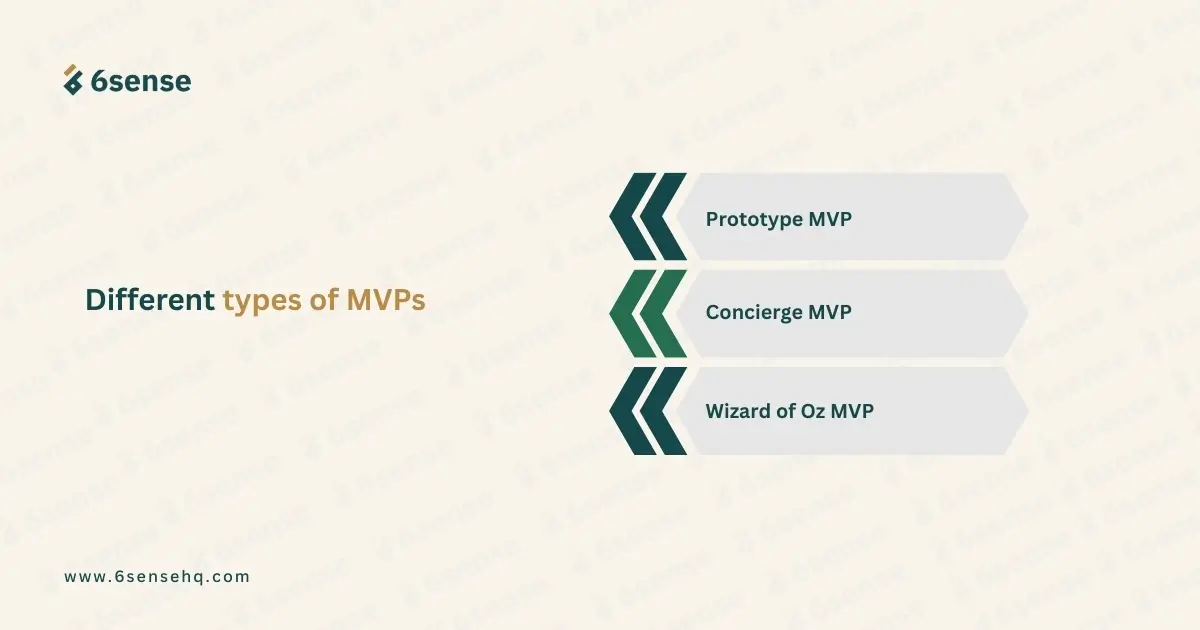
There are different types of MVPs that might suit your needs:
One of the most common MVP development mistakes is adding too many features right at the start. While it's tempting to build a “complete” product, this often leads to unnecessary complexity and delays.
The Problem: You might think that more features will make your MVP more appealing and prove its value faster. However, when you try to do too much, you risk overwhelming your users and losing sight of the core problem your product is meant to solve.
Why It Happens: This mistake often happens because many startups are eager to showcase a "full" product or feel that multiple features will impress users. But in reality, this approach just creates confusion and wastes valuable resources. So, It is crucial to know how to avoid MVP feature creep.
How to Solve It:
One of the most dangerous mistakes in MVP development is ignoring customer feedback. Without gathering MVP user feedback, you might miss crucial insights that can make or break your MVP.
The Problem: You might believe that your initial assumptions are enough to guide the development of your MVP. However, failing to gather feedback from your audience can result in building a product that doesn't solve their actual problems or meet their needs.
Why It Happens: Many startups skip customer feedback because they want to launch quickly or feel confident that their idea will resonate. It’s easy to fall into the trap of thinking that if you build it, users will come but this often leads to frustration when the product doesn’t gain traction.
How to Solve It:
A common MVP mistake for startups is overestimating market demand. Many startups rush into building their products without truly validating whether there’s real demand for them.
The Problem: You might believe that your idea is revolutionary and that everyone will want to use your product. However, failing to validate the market demand can lead to wasted resources on a product that doesn’t resonate with users or solve a real problem.
Why It Happens: This mistake often occurs because entrepreneurs are passionate about their ideas and assume there’s a large market for them. The excitement about the product can overshadow the need for thorough market research, leading to misguided assumptions.
How to Solve It:
Startups rush into product development without properly planning how long it will take to create and test their minimum viable product.
The Problem: You may think that building an MVP is a quick, cost-effective process. However, when you fail to allocate enough time or resources, you risk running out of money or missing critical deadlines, both of which can kill your project before it even has a chance to take off. Even according to reddit who builds your product plays a vital role directly affects your MVP product.
Why It Happens: This mistake happens because many entrepreneurs are overly optimistic about the amount of work required. There's often the assumption that because it’s an MVP, it should be quicker to build. In reality, MVPs still require careful planning, coding, and testing to ensure they provide the value your users need.
How to Solve It:

Many startups try to add every possible feature they think might be useful, but this can overwhelm the product and dilute its core value proposition.
The Problem: When you don’t clearly define the core value of your MVP, you might end up developing features that are nice to have but aren’t essential. This can lead to a prototype that doesn’t actually solve the key problem for your users, and ultimately, it may fail to resonate with users.
Why It Happens: This mistake often occurs because entrepreneurs are eager to show off their product’s potential or worry about missing features that might be necessary later. However, this often results in unnecessary complexity that reduces the MVP's effectiveness.
How to Solve It:
One of the biggest missteps in MVP development is failing to consider how your product will scale as your user base grows. While an MVP is meant to be simple, ignoring scalability can lead to difficult, costly issues later.
The Problem: If you build your MVP without considering future growth, it may work for early users but fail when you scale. This can lead to performance issues, crashes, or slow speeds, all of which harm the user experience and hinder growth.
Why It Happens: Startups often focus solely on getting the MVP out the door, assuming that scalability in MVP comes later. However, this can result in a lack of flexibility when demand increases, forcing you to spend extra time and money fixing issues.
How to Solve It:

A final critical mistake in MVP development is failing to define clear metrics for success. Without measurable goals, it’s impossible to know whether your MVP is meeting your users' needs or on track to become a successful product.
The Problem: Without clear metrics and KPIs, you risk blindly moving forward without understanding what’s working and what isn’t. You might think your MVP is successful based on intuition or limited feedback, but this can lead to misguided decisions and wasted resources.
Why It Happens: Many startups overlook the importance of metrics, thinking that MVPs don’t need tracking or that the product is too early to measure. However, the lack of benchmarks makes it harder to evaluate your MVP's success and validate assumptions.
How to Solve It:
Here are some additional examples that you should keep in mind while building your MVP.
A step-by-step MVP development checklist can help your team verify that important validation, planning, prioritization, development, testing, analytics, and launch tasks have not been missed.
Avoiding common pitfalls during MVP development is crucial to building a strong foundation for your startup. By focusing on the right features, gathering real user feedback, and planning for scalability, you can create a product that’s aligned with market needs and ready for growth.
As you build something that truly resonates with your users, make sure to track the right metrics and avoid common missteps that could derail your progress. If you need help to validate your ideas and build something that can evolve based on feedback, consider talking to our MVP experts now and avoid costly development mistakes!
By following these strategies, you’ll be well on your way to avoiding common development mistakes and setting your startup up for success. Keep your focus on what matters, and you’ll be ready to scale and deliver a product your users truly want.
Compare 6sense HQ and DevToDollars on MVP speed, team models, proof, pricing, and post-launch support to pick the right fit.
15 min read

Compare 6sense HQ alternatives for MVP development in 2026 and find the best software team for your startup budget and goals.
17 min read
Learn whether one developer can build an MVP in 2026 with cost, scope, AI tools, low-code tips, risks, and launch advice.
22 min read