

6sense HQ vs DevToDollars: Best MVP Partner in 2026
Compare 6sense HQ and DevToDollars on MVP speed, team models, proof, pricing, and post-launch support to pick the right fit.
15 min read
Loading…
MVP roadmap for startups: benefits, 6 MVP types, challenges, and a 6-step build-launch-iterate plan to validate demand fast!
Written by: AKM Ahsan Created on: 2 Mar 20266 min to read
Launching a new startup idea feels exciting, but building a full product without testing it first is risky and costly. That’s where MVP development comes in. A Minimum Viable Product (MVP) is the simplest version of your product that still solves a real user problem and lets you learn from real people.
With an MVP, you can test your assumptions early, save app development costs, and gather feedback that guides your next moves. This lean approach helps you validate market demand before investing a lot of time, money, or effort into a fully built product.
Therefore, startups using MVPs can reduce risks, enter the market faster, and make smarter decisions based on real user behavior rather than guesses. Let’s find out what more they can do in this blog!
Many startups fail because they spend too much money too soon. A clear reason is not validating ideas early; companies build products no one wants. An MVP helps fix this by launching a simple product first and learning from real users.
According to CB Insights data, about 35% of startups fail because there is no market need for their product or service, meaning they built something that customers didn’t truly want or need. Additionally, 38% of startups fail because they run out of cash, which can happen when they spend heavily on product development before confirming the new product will succeed in the market.
Here are 4 big benefits of MVP testing for startups:
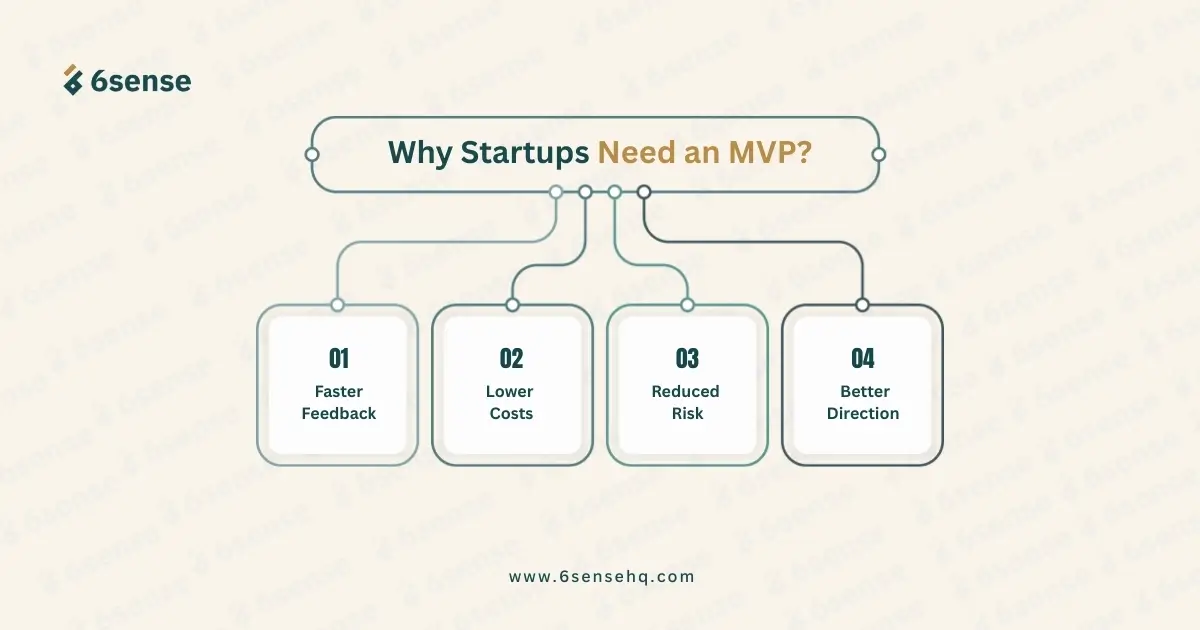
MVPs help startups test ideas with minimal cost and time by delivering just enough value to learn what real users want before the full product launch.
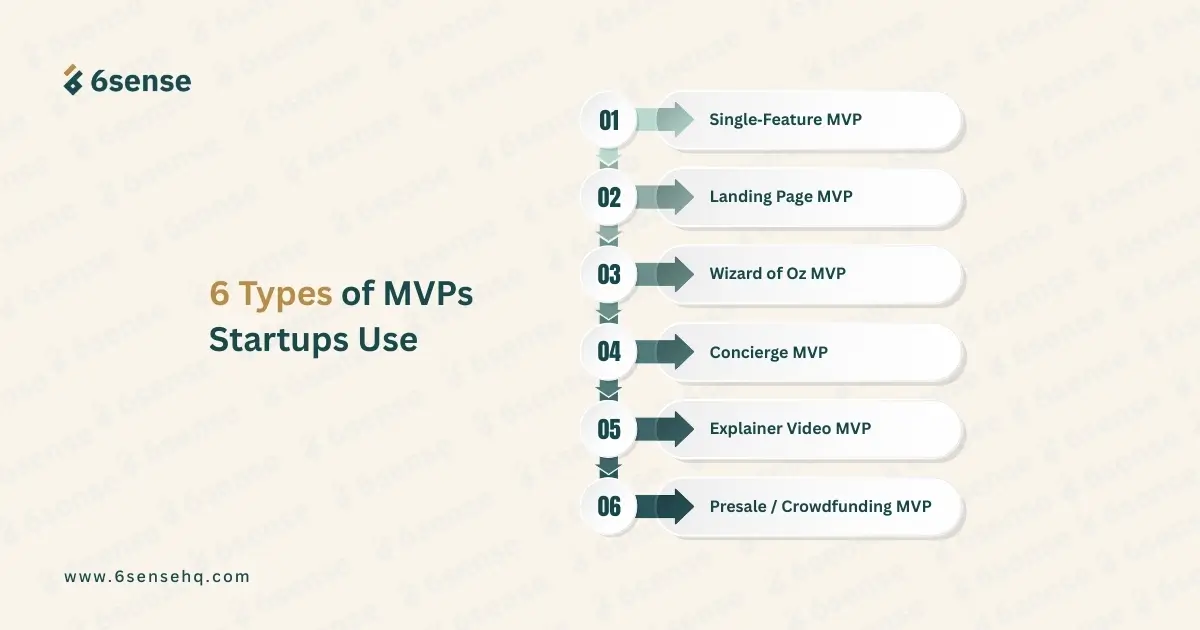
This MVP focuses on one core feature that solves a key problem. By offering just this main function, startups can quickly see if people truly care about the idea without building unrelated features. It’s fast to launch and perfect for basic testing or early adoption feedback.
A simple web page explains your idea, shows benefits, and collects email interest or signups. No product exists yet, but responses show real demand. It’s cheap, quick, and ideal for gauging interest before spending on development.
This looks like a real product, but the startup manually does most work behind the scenes. Users think it’s automated, yet human effort tests viability. It’s great for validating complex workflows without full engineering.
Instead of automation, a team manually helps each user with tasks that the product will one day do automatically. You build deep insights into user needs and preferences before investing in tech. Users get value, and you learn fast.
Show a short demo video of how your product would work and collect feedback or signups. Dropbox famously used this type of MVP to prove user interest before building the full product, saving time and cost.
Offer the product for sale or pre‑order before it’s built. This test real willingness to pay and can even help fund development. It’s a powerful way to validate demand and adjust product plans based on early backer feedback.
Simplifying your MVP process helps you avoid typical mistakes that many founders make.
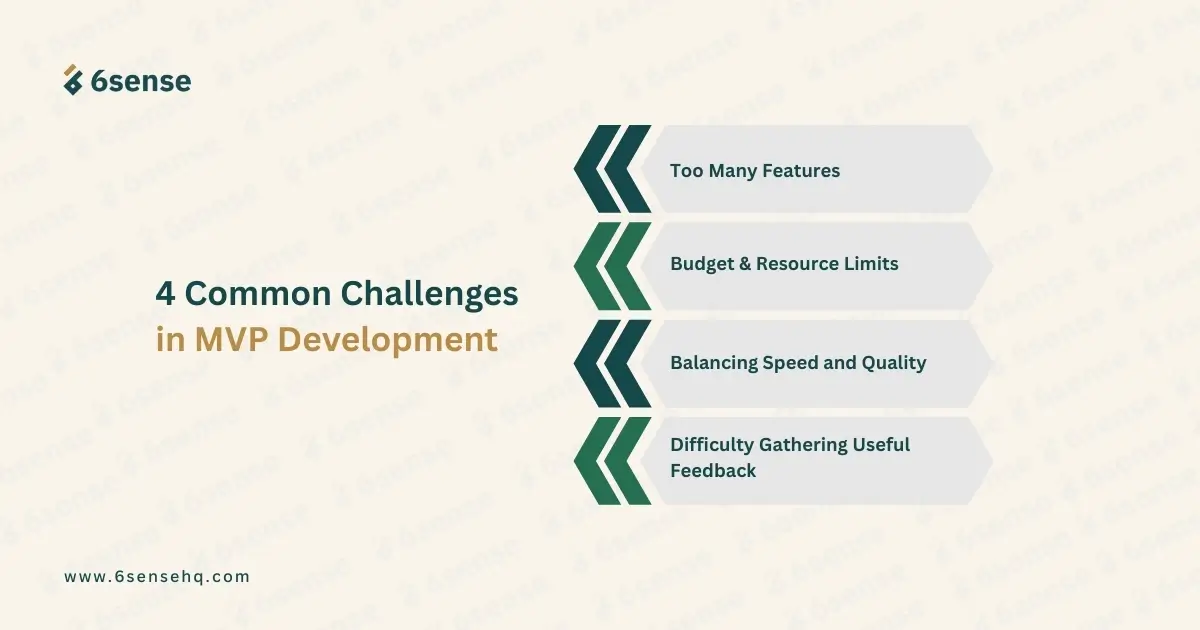
Founders often want to include “just one more” feature. But MVPs should focus on essentials; extra features delay launch and confuse users. Keeping it simple helps speed the feedback loop and reduces MVP software development time.
Most startups have small teams and limited funds. This makes it hard to build and refine an MVP without careful planning. Set clear priorities, and spend money only on what’s necessary.
Rushing can lead to bugs and a bad user experience, but waiting too long delays validation. Aim for a product that’s good enough to gather meaningful feedback without perfection.
It’s not enough to get feedback; it must be meaningful. Early users might give mixed responses, so focus on both user behavior and direct feedback to know what really matters.
One USA-based startup named Impromek faced similar problems. The founder was stuck with an unfinished product, a tight budget, and too many ideas, but no working MVP. He came to 6sense HQ, and our expert team helped him plan and build a lean core platform, which gave him a simple, usable product that real users could start using right away, without overbuilding.
These steps help you build an MVP for your tech startup that delivers value fast and teaches you what users want.
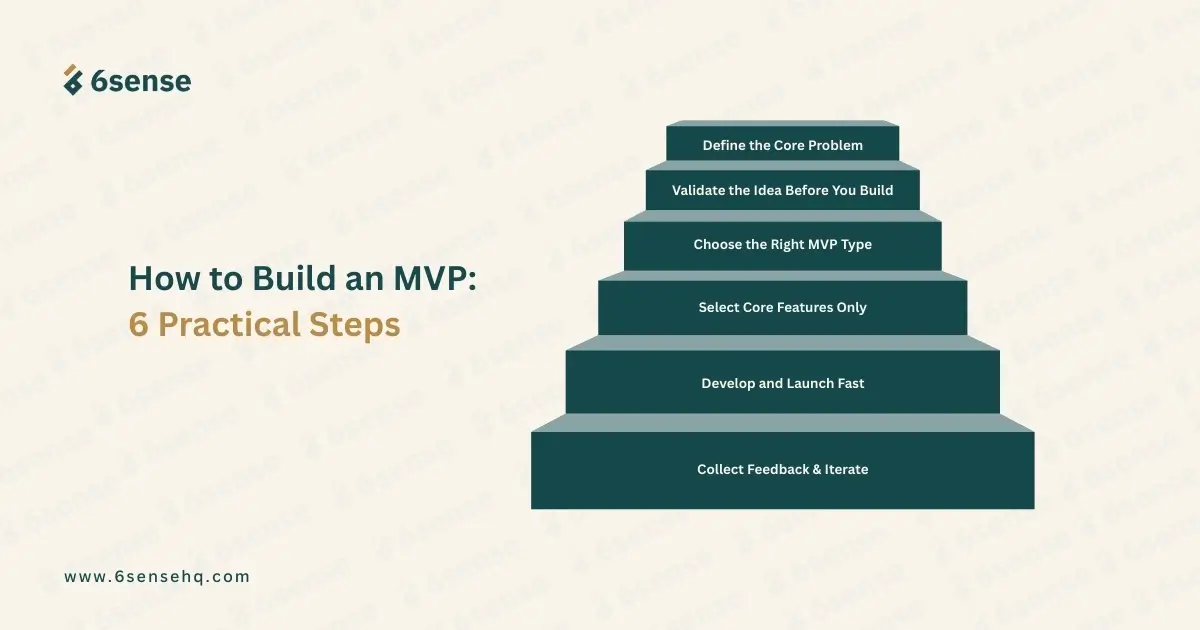
Start by finding the one main problem your users face. Talk to potential customers or research common pain points. Without a clear problem, your MVP won’t solve anything important, and you’ll waste effort building the wrong thing.
Test your idea before development. Create surveys, landing pages, or simple mockups asking users what they think. This confirms that people actually care about your solution before you invest in building it.
Pick an MVP format that fits your goals and budget. Some startups use simple landing pages, while others release basic working software. The type you choose affects how much you learn from users.
List all features you think you need, then remove anything that isn’t essential. Focus on solving the core problem. Simplifying features helps you launch faster and get better feedback.
Build the MVP quickly with the simplest tools possible. A faster launch means you start learning from users sooner. Don’t wait for perfection an MVP is meant to improve over time.
Once your MVP is live, watch how users behave and what they say. Use surveys, analytics, or interviews to gather feedback. Then improve your product based on real data, not assumptions.
MVP development for startups is a powerful way to test ideas, learn from real users, and build products that truly matter. Instead of guessing what users want, an MVP lets you learn fast, save money, and reduce risk. Many successful companies started with simple MVPs that helped them refine their vision and grow with confidence.
Remember that your MVP isn’t the final product; it’s a starting point for learning and improvement. Launch fast, listen carefully, and adapt based on what you discover.
Want help launching your MVP? Book a free strategy call to get expert advice from our team on building, launching, and growing your startup idea.
Compare 6sense HQ and DevToDollars on MVP speed, team models, proof, pricing, and post-launch support to pick the right fit.
15 min read
Compare 6sense HQ alternatives for MVP development in 2026 and find the best software team for your startup budget and goals.
17 min read
Learn whether one developer can build an MVP in 2026 with cost, scope, AI tools, low-code tips, risks, and launch advice.
22 min read