7 Step MVP Development Checklist Guide for Your Startup | 6sense HQ
The Ultimate MVP Development Checklist: A Step-by-Step Guide
Master the 7-step checklist for startup MVP development. Learn to define core features, validate user feedback, and scale effectively.
Written by: AKM Ahsan Created on: 24 Mar 2026•11 min to read
An MVP development checklist is crucial for successfully launching your minimum viable product. It helps you stay on track by guiding you through key steps like defining core features, gathering user feedback, and ensuring scalability.
Without a solid checklist, startups risk wasting time and resources on unnecessary features or missing critical steps. A structured roadmap helps you prioritize the right tasks, validate your product idea with early adopters, and adjust based on real user feedback. Whether you're building your first prototype or iterating for a final launch, an MVP checklist keeps you focused on what truly matters: solving your target audience’s pain points effectively.
What is an MVP and Why Do You Need a Checklist?
An MVP (Minimum Viable Product) is the simplest version of your product that lets you test your product's core idea with real users. The purpose of an MVP is to validate your product idea before investing heavily in full-scale development.
A checklist becomes more useful when it reflects the complete MVP development process from validation to launch. It helps founders organize research, planning, feature selection, development, testing, and post-launch learning instead of treating them as disconnected activities.
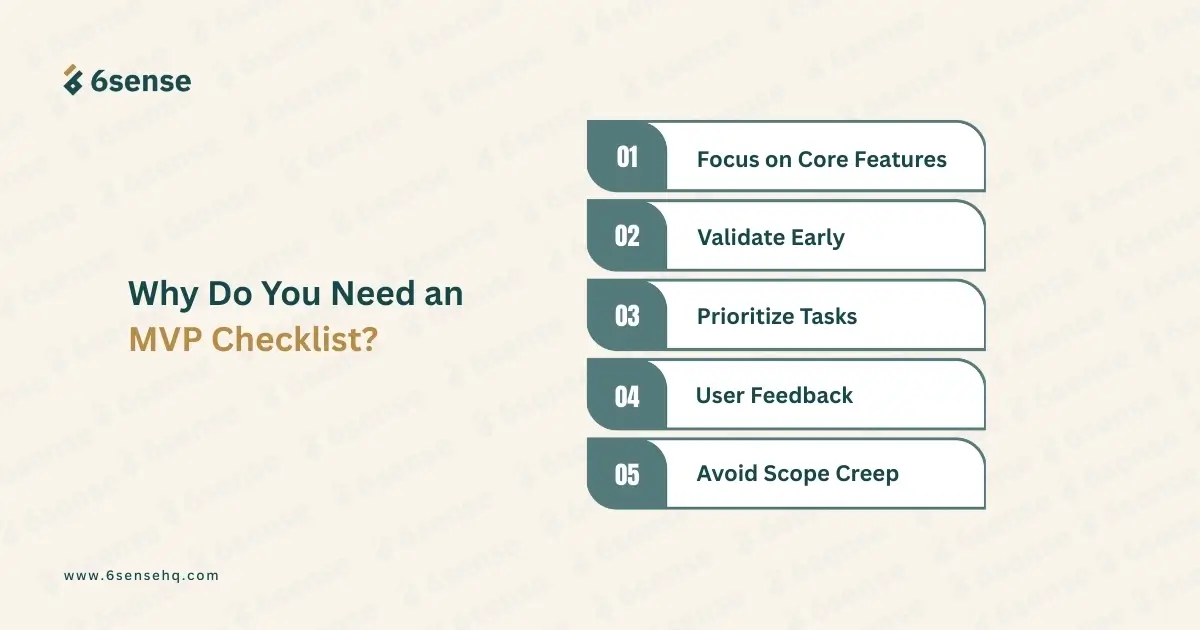
Why You Need an MVP Checklist:
Focus on Core Features: The checklist helps you identify and build only the most essential features needed to solve the core problem of your target audience.
Validate Early: It ensures that you validate your assumptions quickly with early adopters to confirm if your solution resonates with users.
Prioritize Tasks: The checklist guides you through the prioritization of tasks, so you don’t waste resources on unnecessary features.
User Feedback: It helps you incorporate user feedback throughout the development process to improve and iterate on the product.
Avoid Scope Creep: By following the checklist, you avoid adding non-essential features and stay focused on what really matters.
These seven steps can also be organized into a practical MVP roadmap for startup teams, giving founders a clearer sequence of decisions, deliverables, and milestones from the initial idea to market validation.
Step 1: Define Your MVP’s Purpose and Target Audience
Start with focused user research for an MVP to understand how potential customers currently experience the problem, which alternatives they use, and what outcomes matter most to them.
Turn those findings into evidence-based user personas for your MVP. Each persona should represent a meaningful user segment with distinct goals, behaviors, pain points, and reasons for trying your product.
The Problem:
Many startups make the mistake of rushing into development without first clarifying the core problem they’re trying to solve. This can lead to wasted resources and frustration, as the product may miss the mark entirely.
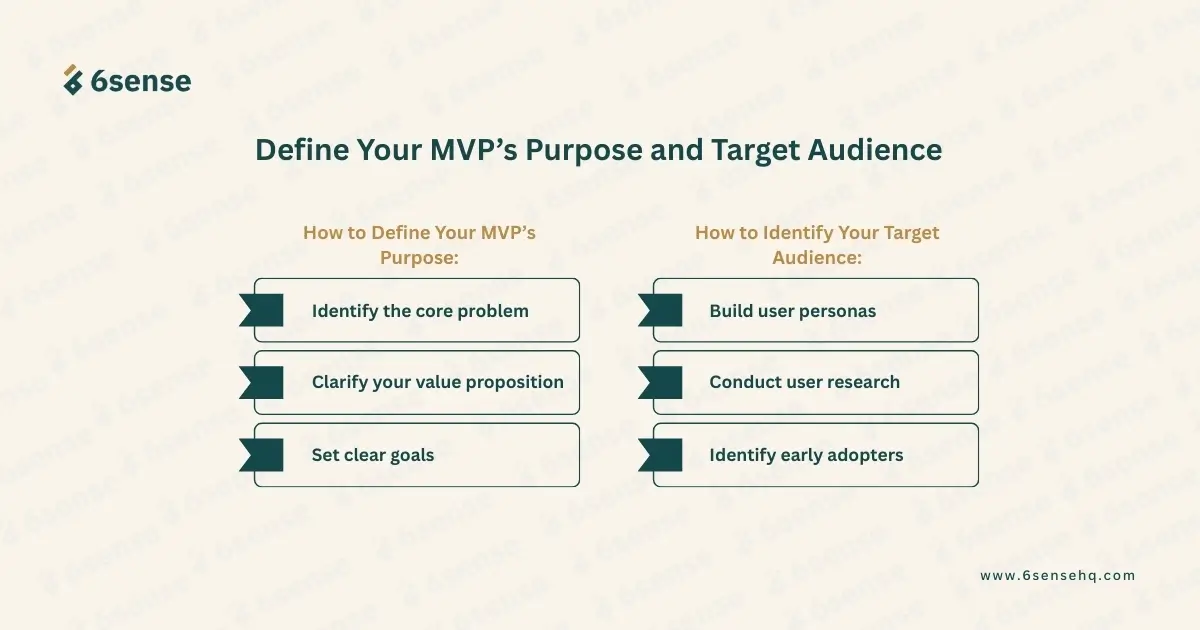
How to Define Your MVP’s Purpose:
Identify the core problem: Understand the key challenge your product will address. This is the pain point you want to solve for your target audience.
Clarify your value proposition: What makes your product unique and why will users care? Your MVP needs to prove that it provides a solution that’s better or different from existing alternatives.
Set clear goals: Determine what you want to achieve with the MVP. Are you testing user engagement? Validating market demand? Your goals will guide the rest of the development process.
How to Identify Your Target Audience:
Build user personas: Create detailed profiles of your ideal users, focusing on their needs, behaviors, and challenges.
Conduct user research: Use surveys, interviews, and market analysis to better understand your target audience and their pain points.
Identify early adopters: Users most likely to embrace your MVP. They’ll help you gather the user feedback needed to refine your product.
Step 2: Identify Core Features and Avoid Feature Creep
It is also useful to review the common mistakes that derail MVP development, particularly uncontrolled feature growth, weak validation, unclear success criteria, and premature scaling.
The Problem:
Many entrepreneurs think that including more features will make their MVP more attractive. However, adding too many features too soon can divert attention from the core value proposition and complicate the MVP, making it harder to validate your product idea with real users.
How to Identify Core Features:
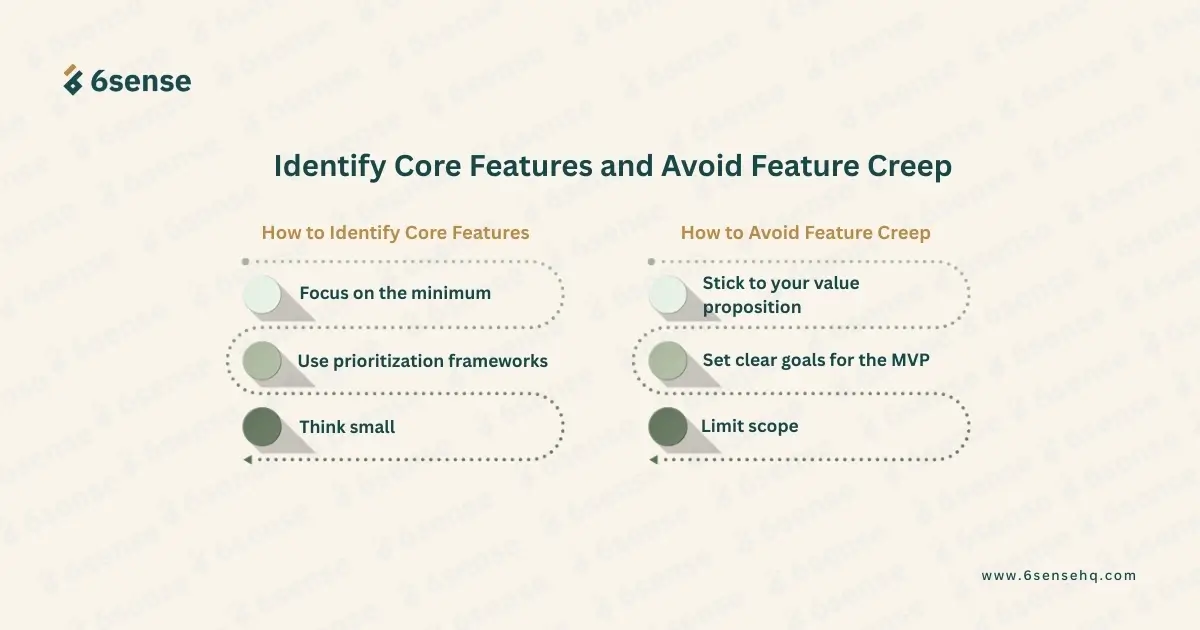
Focus on the minimum: Identify the fewest features required to solve the core problem for your target audience. Your MVP should address the most essential needs, without extra features that could distract or confuse users.
Use prioritization frameworks: A framework like the MoSCoW method helps you prioritize features into four categories — Must-have, Should-have, Could-have, and Won’t-have. This will help you focus on what truly matters for the MVP and avoid unnecessary additions.
Think small: The goal is not to build yourfinal product but to create a prototype that addresses the core issue. Keep it simple.
How to Avoid Feature Creep:
Stick to your value proposition: Every feature you add should directly contribute to solving the core problem. If it doesn’t, it doesn’t belong in the MVP. You can consider consulting a specialized MVP development team.
Set clear goals for the MVP: Define what success looks like for the MVP. If a feature doesn’t align with these goals, put it on hold for future iterations.
Limit scope: Be prepared to say no to additional features, even if they seem appealing. Focus on prioritizing features that provide the most value for your early adopters.
Step 3: Validate with Real User Feedback
Before speaking with potential customers, prepare customer discovery questions that test MVP assumptions. Ask about real experiences, past behavior, existing workarounds, and recurring frustrations rather than asking whether users like your proposed idea.
The Problem:
Failing to gather user feedback early in the development process can lead to building an MVP that doesn’t solve the right problems. Startups that skip this step risk spending resources on a product that’s not market-ready or doesn’t resonate with users.
How to Validate with Real User Feedback:
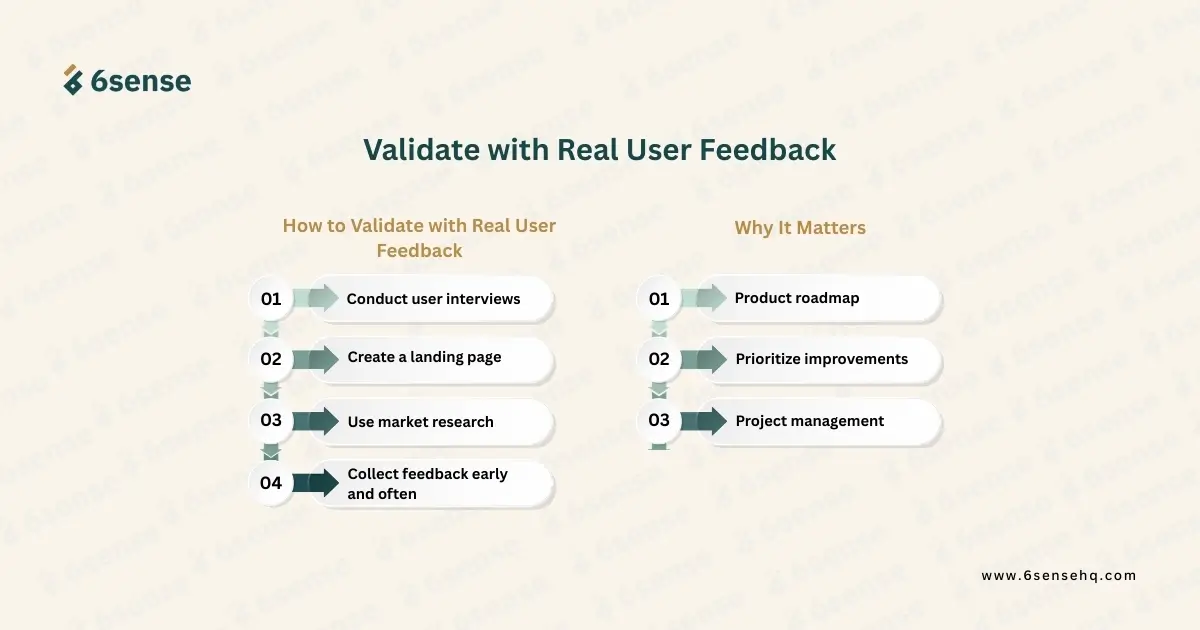
Conduct user interviews: Talk to early adopters and gather qualitative insights about your MVP. Understand their pain points, what excites them, and what needs improvement.
Create a landing page: Test interest in your MVP. This is a cost-effective way to gauge demand, collect email addresses, and measure engagement before fully developing the product.
Use market research: Complement user interviews with market research to ensure your MVP is aligned with the needs of the broader market. This gives you a bigger picture of how your product fits within the existing ecosystem.
Collect feedback early and often: Don’t wait until your MVP is perfect. Early MVP validation will help you identify issues quickly and make the necessary adjustments before scaling.
Why It Matters:
Product roadmap: Insights from user feedback will guide your product roadmap and ensure that future iterations align with what users actually want.
Prioritize improvements: Use the feedback to identify the features and changes that will have the greatest impact on your MVP’s success.
Project management: Gathering real user feedback allows you to better plan your next steps, allocate resources effectively, and avoid costly missteps during development.
Step 4: Build a Scalable MVP Architecture
As you start building your MVP, one of the most critical aspects to consider is scalability. While your MVP is meant to be a simplified version of the final product, it’s essential to plan for future growth right from the start.
The Problem:
Many startups rush into MVP development without considering how the product will scale. This can result in a product that works fine for initial users but struggles under increased demand. In fact, 50% of startups fail because they don’t scale their product to meet user need.
Why Scalability Matters:
When building an MVP, you may not need the full infrastructure of your final product, but you should consider how the product will handle more users and data. A scalable MVP ensures you don’t have to rebuild significant portions of your product when you expand.
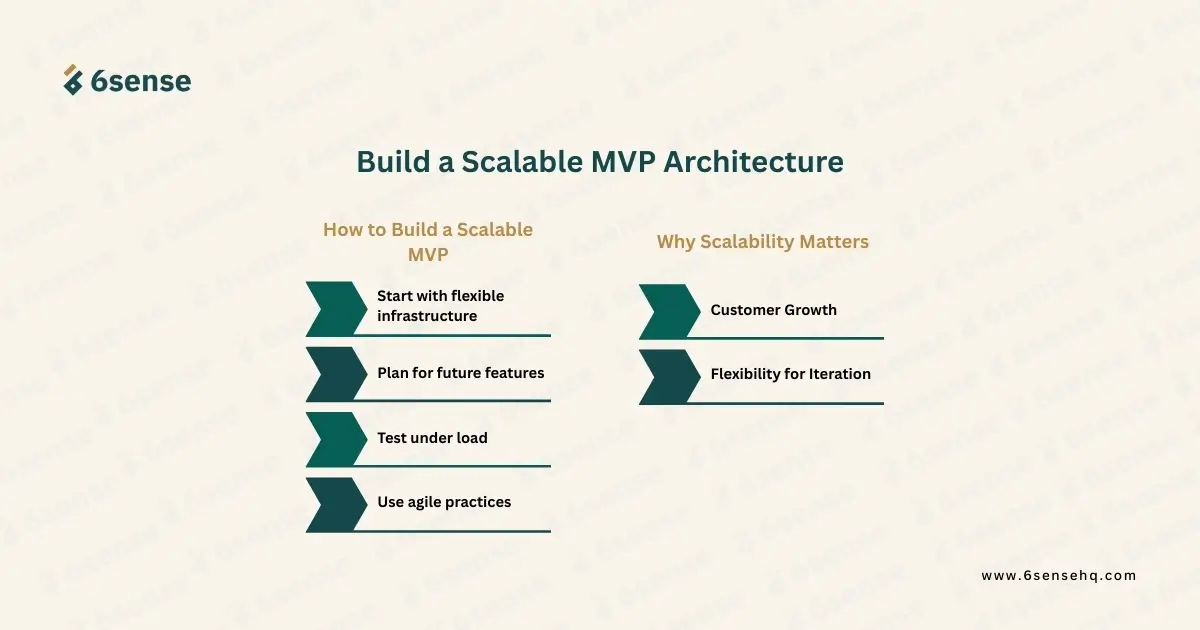
Customer Growth: As your customer base grows, your product will need to handle more traffic and users without breaking down. Building with scalability in mind avoids performance bottlenecks.
Flexibility for Iteration: A scalable architecture allows you to implement changes and iterative improvements without requiring a complete system overhaul.
How to Build a Scalable MVP:
Start with flexible infrastructure: Choose technologies that allow for easy scaling, such as cloud platforms like AWS or Google Cloud, which are built to grow as your product does.
Plan for future features: Even if you’re not implementing certain features right now, make sure the foundation of your MVP is capable of accommodating future functionality.
Test under load: Run stress tests to ensure your MVP can handle increased user traffic. This helps identify technical issues before they become problems.
Use agile practices: Implementing agile practices in your development process allows you to adapt to changes and scale more efficiently over time.
Step 5: Develop a Clear Testing and Feedback Plan
After building your MVP, one of the most critical steps is MVP testing and gathering user feedback. Skipping this phase can result in a product that doesn’t align with market demand or address the right user needs.
The Problem:
Without structured testing and feedback, you risk creating a product that fails to engage users or validate its core functionality. Without feedback, you can't be sure you're solving one core problem exceptionally well.
Why Testing and Feedback Matter:
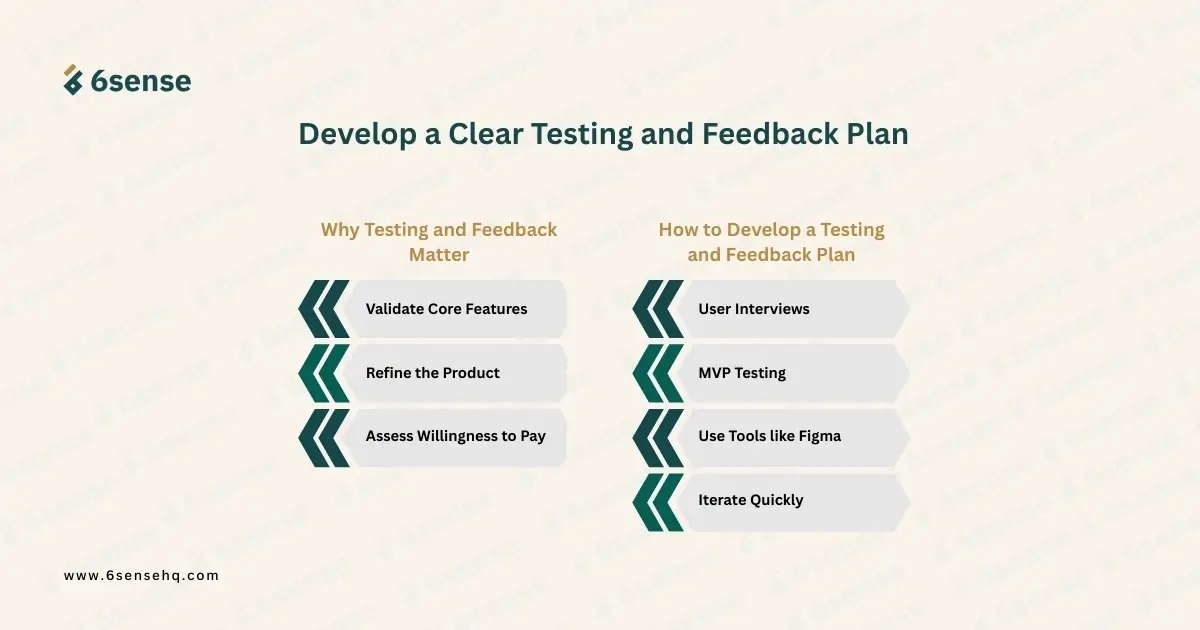
Validate Core Features: Testing ensures that your essential features address real user needs and solve the core problem.
Refine the Product: Early feedback lets you iterate on user feedback, improving the product in real time.
Assess Willingness to Pay: By validating whether users would be willing to pay for your product, you can assess its viability before full-scale development.
How to Develop a Testing and Feedback Plan:
User Interviews: Conduct detailed user interviews to uncover pain points and assess product fit.
MVP Testing: Focus on testing the core features with early adopters to understand their experience and gather actionable insights.
Use Tools like Figma: Use design tools like Figma for prototyping and refining before full-scale development.
Iterate Quickly: Make adjustments based on the feedback, and be ready to refine the product through an agile development process.
Step 6: Set Clear Metrics for Success
To ensure your MVP is on the right track, define clear success metrics. Without measurable goals, it’s impossible to know whether your MVP is achieving its objectives or delivering value to users.
The Problem:
Without clear success metrics, you risk making decisions based on assumptions or intuition rather than hard data. This can lead to wasted resources and missed opportunities to improve your MVP.
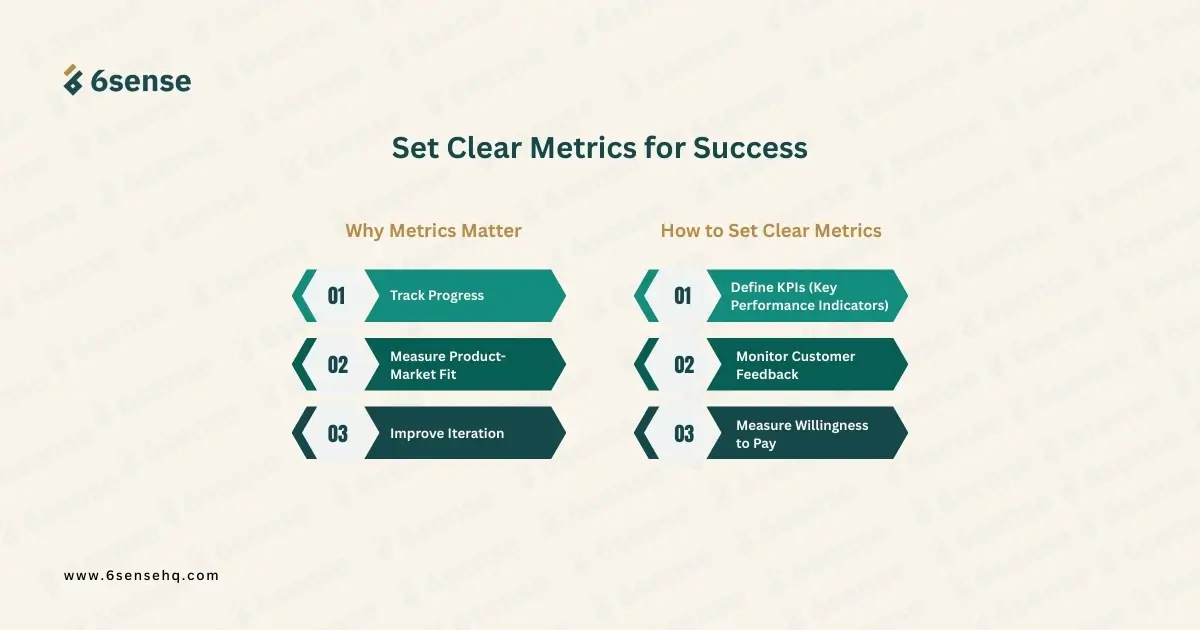
Why Metrics Matter:
Track Progress: Metrics help you monitor how well your MVP is performing in real-world conditions, especially with early adopters.
Measure Product-Market Fit: Use metrics to determine if your MVP is solving the core problem for your target audience and gaining traction.
Improve Iteration: Continuous tracking allows you to adjust your product features or marketing strategies based on data-driven insights.
How to Set Clear Metrics:
Define KPIs (Key Performance Indicators): Focus on metrics like user acquisition, user retention, engagement rates, and conversion rates. These help you understand how well your product is meeting user needs.
Monitor Customer Feedback: Track user feedback to identify patterns, pain points, and areas for improvement. This will inform future iterations.
Measure Willingness to Pay: Assess if users are willing to pay for your product or use it regularly. This can be a strong indicator of your MVP's market fit.
Step 7: Budgeting for Your MVP Development
Budget planning should account for the MVP development phases and realistic delivery timelines. Discovery, design, development, testing, and launch each require different resources, and overlooking one phase can create inaccurate estimates.
The Problem:
Many startups underestimate the costs involved in developing an MVP. Without a clear budget, you may face unexpected expenses, leading to delays or a compromised MVP launch.
Why Budgeting Matters:
Avoid Financial Overruns: By setting a budget upfront, you can prevent overspending on unnecessary features and focus on building only the core functionality.
Allocate Resources Effectively: A clear budget allows you to allocate funds to key areas of product development, including design, testing, and marketing.
Plan for Future Development: Budgeting isn’t just about the initial development, it helps you plan for future iterations, scaling, and updates based on user feedback.
How to Set a Realistic Budget:
Estimate Development Costs: Work with your development teams to estimate the cost of building each feature and determine which features are critical for the MVP. Use this information to build a product roadmap that aligns with your budget.
Consider Testing and Marketing: Don’t forget to include the costs of MVP testing, user research, and marketing to attract potential users.
Allow for Contingency: Set aside a contingency fund for unexpected costs, such as additional development time or unforeseen technical challenges.
Conclusion: Ready to Launch Your MVP?
Now that you've learned the MVP checklist for startups the key steps to build an MVP, you’re equipped to move forward with confidence. From defining your core features to setting a clear budget and gathering user feedback, each step helps you create a functional product that meets the needs of your target audience.
To recap:
Identify the core problem and essential features.
Validate your product with real users early on.
Test and iterate based on feedback to improve your MVP.
Set a budget and allocate resources efficiently to avoid overspending.
If you need a more advanced opinion on your MVP, book a call with our experts to plan your MVP development journey and validate your idea and strategies together.