


How to Transition to Offshore Teams Without Losing Control
Optimize your 2026 offshore strategy with a Mirror Stack, Zero Trust security, and AI to scale execution while saving 40-70%.
9 min read
Loading…
Just the key IP risk areas to watch, best protection practices, and what to do if your IP is at risk offshore.
Written by: Nasif Sid Created on: 3 Feb 20268 min to read
To protect your IP when working with offshore developers, you need a mix of strong contracts, airtight NDAs, and a development partner you can actually trust. It’s not just about legal safety, it is about choosing people who treat your product like it’s their own.
More and more companies like yours are outsourcing to stay lean, build faster, and scale efficiently. But too often, startups overlook the risks to their intellectual property. Whether it's unclear contracts, loose NDAs, or trusting the wrong partner, one small misstep can cost you big.
This blog breaks down how to protect your IP when working with offshore developers in a way that's practical and founder-friendly. You’ll learn how to spot red flags, use legal tools the right way, and build trust without losing control. If you're serious about safeguarding your product, this guide is your starting point.
Losing your IP means losing control of your product, your market edge, and possibly your entire business. If you’re not protecting it from the start, offshore development can do more harm than good.
Your IP isn't just code. It's your product strategy, your vision, and often your startup’s core value. If it’s misused or copied, recovery is costly and often impossible.
Here’s what companies are risking when they skip protection:
If your startup is building with offshore developers, your first priority should be clear: lock down your IP before anything else happens.
Just because your company is paying for offshore development doesn’t mean you automatically own the IP. If the right terms aren’t in writing, your business could lose the very asset it's building.
According to the World Intellectual Property Organization (WIPO), 1 in 3 small businesses experience IP-related issues when working with third-party contractors, many of which come from poor contract language or lack of clarity on ownership rights.
Let’s break down the most common misunderstandings:
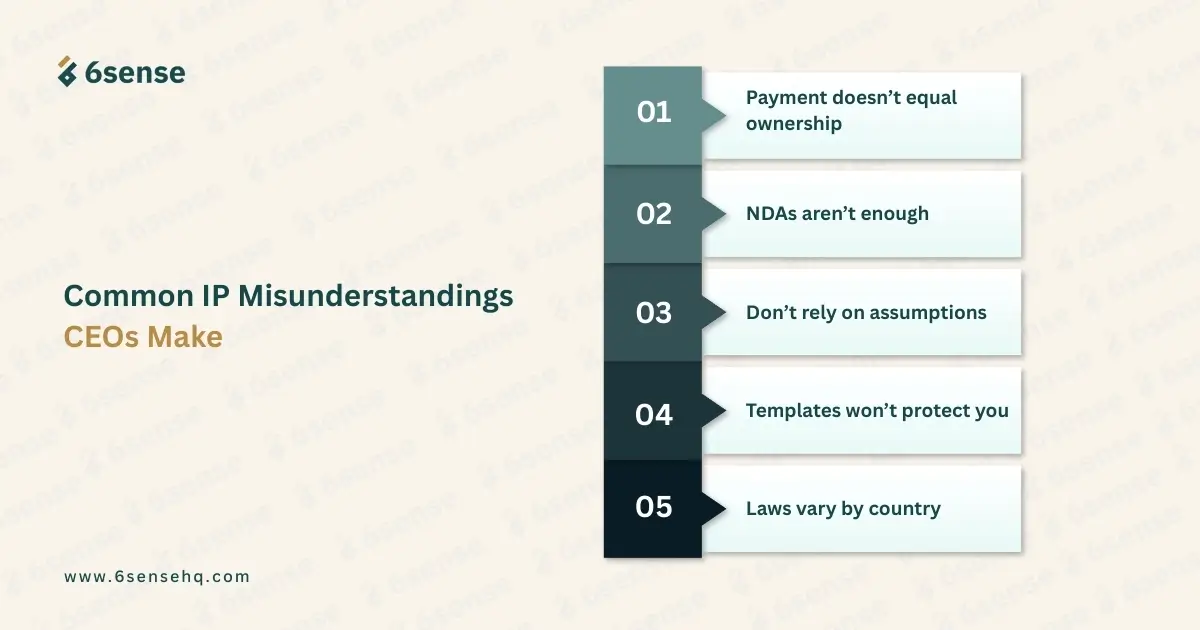
Just because your company funded the build doesn’t mean you legally own the work. Unless your contract has an IP assignment clause, the offshore team may still hold the rights, and yes, that includes your codebase.
An NDA helps keep your idea confidential, but it doesn't grant you ownership of anything that's built. You still need separate clauses that transfer rights to your business.
Most agencies have good intentions. But good intentions don’t stand up in court. If full IP transfer isn’t clearly written into your agreement, your startup could be left with limited rights.
Generic templates often miss country-specific laws and jurisdictional protection for IP. What works in one region may be useless in another. You need a custom-reviewed contract aligned with your business goals.
Your local IP laws don’t always apply overseas. If your developer is in a different country, your contract must reflect that, including how and where disputes are handled.
Not every red flag is obvious. But if your offshore team is careless with someone else’s IP, they won’t protect yours either. Before you sign, look closely at how they work and how they respond.
Many startups rush into offshore partnerships based on pricing and timelines. But without asking the right questions, you could end up tied to a team that doesn’t take IP seriously.
Watch out for these warning signs:
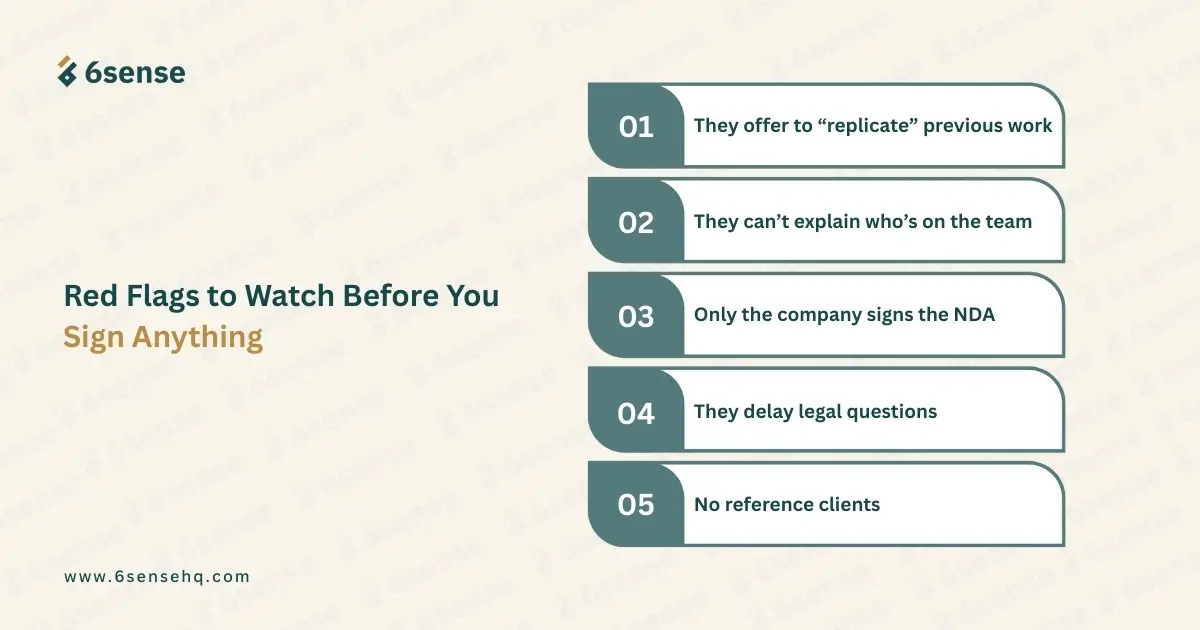
Ask if they can build something similar to what’s already in their portfolio. If they’re open to it, that means they don’t respect existing IP. If they’ll do it to others, they’ll do it to you.
You should know exactly who’s writing your code. If they avoid naming developers or can’t confirm whether team members are full-time, that’s a major trust gap.
Every individual developer touching your code should sign a personal NDA. If they say the company-level NDA is enough, your IP is at risk.
When you ask about contracts, IP clauses, or NDAs, they should have answers ready. A vague “we’ll get back to you” suggests they haven’t built solid processes around IP.
Ask to speak to a current or past client. If they avoid or delay this, it’s a red flag. A strong offshore team will have happy clients who are willing to vouch for them.
To protect your IP when working with offshore developers, you need more than contracts. It starts with the right people, is reinforced by legal clarity, and is maintained through accountability and trust.
Follow these 7 steps to keep your company’s IP safe while still moving fast.
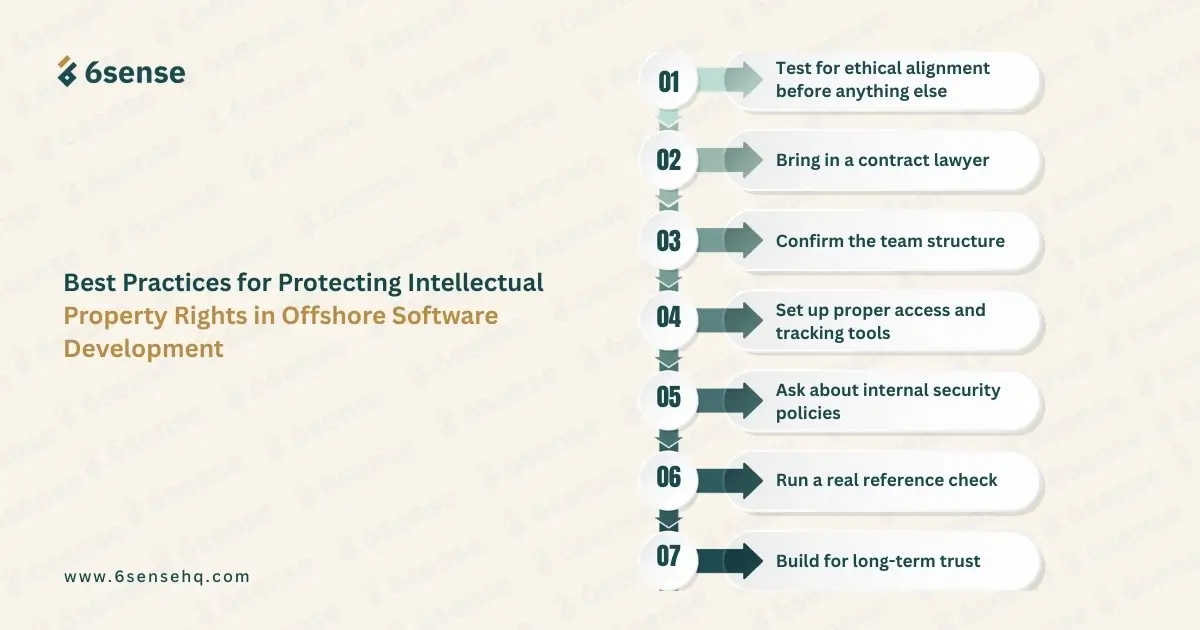
Ask direct, uncomfortable questions early. For example:
If they hesitate or say yes, walk away. An ethical team will protect their past clients’ IP and yours too.
Before you sign anything, have your contract reviewed by someone familiar with cross-border IP law. Your agreement should include:
Make sure the developers working on your code are:
Use systems and tools that protect ownership and increases your visibility:
Don’t assume they’ve got things buttoned up. Ask questions like:
If they can’t answer confidently, consider it a red flag.
Ask for a direct intro to one of their longest-running clients. Then ask:
Even the best contracts won’t matter if the working relationship is broken. Watch for signs of long-term thinking:
If you think your IP has been copied, leaked, or misused by an offshore team, don’t panic but don’t delay either. A fast, informed response can help you limit damage and regain control.
Here’s what your company should do right away:
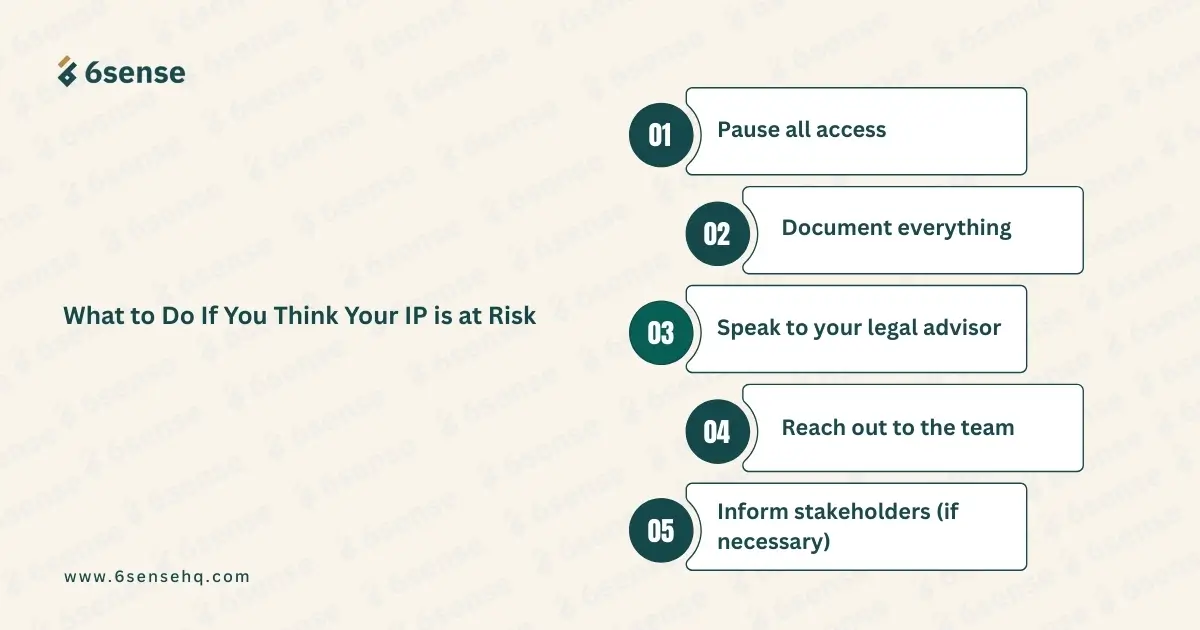
Immediately restrict access to your codebase, project files, and internal tools. Lock down GitHub/GitLab, revoke credentials, and freeze collaboration platforms until you’ve investigated.
Take screenshots, collect emails, messages, and any suspicious activity logs. Create a timestamped record. This will be critical for both legal action and internal audits.
Contact your contract lawyer (preferably the same one who reviewed your IP agreements). Ask them to review the contract and guide you on next steps including sending legal notices, if needed.
If you’re unsure whether something is a misunderstanding or real misconduct, open a formal conversation with the offshore team lead. Be direct, but don’t accuse. Ask questions and assess their response.
If you're a funded startup or working under NDAs with clients, be transparent with your key stakeholders. Let them know you're investigating, and outline how you're protecting their data and code.
If things escalate:
Your product isn’t just code, it's the core of your business. And when you're working with offshore developers, protecting your IP becomes even more important.
From contracts to NDAs, and from team trust to legal clarity, every detail matters. Because if ownership isn’t clearly defined early on, fixing it later becomes costly and complex.
That’s why knowing how to protect your IP when working with offshore developers isn’t optional, it’s essential.
So, if you're unsure where things stand today, or want expert eyes on your current setup, let’s talk.
Book a free strategy call with 6sense to make sure your IP stays right where it belongs, with you.
Optimize your 2026 offshore strategy with a Mirror Stack, Zero Trust security, and AI to scale execution while saving 40-70%.
9 min read

Stop scrolling, start hiring: 15 best offshore dev sites for 2026 with rates, vetting process, and quick picks. Tap in!
14 min read

Offshore ROI in 2026: calculate true TCO, payback & NPV, dodge rework traps, and scale faster, grab the checklist now!
7 min read