How to Manage Offshore Software Development (Proven Ways) | 6sense HQ
How to Manage Offshore Software Development Without Fails
Managing offshore software development isn’t just about oversight; it’s about strategy, communication, and building trust across borders.
Written by: Nasif Sid Created on: 30 Oct 2025•9 min to read
Managing offshore software development successfully comes down to setting clear expectations, building structured communication, and treating your remote team like an extension of your in-house one.
For your startup, going offshore might seem like the perfect way to reduce costs and access skilled talent. And it can be, if you manage it right.
Many companies rush into offshore partnerships expecting quick wins, only to run into delays, misalignment, or rework that could have been avoided.
The truth is, success with offshore teams isn’t about working harder; it’s about working smarter. You need systems that support clarity, consistency, and accountability regardless of time zones or borders.
In this guide, you'll learn how to manage offshore software development using proven best practices, communication frameworks, and tools that help you build trust, speed up delivery, and get the results your product needs to grow.
Key Offshore Management Challenges You’ll Face
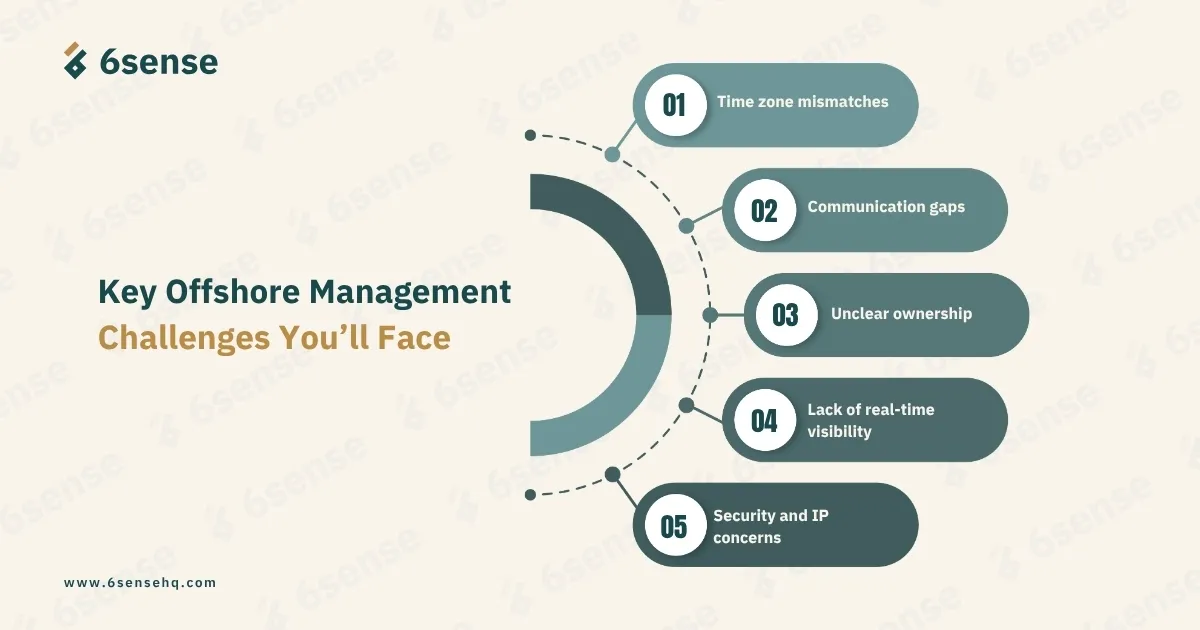
The biggest challenges in managing offshore software development are time zone misalignment, communication gaps, unclear ownership, and lack of real-time visibility.
Here’s how each one can impact your team if not handled early:
Time zone mismatches
When your team is spread out, delays in feedback or decision-making are common. Without planned overlap hours, blockers can sit unresolved for a full day or more.
Communication gaps
Without strong async communication, tasks often move forward based on assumptions. This leads to misaligned outcomes, rework, and confusion on both sides.
Unclear ownership
If roles and responsibilities aren’t clearly defined, your offshore team may hesitate to make decisions or raise red flags, which slows delivery and creates risk.
Lack of real-time visibility
Without tools and systems to track work as it happens, you lose sight of progress. This creates a gap between expectation and execution.
Security and IP concerns
Offshore access to code and infrastructure requires clear protocols. Without them, your company could face compliance or confidentiality issues.
Offshore Software Development Best Practices
Managing offshore software development effectively starts with the right systems, clear expectations, and repeatable workflows that keep everyone aligned.
Below are the practices your company should implement from day one:
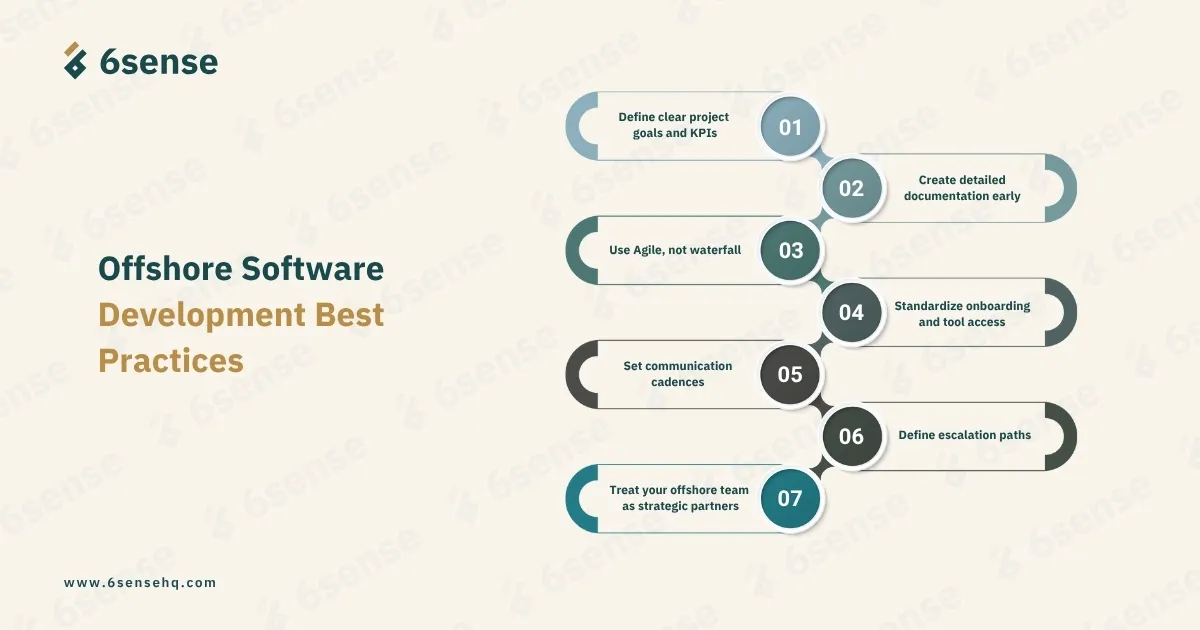
Define clear project goals and KPIs
Make sure your offshore team understands what success looks like. Set measurable milestones and share business context, not just technical tasks.
Create detailed documentation early
Write down everything your team needs to know, from product specs to coding standards and deployment processes. Good documentation reduces hand-holding and helps teams move independently.
Use Agile, not waterfall
Break down development into short sprints. Use sprint planning, daily stand-ups, and sprint reviews to create rhythm and accountability, especially when working with agile offshore teams.
Standardize onboarding and tool access
Don’t lose days to setup delays. Prepare onboarding checklists, tool logins, and team introductions before the first sprint begins.
Set communication cadences
Plan for weekly reviews, daily updates, and async check-ins. Overcommunication is better than silence when working offshore.
Define escalation paths
Make it clear who to contact when blockers arise. A simple decision tree can prevent hours, or days of stalled work.
Treat your offshore team as strategic partners
Include them in product decisions, not just task execution. The more context they have, the better the output.
Building a Strong Communication Framework
Clear and consistent communication is the backbone of any successful offshore software development setup. Without it, even the most skilled developers can miss the mark.
Here’s how to build a communication structure that actually works:
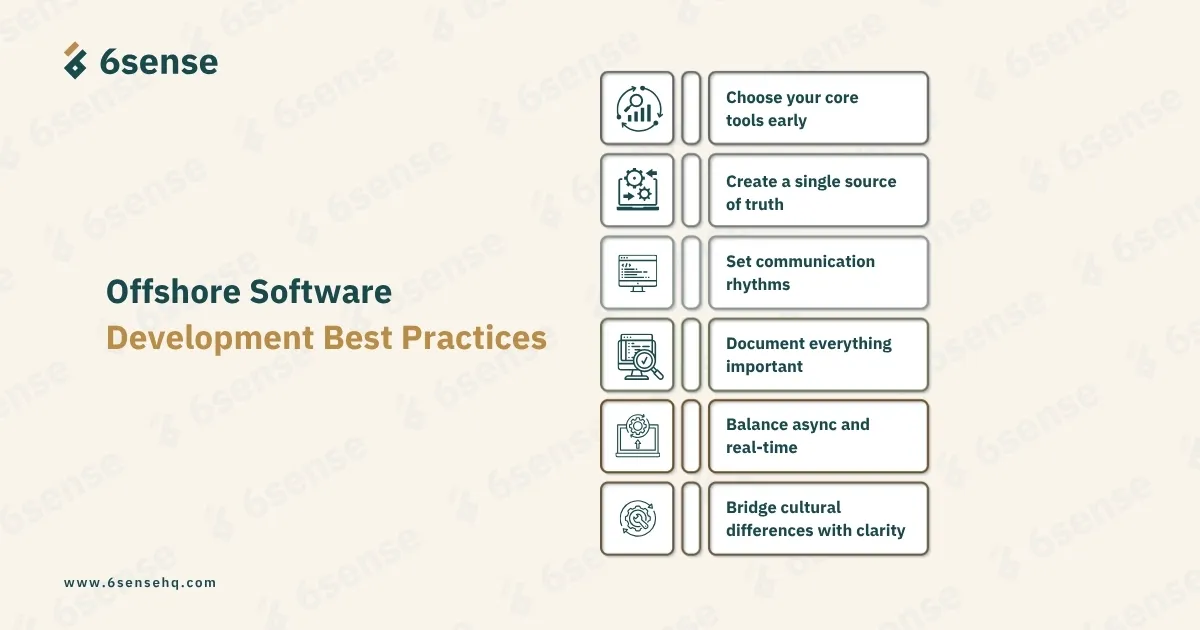
Choose your core tools early
Use Slack or Microsoft Teams for daily chats, Zoom for meetings, and Jira or ClickUp for project tracking. Stick to a stack your team actually uses.
Create a single source of truth
Centralize docs, product specs, and meeting notes in tools like Confluence or Notion so everyone knows where to find answers.
Set communication rhythms
Schedule daily stand-ups, weekly reviews, and bi-weekly retros. This keeps feedback flowing and reduces unnecessary back-and-forth.
Document everything important
Don’t rely on memory. Share summaries after meetings, tag updates in project boards, and write decisions down.
Balance async and real-time
Not every issue needs a call. Teach your team to write clear updates so you stay aligned even when no one’s online.
Bridge cultural differences with clarity
Be specific in your asks. Replace “ASAP” with deadlines. Avoid sarcasm, vague phrases, or local idioms that don’t translate well.
Managing Time Zones and Workflows
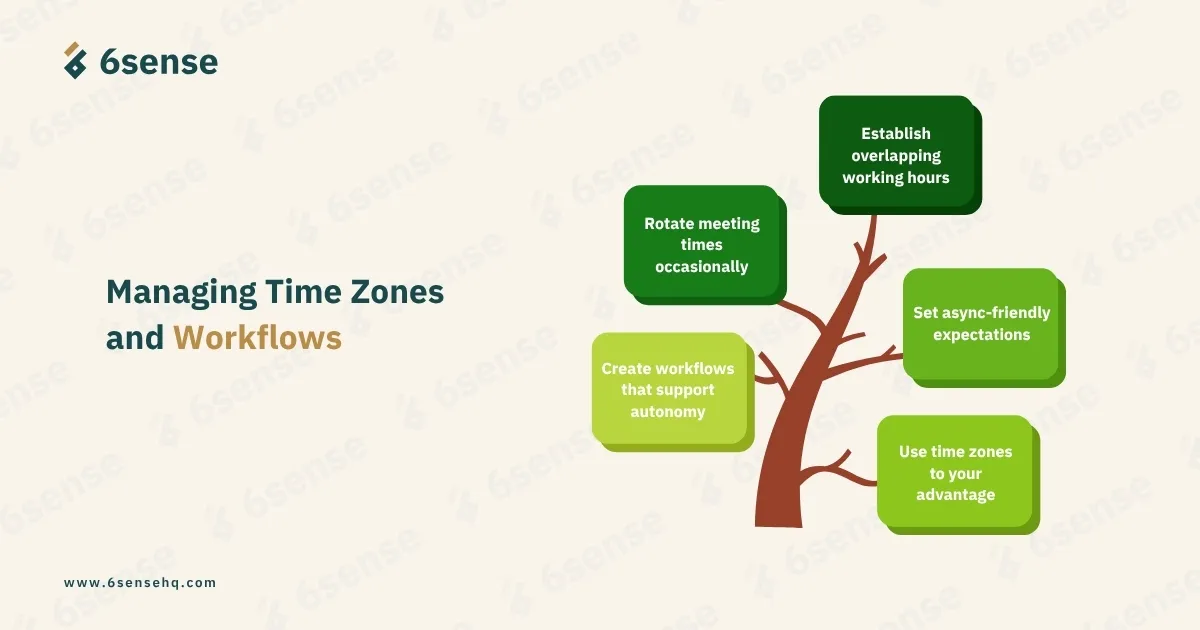
The key to managing time zones in offshore development is planning overlap hours, setting async processes, and designing workflows that don’t rely on constant availability.
Here’s how to make time zones work for your team instead of against it:
Establish overlapping working hours
Find at least 2–3 hours of overlap between your in-house and offshore teams. Use this window for live stand-ups, blockers, or decision-making.
Set async-friendly expectations
Structure updates so that progress continues even while others are offline. Use tools like Loom, Trello, or ClickUp for status sharing.
Use time zones to your advantage
Hand off tasks at the end of your day and wake up to progress. With the right handover process, your team can work around the clock without burnout.
Create workflows that support autonomy
Offshore teams should be able to move forward without waiting for constant approvals. Pre-defined acceptance criteria and clear documentation help here.
Rotate meeting times occasionally
Show respect for your offshore team by rotating late-night or early-morning calls. Shared effort builds trust and engagement.
Role Clarity and Accountability in Offshore Teams
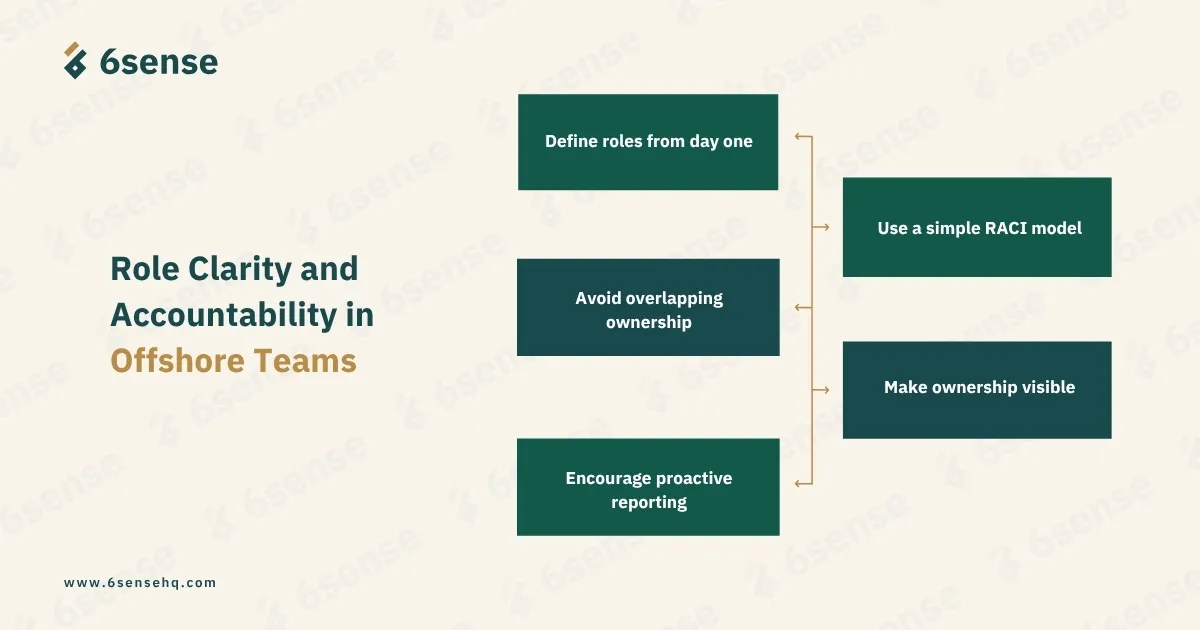
Clear roles and accountability systems are essential for offshore teams to operate with confidence, speed, and minimal friction.
When everyone knows their responsibility, progress flows naturally. Here’s how to build that clarity:
Define roles from day one
Assign clear titles and responsibilities like Product Owner, Project Manager, Scrum Master, Tech Lead, Developer, and QA. Don’t leave it vague.
Use a simple RACI model
Break down who is responsible, accountable, consulted, and informed for each task or decision. This avoids confusion and finger-pointing later.
Avoid overlapping ownership
When two people think they’re in charge, nobody is. Assign one decision-maker per area, especially on the product or delivery side.
Make ownership visible
Add role tags in your tools, delegate tasks in Jira or Trello, and tag people directly in updates or comments.
Encourage proactive reporting
Teach your offshore team to raise blockers early, report on outcomes regularly, and take ownership of delivery, not just execution.
Security, IP, and Access Control
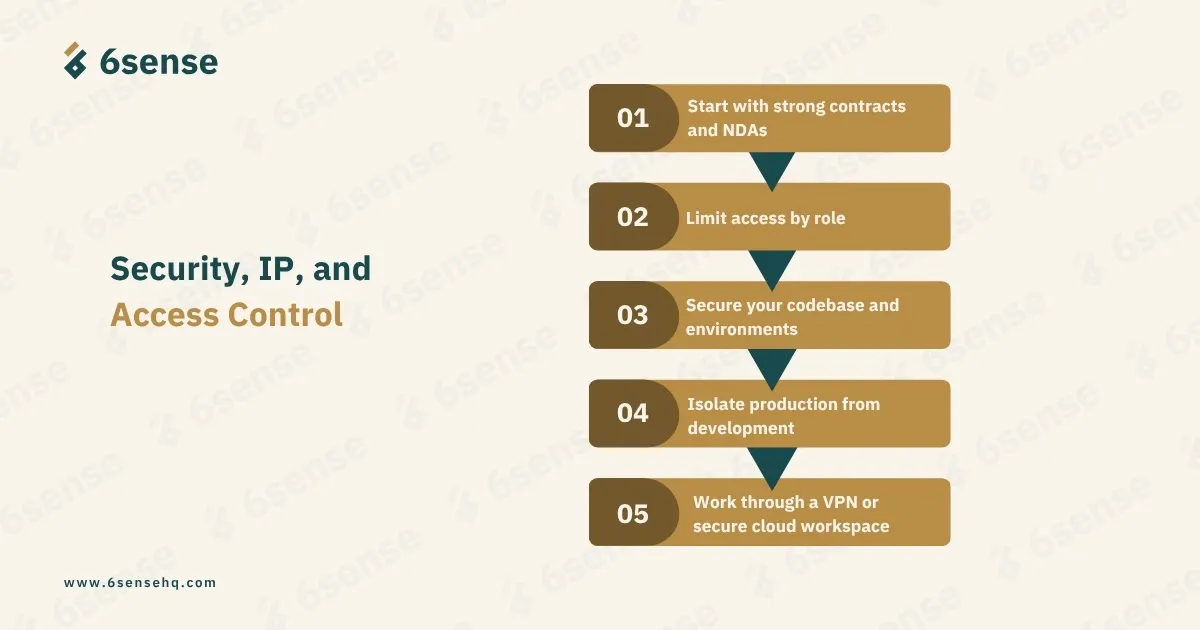
Protecting your product’s code, data, and intellectual property is non-negotiable when managing offshore software development.
Without clear security protocols, even a great team can introduce serious risk. Here’s how to keep your assets safe and compliant:
Start with strong contracts and NDAs
Make sure every developer signs a non-disclosure agreement and that your contract outlines IP ownership, data privacy, and jurisdiction.
Limit access by role
Not everyone needs access to everything. Grant permissions based on what each role requires to do their job, using a tiered access model.
Secure your codebase and environments
Use Git with access control, enforce two-factor authentication, and host your code on trusted platforms like GitHub or GitLab with strict permissions.
Isolate production from development
Never give full production access to offshore developers unless absolutely necessary. Use staging environments for testing and deployment.
Work through a VPN or secure cloud workspace
Add an extra layer of security by routing offshore access through a VPN or managed workspace like AWS WorkSpaces or Azure Virtual Desktop.
Metrics That Matter: Tracking Success in Offshore Teams
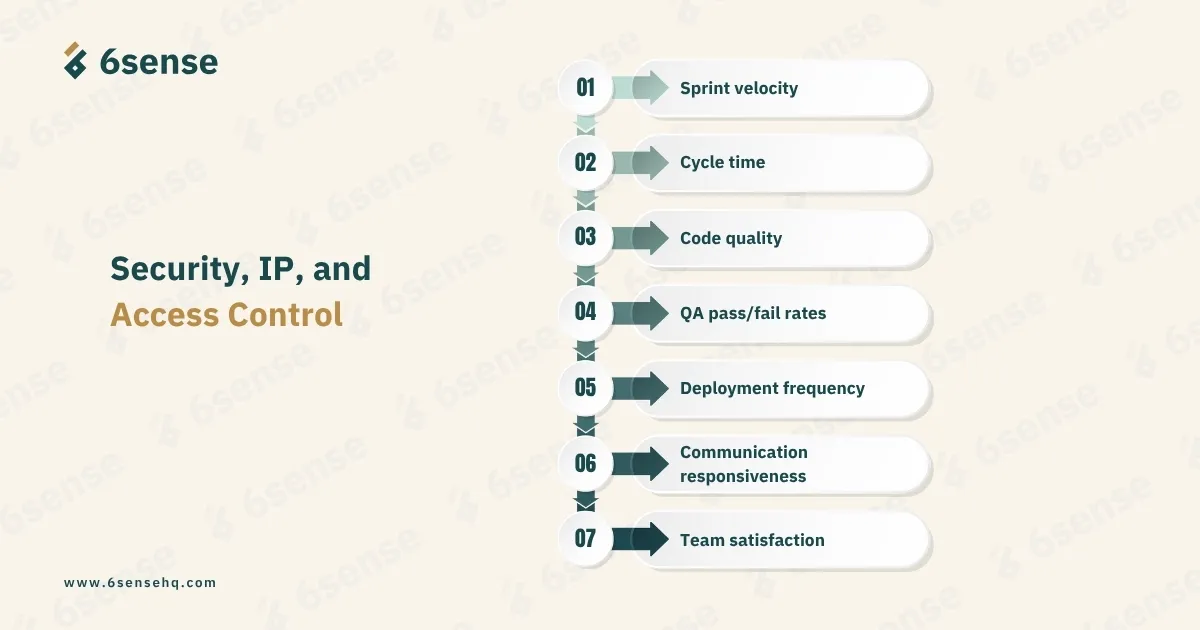
You can’t manage what you don’t measure, so tracking the right performance metrics is key to successful offshore software development.
Here’s what your company should consistently monitor:
Sprint velocity
Track how much work your team completes each sprint. It helps you spot trends, estimate better, and identify roadblocks before they grow.
Cycle time
Measure how long it takes for a task to go from start to finish. Shorter cycle times mean faster feedback and faster product iteration.
Code quality
Use tools like SonarQube or static analysis to check for bugs, technical debt, and overall health of your codebase.
QA pass/fail rates
Keep an eye on how many features pass testing the first time. A low pass rate can indicate rushed work or unclear requirements.
Deployment frequency
More frequent, smaller deployments reduce risk and help you spot issues early. Aim for regular, predictable releases.
Communication responsiveness
Track how quickly blockers are raised and addressed. Slow response times can quietly stall your project.
Team satisfaction
Check in with your offshore team. A happy team is often a productive team, and burnout can sneak in unnoticed when working across borders.
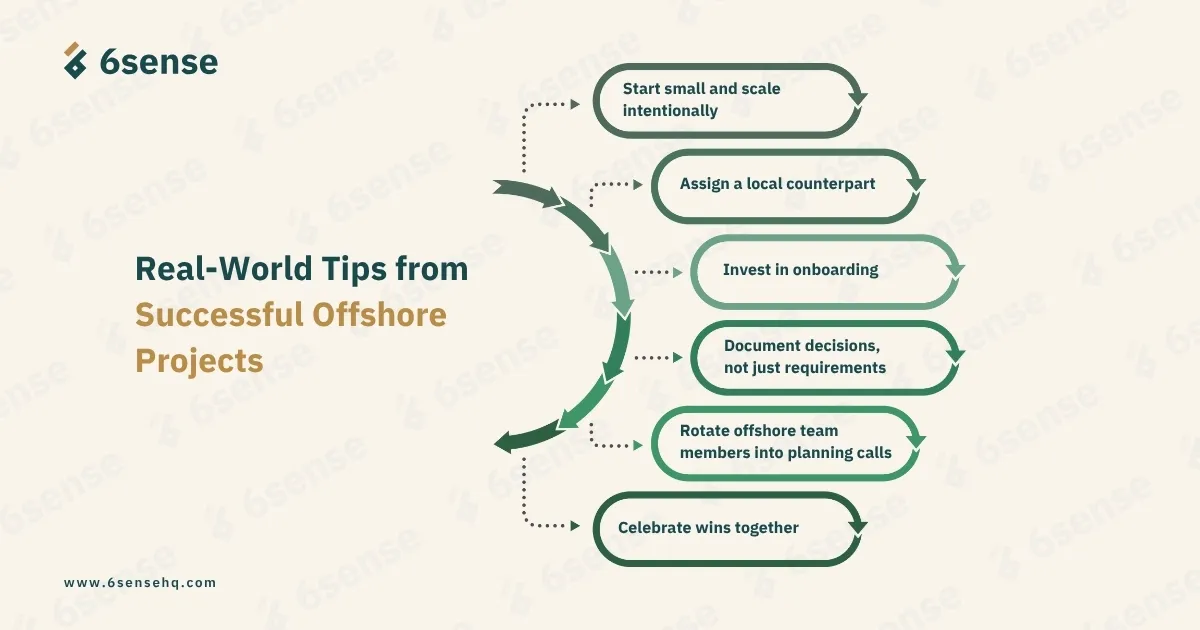
Real-World Tips from Successful Offshore Projects
The best way to manage offshore software development is to learn from companies like 6sense HQ, which are already doing it well.
Here are actionable tips pulled from real offshore success stories:
Start small and scale intentionally
Many companies begin with a 2–3 person offshore team and expand as trust and systems develop. Don’t rush the ramp-up.
Assign a local counterpart
Successful projects often assign an in-house team member to mirror the offshore team lead. This keeps communication tight and decisions fast.
Invest in onboarding
One startup shared that a one-week onboarding sprint saved them months of rework later. Walk your offshore team through product goals, not just tasks.
Document decisions, not just requirements
Capture the “why” behind features, not just the “what.” Teams perform better when they understand the reasoning behind product choices.
Rotate offshore team members into planning calls
Inviting developers into strategic conversations improves buy-in, reduces miscommunication, and leads to better product decisions.
Celebrate wins together
Treat your offshore team like part of your company. Acknowledging good work keeps morale high and reduces churn.
Conclusion
So, from now on, you know how to manage offshore software development, and you also know it’s not just about outsourcing, it’s about building a clear, structured system that empowers your team to deliver with confidence.
When your company sets expectations early, communicates clearly, and treats offshore developers like trusted partners, distance becomes an advantage instead of a barrier.
The right tools, roles, security measures, and workflows can help your team ship faster, adapt quicker, and scale smarter.
Whether you're starting with a small team or optimizing an existing setup, these practices will help you stay in control without micromanaging.
Ready to turn your offshore team into a high-performing extension of your business?
Start by auditing your current setup, or reach out to a reliable offshore partner who aligns with your goals and delivery style.