


How to Transition to Offshore Teams Without Losing Control
Optimize your 2026 offshore strategy with a Mirror Stack, Zero Trust security, and AI to scale execution while saving 40-70%.
9 min read
Loading…
Agile isn’t just a process, it’s the bridge that makes offshore software teams work seamlessly across borders.
Written by: Nasif Sid Created on: 23 Oct 20257 min to read

Agile works with offshore teams by creating structure, speed, and seamless collaboration even across time zones. A lot of startups adopt Agile, hoping it will help them overcome distance, time zones, and communication barriers. And they are right.
When used correctly, Agile transforms how offshore teams plan, collaborate, and deliver.
Agile is more than a process. It is a mindset built around adaptability, transparency, and fast feedback. For offshore teams, that mindset creates structure and rhythm across continents.
Daily check-ins replace endless email threads, sprint goals keep everyone aligned, and feedback cycles make collaboration feel natural and smooth.
In this guide, we will explore how Agile actually functions within offshore setups, why it fits so well, and what practices make global collaboration not just possible but productive.
Agile is a flexible way of developing software in short, repeatable cycles with constant feedback and teamwork at its core.
Instead of following one long plan from start to finish, Agile breaks work into smaller phases called sprints. Each sprint involves planning, building, testing, and reviewing. This helps teams spot issues early and stay on track.
What makes Agile different is its focus on continuous communication and improvement. Teams regularly check in, adjust based on feedback, and move forward together, rather than waiting until the end to make changes.
According to a Digital.ai report, over 71% of companies now use Agile to improve delivery speed and product quality.
Whether your team is in-house or offshore, Agile helps everyone stay aligned, adapt fast, and build better software.
The flexibility, structure, and communication built into Agile make it ideal for teams working across different time zones and locations. Agile and offshore software development are a natural match.
Here’s why the agile model works so well:
Sprint planning, daily stand-ups, sprint reviews, retrospectives, and backlog grooming are the key Agile practices that keep offshore teams aligned, productive, and on track. Offshore agile teams rely on these core Agile practices to stay aligned and productive.
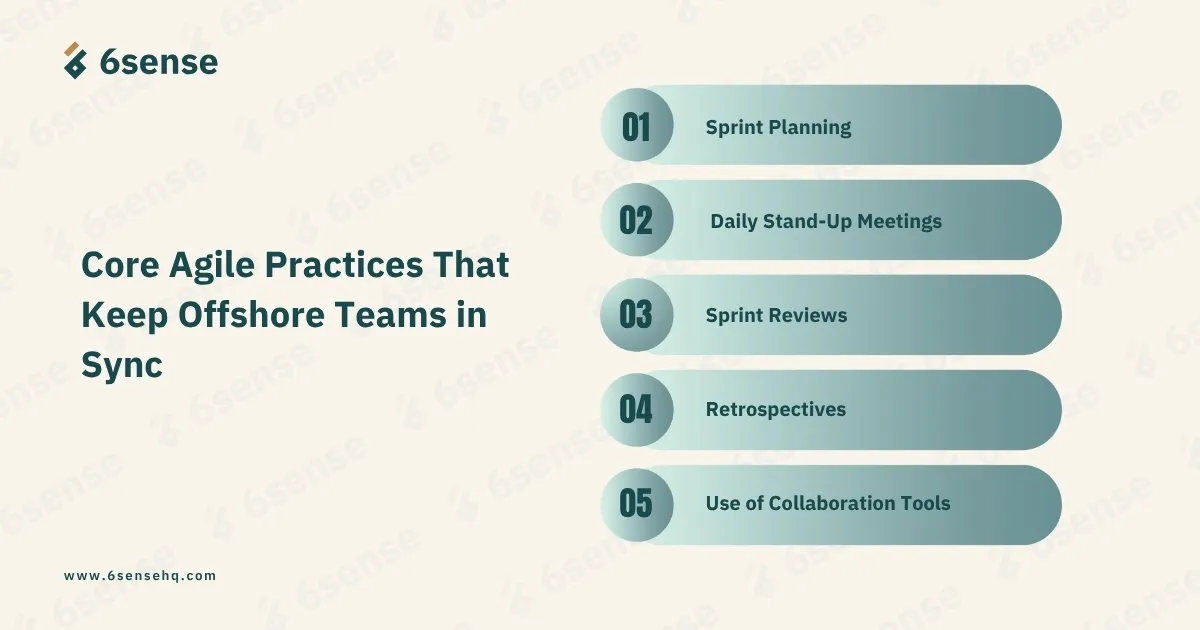
Every project is divided into small time periods called sprints. During sprint planning, the team sets clear goals for what will be achieved in the next one or two weeks. This helps offshore developers know exactly what to focus on while allowing clients to see steady progress.
A short meeting every day keeps communication alive. Team members share what they worked on, what they will do next, and whether anything is blocking their progress. These check-ins usually take less than fifteen minutes but make a big difference in keeping everyone connected.
At the end of each sprint, the team demonstrates what they have built. Clients or project owners can see real results and give feedback immediately. This habit creates a rhythm of regular improvement instead of long waiting periods for updates.
After every sprint, teams review their progress to discuss what went well and what can be improved. It builds trust and accountability because everyone’s voice is heard. Over time, this continuous reflection leads to stronger collaboration and better results.
Platforms like Jira, Trello, and Slack make it easy to share updates, files, and timelines in real time. Offshore teams use these tools to make their work visible, transparent, and well-coordinated.
Together, these practices keep offshore teams moving in the same direction. They replace uncertainty with rhythm and distance with teamwork.
Working with offshore teams brings a lot of benefits, but it also comes with a few natural challenges. Different time zones, cultural differences, and communication gaps can slow things down if not handled carefully. Agile helps solve these issues by creating structure, rhythm, and openness across every stage of development.
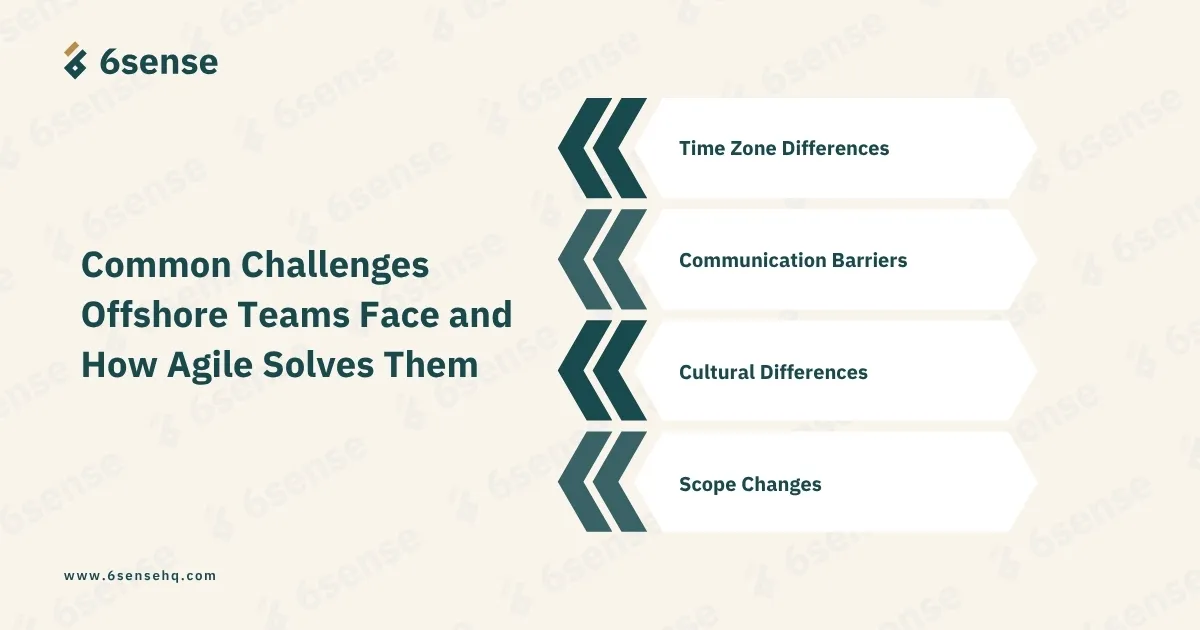
When teams are spread across continents, coordination can be tricky. Agile handles this by encouraging overlapping working hours and regular check-ins. Daily stand-ups and sprint reviews make sure updates happen consistently, even if the teams are far apart.
A 2024 report by Scrum Alliance showed that teams using Agile frameworks saw a 35 percent improvement in time zone coordination.
Sometimes, information gets lost in translation or delayed by long email chains. Agile’s short feedback loops and frequent meetings prevent that. With open communication through tools like Slack or Microsoft Teams, everyone knows what is happening in real time.
Offshore collaboration brings together people with different work habits and communication styles. Agile promotes transparency and teamwork, which helps bridge these differences.
Shared goals and regular retrospectives build understanding and mutual respect over time.
Clients often refine their ideas as a project grows. In traditional models, this can cause confusion or delays. Agile thrives on flexibility. Each sprint provides an opportunity to review priorities and adjust plans without breaking the overall workflow.
Applying Agile in an offshore development team is about creating the right environment where collaboration and communication can thrive. When teams work across borders, the key to success is clarity, consistency, and trust.
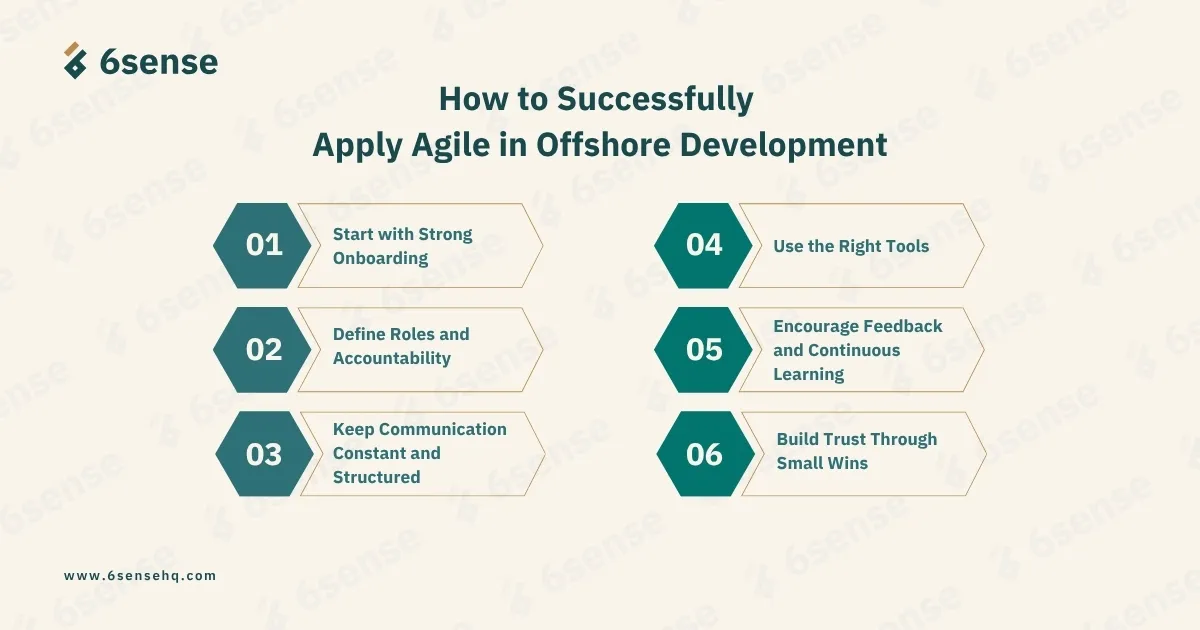
A successful Agile project begins with a proper introduction. Make sure everyone understands the product vision, roles, and responsibilities before work starts. Clear onboarding sets expectations and reduces confusion later on.
Agile teams perform best when every person knows their purpose. Define who acts as the product owner, scrum master, and developer. Encourage open ownership so everyone feels responsible for progress.
Do not rely on long weekly meetings. Use shorter, regular updates to stay aligned. Daily stand-ups, sprint reviews, and one-on-one check-ins keep progress visible and teams motivated.
Project management tools such as Jira, Trello, or ClickUp help offshore teams track progress easily. Combine them with communication platforms like Slack or Microsoft Teams to maintain transparency and collaboration.
After every sprint, take time to reflect. Ask what went well and what could be improved. Continuous improvement keeps morale high and helps teams adapt to challenges faster.
Start with smaller goals to build confidence and reliability. As trust grows, larger and more complex tasks become easier to handle together.
How Agile works with offshore software teams comes down to solving the biggest challenges in remote development, which are miscommunication, time zone gaps, and shifting priorities. Agile tackles these through sprints, stand-ups, and continuous feedback.
Startups benefit from faster delivery, clearer goals, and tighter collaboration without needing to scale a large in-house team.
It enables faster delivery, better visibility, and continuous client feedback, which are all critical for startup success.
To apply it effectively, invest in strong onboarding, define roles early, use tools like Jira and Slack, and build trust through consistent results.
So, are you ready to scale with an Agile offshore team? Let's talk with the 6sense HQ team and see how we can help you.
Optimize your 2026 offshore strategy with a Mirror Stack, Zero Trust security, and AI to scale execution while saving 40-70%.
9 min read

Stop scrolling, start hiring: 15 best offshore dev sites for 2026 with rates, vetting process, and quick picks. Tap in!
14 min read

Offshore ROI in 2026: calculate true TCO, payback & NPV, dodge rework traps, and scale faster, grab the checklist now!
7 min read