5 Advantages of Offshore Software Development for Startups | 6sense HQ
Hidden Advantages of Offshore Software Development
No hype. No fluff. Just the real advantages of offshore software development and when it actually makes sense for your business.
Written by: Nasif Sid Created on: 5 Jan 2026•10 min to read
The advantages of offshore software development for your startup include significant cost savings, access to a global talent pool, and faster project delivery. By hiring offshore developers, your startup can scale efficiently while focusing on core business objectives, all without exceeding your budget.
Offshore software development provides flexibility, agility, and expertise to help you build high-quality products faster. While there are some challenges, such as time zone differences, the benefits, including lower costs and a larger talent pool, make it a smart choice for startups.
Why Offshore Software Development is Gaining Popularity
Offshore software development means hiring developers or entire development teams from countries outside of your own. Whether it’s from regions like Eastern Europe, Latin America, or South Asia, this approach lets you access the best global talent while significantly reducing costs.
Here’s why more and more startups like yours are choosing offshore software development:
Access to Global Talent: By going offshore, you open your doors to a wider talent pool. Whether you need expertise in AI, blockchain, or mobile app development, you can find specialized developers from all over the world.
Scalability and Flexibility: Offshore teams offer the flexibility to scale up or down quickly based on your project needs. You can add resources as needed without the long-term commitment of hiring full-time staff.
Improved Tools and Collaboration: With remote work tools like Slack, Zoom, and Jira, working with offshore teams has never been easier. These tools help maintain smooth communication and ensure that everyone is on the same page, regardless of location.
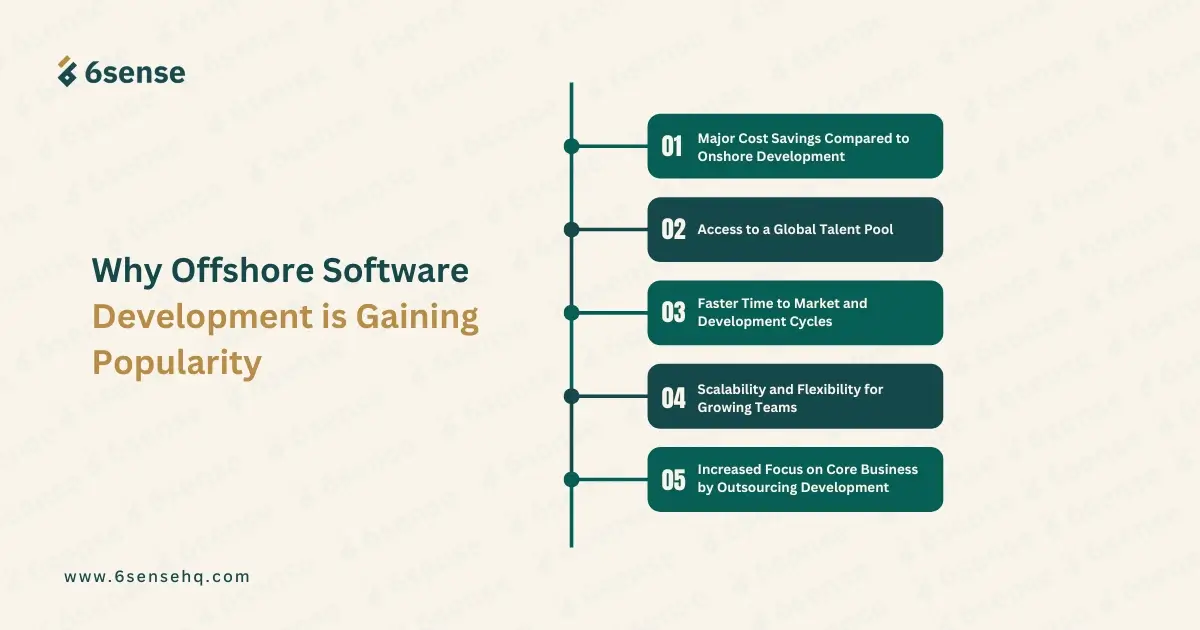
Advantage 1: Major Cost Savings Compared to Onshore Development
When it comes to offshore software development, one of the most compelling reasons for startups and businesses like yours to consider this option is the significant cost savings.
Offshore development can save you anywhere between 40-70% compared to hiring locally. Here’s why:
Lower labor costs: Countries like Bangladesh, India, Ukraine, and the Philippines offer highly skilled developers at a fraction of the price you'd pay in the U.S. or Western Europe.
No overhead costs: Offshore teams work remotely, so you don’t need to worry about providing office space, equipment, or benefits for each team member.
Flexibility in staffing: With offshore development, you can scale your team based on project needs without worrying about the long-term costs associated with full-time, in-house employees.
Advantage 2: Access to a Global Talent Pool
Another huge advantage of offshore software development is access to a global talent pool. When you hire offshore developers, you're not limited to local talent. You can tap into highly skilled professionals from regions like Eastern Europe, South Asia, and Latin America.
Here’s why this matters:
Specialized skills: Many offshore locations have a strong focus on specific technologies, like AI, blockchain, or machine learning. This allows you to find developers with niche expertise without paying a premium in your local market.
Diverse perspectives: Working with international teams brings new ideas and creative solutions. Different cultures and problem-solving approaches can lead to unique innovations and improve your product's competitiveness.
Competitive advantage: As the demand for tech talent increases, the ability to hire from a global pool ensures that you can always find the best developers for your project, regardless of location.
Advantage 3: Faster Time to Market and Development Cycles
Offshore software development can significantly speed up your product's time to market. When you work with an offshore team, you can leverage the round-the-clock development cycle. Here's how it works:
Time zone advantage: Offshore developers often work in different time zones, which means that while your in-house team is offline, your offshore team can keep working. This results in faster turnaround times, as development never truly stops.
Larger, specialized teams: Offshore development firms often have teams with the expertise needed for each phase of your project, from development to testing. With a well-organized offshore team, you can move faster through each phase without waiting for availability or additional resources.
Parallel workflows: Offshore teams can work on different parts of the project simultaneously. While one team handles backend development, another team can work on UI/UX, ensuring that multiple aspects of the project progress in parallel.
Advantage 4: Scalability and Flexibility for Growing Teams
One of the biggest benefits of offshore software development is the scalability and flexibility it offers, especially as your company grows. When you're in the early stages or scaling quickly, having an adaptable team is crucial.
Here's how offshore teams can support that growth:
Easily scale up or down: Offshore development teams give you the flexibility to quickly scale your team based on project needs. If you need to increase resources for a specific phase of development, you can easily add developers without the need for a lengthy hiring process or additional HR overhead.
Access to diverse skill sets: Whether it's a short-term need for a specific technology or a long-term project requiring a variety of skills, offshore development teams give you the flexibility to hire the right experts as needed.
Reduced hiring risk: As your project evolves, the need for specific skills may change. Offshore partners allow you to adjust the team composition based on new requirements, ensuring that your project is always in capable hands.
Advantage 5: Increased Focus on Core Business by Outsourcing Development
Outsourcing software development to offshore teams lets you focus on the strategic areas that drive growth in your business, such as product innovation, marketing, and customer relationships. Here's how this works for you:
Freeing up time: AI-powered tools are taking over the software development landscape, automating mundane tasks and boosting code optimization efforts. You can focus on building partnerships, customer engagement, and scaling operations.
Specialized expertise: Offshore teams bring in niche skills and experience without the need for you to hire full-time in-house experts, ensuring high-quality output for your product without sacrificing your attention to core business functions.
Operational efficiency: Offshore developers reduce the operational burden on your team, cutting down on HR, recruitment, and infrastructure costs. This allows your company to scale quickly without the overhead of managing a full internal team.
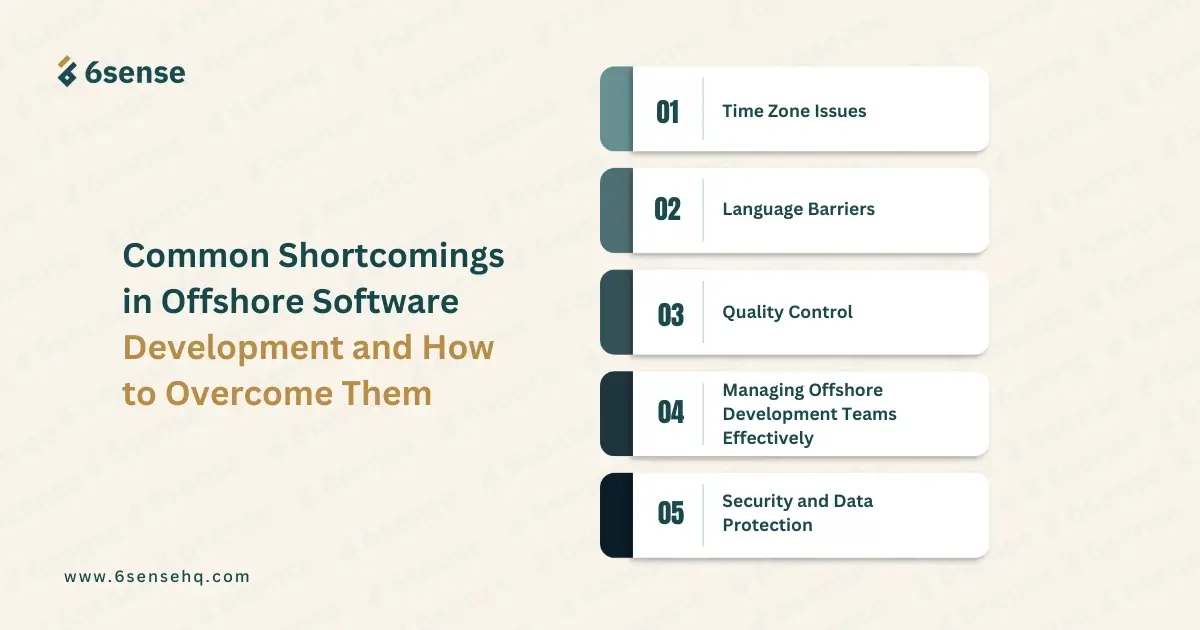
Common Shortcomings in Offshore Software Development and How to Overcome Them
While offshore software development offers many advantages, it does come with some common challenges. However, with the right strategies in place, these obstacles can be easily managed. Let’s look at some key risks and how you can overcome them:
1. Time Zone Issues
Challenge: Coordinating across different time zones can lead to delays, missed communications, and slower progress.
Solution:
Overlap working hours: Aim for a few hours of overlap each day to ensure quick decision-making and real-time feedback.
Async communication: For teams working in different time zones, implement async communication tools like Slack or Jira to keep work flowing smoothly without waiting for replies.
2. Language Barriers
Challenge: Misunderstandings can occur if your offshore team’s language skills aren’t up to par, leading to errors or delays.
Solution:
Clear documentation: Use detailed documentation for every stage of the project to ensure everyone is on the same page.
Language proficiency checks: Prior to hiring, assess your team’s English (or your preferred language) skills. Aim for developers who are not only fluent but also understand the technical terminology in your field.
3. Quality Control
Challenge: Ensuring consistent quality across a remote team can be difficult, especially when there are discrepancies in work processes or technical expertise.
Solution:
Set clear expectations: Outline quality standards, deliverables, and performance expectations from day one.
Regular reviews and feedback: Implement a robust process for code reviews, weekly demos, and performance evaluations. This ensures the project stays on track and meets your quality standards.
Use project management tools: Platforms like Jira or Asana can help track work progress, highlight issues, and keep tasks aligned with timelines.
4. Managing Offshore Development Teams Effectively
Challenge: Managing a remote team, especially one across borders, can be challenging in terms of communication, collaboration, and coordination.
Solution:
Dedicated project manager (PM): Having a PM, either in-house or from the offshore team, ensures that the team remains focused and adheres to project timelines.
Use collaboration tools: Tools like Zoom, Trello, and GitHub can foster effective communication, track progress, and ensure smoother collaboration between teams.
Cultural awareness: Recognize the cultural differences and working styles of your offshore team. Foster an inclusive culture that values flexibility, transparency, and regular feedback.
5. Security and Data Protection
Challenge: Handling sensitive data, intellectual property (IP), and project confidentiality with an offshore team can pose security risks.
Solution:
Sign NDAs and contracts: Ensure all team members, both onshore and offshore, sign NDAs and intellectual property agreements before starting work.
Use secure tools: Use encrypted communication channels, secure cloud-based repositories (like GitHub), and project management platforms that provide adequate security measures.
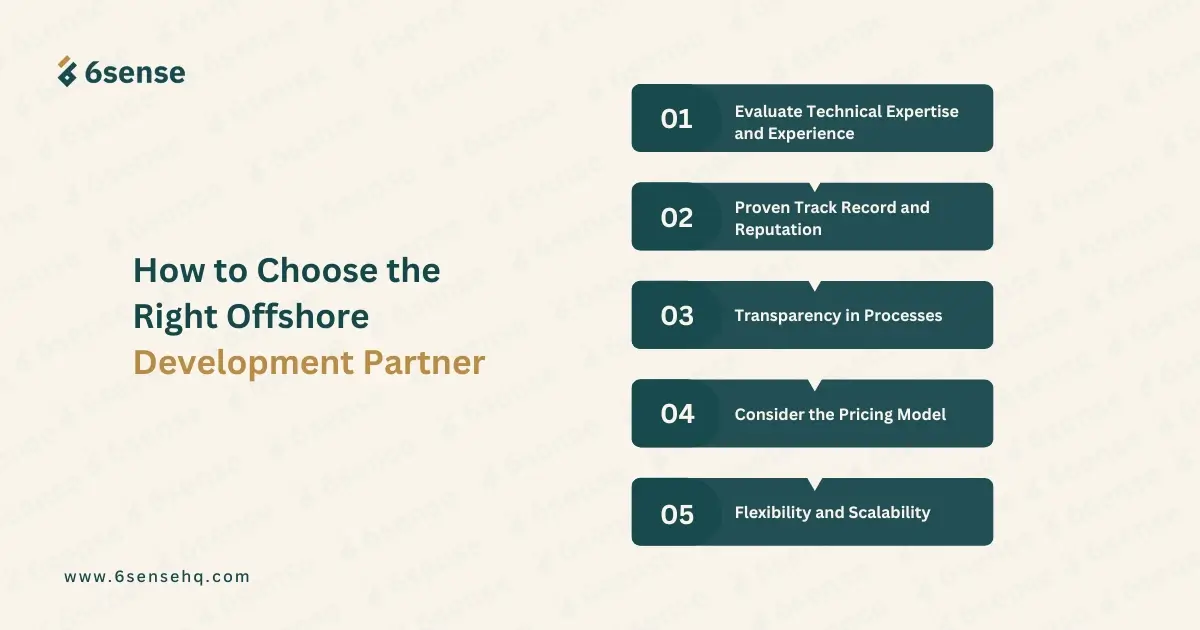
How to Choose the Right Offshore Development Partner
Choosing the right offshore development partner is one of the most critical decisions in ensuring the success of your project. The right partner will not only save you money but also help you scale quickly, meet deadlines, and maintain quality. Here's how you can make an informed decision:
1. Evaluate Technical Expertise and Experience
What to Look For:
Ensure the partner has experience in the specific technologies and platforms relevant to your project (e.g., React, Node.js, Python, AWS, etc.).
Review their past projects and case studies. Look for success stories in your industry or similar projects.
Why it Matters: A partner with the right technical expertise will help you avoid costly mistakes and ensure your product is built with the best tools available.
2. Proven Track Record and Reputation
What to Look For:
Look for reviews, testimonials, and client references. Platforms like Clutch and GoodFirms are good resources for finding verified reviews.
Check how long the partner has been in business and if they have successfully delivered projects similar to yours.
Why it Matters: A proven track record is an indicator of reliability, consistency, and the ability to deliver on promises. It also reassures you that the partner has the experience to handle your project efficiently.
3. Transparency in Processes
What to Look For:
A good offshore development partner should provide clear documentation of their workflows, milestones, and timelines.
Ensure they use project management tools like Jira, Trello, or Asana, where you can track progress, identify issues, and stay aligned.
Why it Matters: Transparency in processes ensures that both sides are on the same page, avoiding surprises and misunderstandings down the line. It also builds trust and facilitates smoother collaboration.
4. Consider the Pricing Model
What to Look For:
Be clear about the pricing structure. Does the partner offer hourly rates, project-based pricing, or monthly retainers?
Ensure the cost is competitive but realistic based on the quality of service. Keep in mind that the cheapest option might not always be the best choice in terms of skill and reliability.
Why it Matters: Pricing is an important factor, but it shouldn’t be the only one. A fair pricing model aligned with your project scope will help ensure that you’re getting value without cutting corners.
5. Flexibility and Scalability
What to Look For:
Can the partner easily scale the team based on your project’s needs?
Look for flexibility in adapting to changing requirements or unexpected challenges that may arise as your project progresses.
Why it Matters: As your project evolves, you may need to expand or adjust your team. The right partner should be able to quickly adapt to these changes without affecting delivery timelines or quality.
Conclusion
Offshore software development offers tremendous potential for startups like yours, providing cost savings, access to top talent, and the ability to scale quickly. However, to fully leverage these advantages, it’s crucial to make informed decisions at every stage from choosing the right offshore partner to managing communication and mitigating risks effectively.
By following the offshore developer hiring checklist and focusing on transparency, technical expertise, and cultural fit, you can ensure a successful collaboration that drives your product forward.
Choosing the right offshore partner is an investment in your company’s future. With careful planning and the right strategies, you can build a high-performing, cost-efficient development team that works as an extension of your own.
Ready to take the next step? Start by evaluating potential offshore partners, and don’t hesitate to reach out if you need expert guidance in navigating this process!