

Types of Staff Augmentation Models for Startups
Not all staffing solutions are the same. Explore the types of staff augmentation models to find the right fit for your project’s speed, flexibility, and expertise needs.
6 min read
Loading…
Understanding the right pricing model for staff augmentation can save costs and maximize the value of your external team.
Written by: Nasif Sid Created on: 12 Nov 20256 min to read
Staff augmentation pricing model refers to the way businesses pay for temporary or contract-based tech talent, usually based on hourly, monthly, or project rates. It’s a flexible approach where you only pay for the skills you need, for as long as you need them.
Unlike traditional hiring with fixed prices and long commitments, staff augmentation lets you bring in vetted experts on demand. It’s perfect for fast projects or filling critical skill gaps without the overhead.
In this blog, we’ll break down the most common pricing models, what affects the rates (like skill level and location), and how to choose the best fit for your business in 2025. Let’s simplify the numbers so that you can make smarter, faster hiring decisions.
Unlike traditional hiring, where costs are fixed and long-term (think annual salaries, benefits, office space), staff augmentation offers modular pricing tailored to specific time frames, skills, and roles.
Here's how it differs:
| Aspect | Traditional Hiring | Staff Augmentation |
| Cost Structure | Annual salaries, benefits | Hourly/monthly/project rates |
| Flexibility | Low | High |
| Time to Hire | Weeks to months | Days |
| Termination Cost | High (notice, severance) | Low (contract-based) |
| Commitment | Long-term | Short to long-term, flexible |
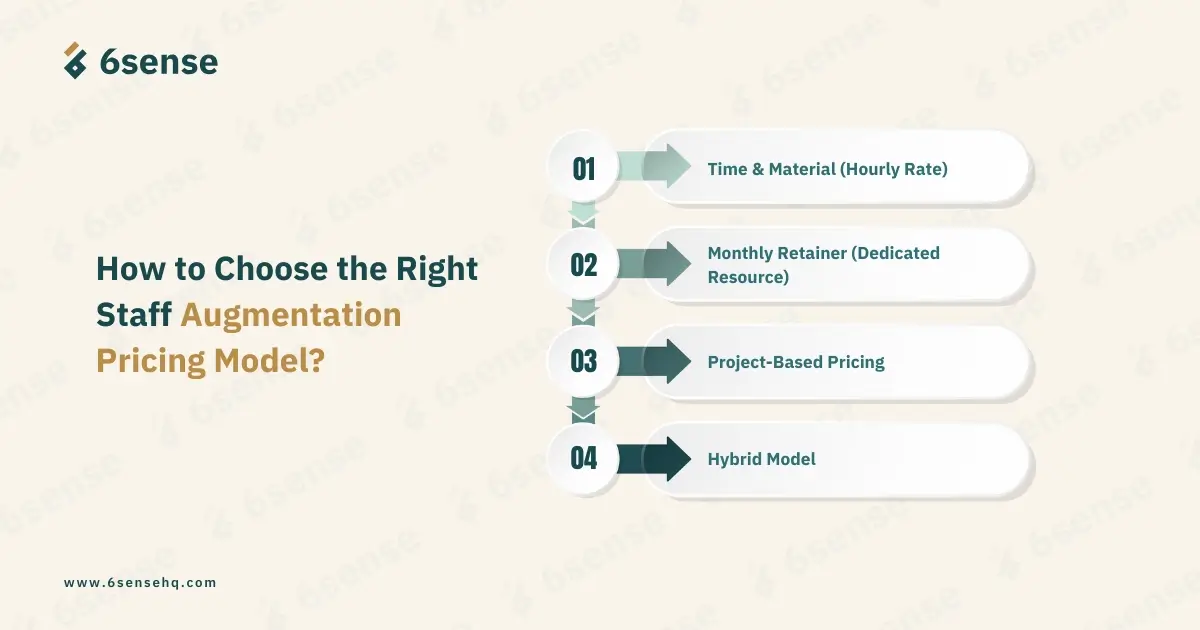
Choosing the right staff augmentation model depends on your project type, duration, budget, and control preferences. Here are the most common pricing structures:
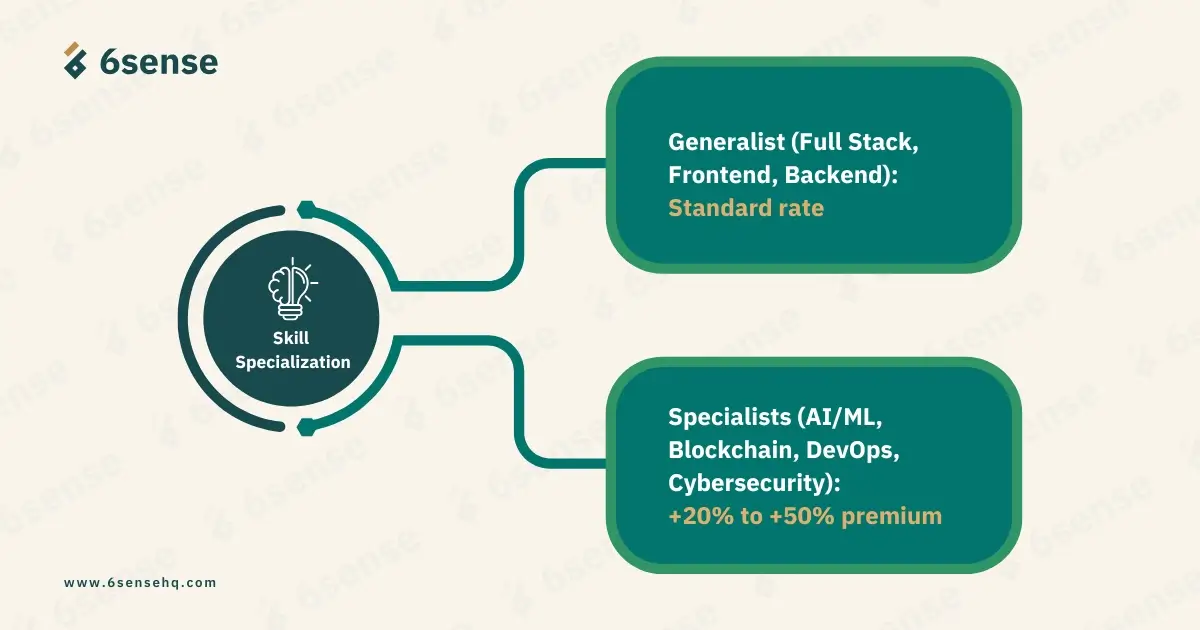
In 2025, staff augmentation rates vary widely based on experience level, specialization, geography, duration, and vendor type. On average in the U.S., junior developers cost $15–$25/hr, mid-level $25–$45/hr, and senior developers $45–$60/hr. Offshore talent can start as low as $10/hr, while onshore senior roles can exceed $75/hr.
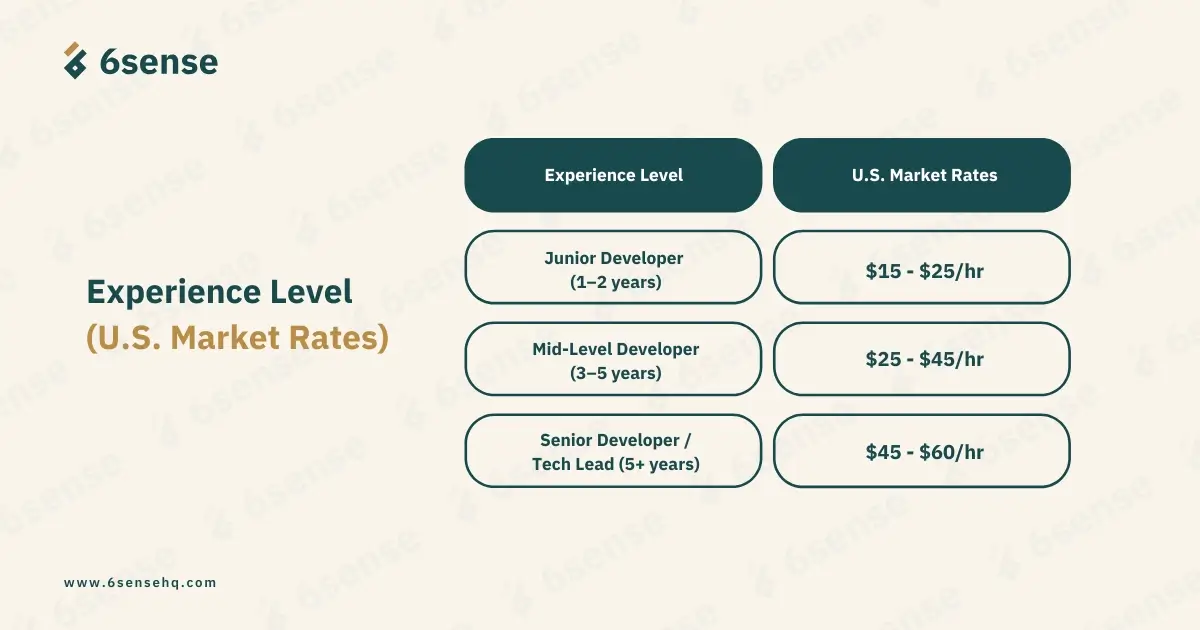
Note: Rates can reach $75/hr+ in tech hubs like NYC, SF, or for hot skills.
| Region | Junior Rate | Senior Rate | Notes |
| Onshore (U.S./U.K.) | $20-$30/hr | $60-$75/hr | Best collaboration, highest cost |
| Nearshore (LatAm, E. Europe) | $15-$25/hr | $40-$55/hr | Good time-zone overlap, solid quality |
| Offshore (India, SEA, Africa) | $10-$20/hr | $30–$50/hr | Most affordable, may need timezone planning |
| Vendor Type | Pricing | Pros | Cons |
| Freelancer Platforms | Lowest | Cheap, fast onboarding | Risky, lack of vetting |
| Offshore Agencies | Low to Mid | Cost-effective, scalable | Requires more oversight |
| Premium Staff Augmentation Firms | Mid to High | Pre-vetted, compliant, support | Higher hourly rate, but safer |
The best staff augmentation engagement model depends on your business goals, team size, budget, and how closely you need to work with the hired talent. Each model has its strengths and trade-offs.
Here's a simple breakdown to help you decide:
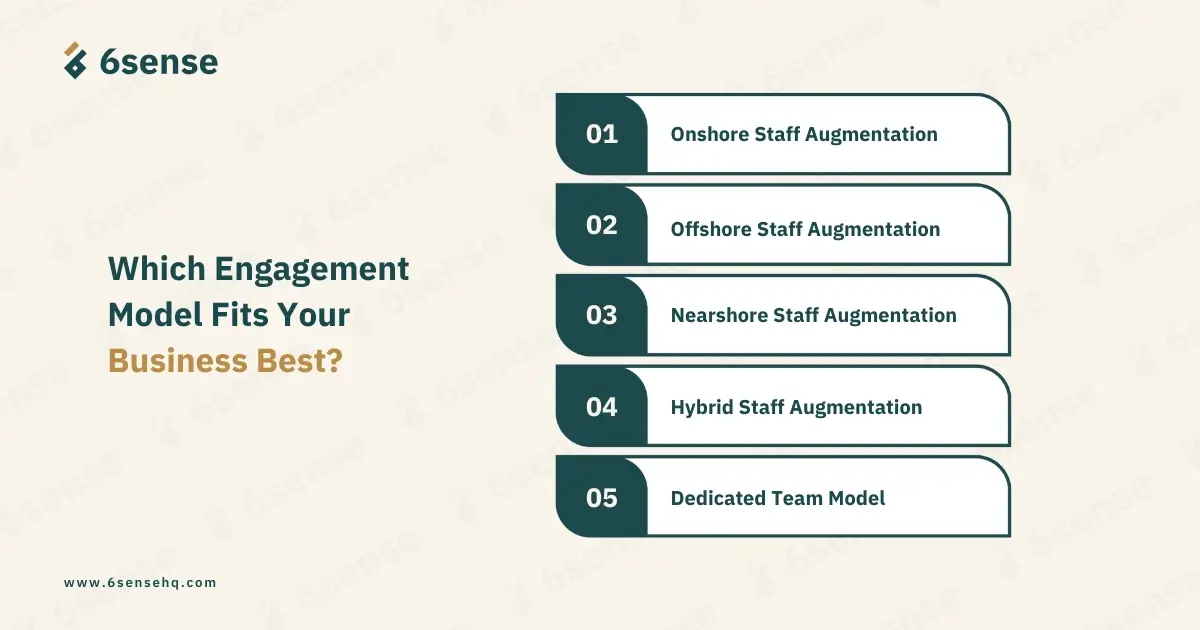
This model involves hiring developers from your own country or region. It’s perfect when your development team needs real-time communication, shared working hours, or must follow local regulations (like in finance or healthcare). It costs more, but it’s the safest bet for projects needing tight coordination and fast decision-making.
With offshore staff, you hire talent from countries with lower labor costs (like Bangladesh, India, or the Philippines). This is the most budget-friendly model and great when you need to scale fast or access niche skills. Just be prepared to manage time zone gaps and potential cultural or communication differences.
6sense HQ builds offshore teams fast with full control, low overhead, and quick ramp-up. This gives you access to elite top talent at cost-effective rates.
Well, this model is a sweet spot between onshore and offshore. You work with teams in nearby countries, usually within a 2-4 hour time zone difference. It balances cost savings and collaboration. Nearshore is amazing for U.S. companies working with Latin America or European firms working with Eastern Europe.
Hybrid models combine onshore, offshore, and nearshore resources. For example, you might have a local project manager and offshore developers. This setup gives you 24/7 development cycles, cost efficiency, and better coverage. It's great for large or global projects but requires strong coordination and planning.
In this model, you hire a full-time external team that works only on your project, just like an in-house team. It’s perfect for long-term software development, product building, or startups that want control without the overhead of hiring internally. You get loyalty and deep integration, but on a flexible contract.
According to Deloitte’s recent survey of over 500 business and tech leaders claimed talent acquisition as one of their top internal challenges, and even when talent is onboarded, retention remains shaky.
But if you're partnering with a reliable and trusted offshore development partner like 6sense HQ, you will get a vetted, dedicated software engineer in 1-2 weeks. This helps you build 4x faster and save up to 52% costs.
In 2025, hiring through augmented staff isn’t just about filling roles; it’s about finding a smart, flexible way to grow. When you choose the right staff augmentation pricing model, you get more than cost savings. You gain control, faster delivery, and access to top talent when you need it.
Whether you're a startup building something new or an enterprise scaling up, the right model helps you move faster and smarter, without sacrificing quality or budget.
Looking to scale your tech team with data-driven precision? Explore smarter hiring with 6sense HQ today.
Not all staffing solutions are the same. Explore the types of staff augmentation models to find the right fit for your project’s speed, flexibility, and expertise needs.
6 min read

Need to scale without long-term risk? Staff augmentation lets you add proven talent fast, control costs, and keep full ownership of delivery.
6 min read
Staff augmentation can supercharge your team, but it’s not a one-size-fits-all solution.
7 min read