

Best SaaS Development Methodologies for Startups 2026
Choosing the right SaaS development methodology is key to growth. Learn how Agile, Lean, and DevOps can help scale your startup.
6 min read
Loading…
Why are companies choosing SaaS products today? Explore the major benefits of SaaS development and how it drives business innovation.
Written by: AKM Ahsan Created on: 2 Apr 20269 min to read
Software has become the backbone of modern businesses. But the way software is developed and delivered has changed dramatically over the last decade.
Instead of installing software locally on computers or company servers, many businesses now use Software as a Service (SaaS) applications that run in the cloud and are accessed through a web browser.
This shift is not just a technological change; it is a fundamental shift in how companies build, deploy, and scale software products. Today, SaaS solutions power everything from customer relationship management systems and accounting tools to collaboration platforms and AI products.
At 6sense HQ, we have guided 50+ startups and growing businesses through SaaS builds across fintech, healthtech, and B2B SaaS. The benefits we describe in this guide are not theoretical; they come from real product development journeys and scaling challenges we have seen firsthand.
Let’s begin!
SaaS (Software-as-a-Service) development refers to building cloud-based software applications that users access through the internet instead of installing them on local devices.
In a SaaS model:
Unlike traditional software, SaaS products run on cloud-native infrastructure and often follow subscription revenue models based on Monthly Recurring Revenue (MRR) or Annual Recurring Revenue (ARR).
Examples of popular SaaS products include:
SaaS has become one of the fastest-growing segments of the technology industry.
According to Statista, global revenue in the SaaS market is projected to reach about $390 billion in 2025 and continue growing rapidly in the coming years.
Several factors are driving this growth:
The SaaS market was valued at over $315.68 billion in 2025 and is projected to exceed $1 trillion by 2034, showing how central cloud software has become to digital transformation.
SaaS development follows a cloud-native architecture designed to serve multiple users simultaneously.
Most SaaS applications operate using a multi-tenant architecture, where a single software instance serves many customers while keeping their data separate and secure.
Key components of SaaS architecture include:
This architecture enables SaaS products to scale efficiently and deliver consistent performance to users worldwide.
The popularity of SaaS development comes from the many advantages it provides to businesses. Below are the most important benefits.
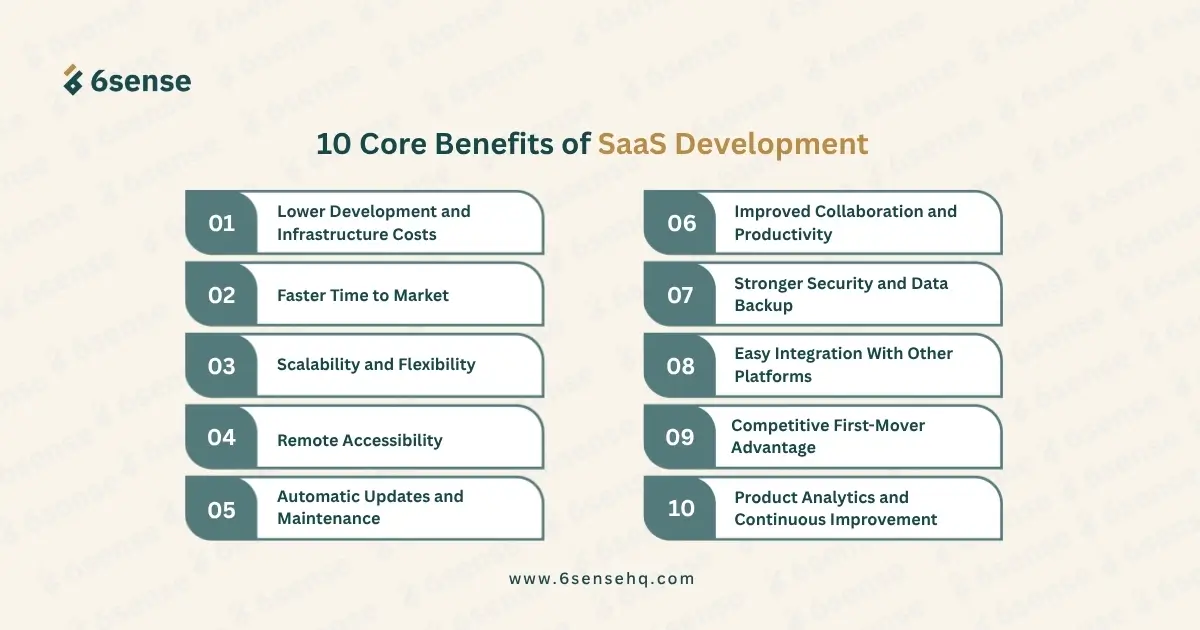
One of the biggest advantages of SaaS development is cost efficiency. Traditional software often requires companies to purchase:
On-premise enterprise software can cost $50,000–$200,000 upfront for infrastructure alone, while cloud-based SaaS solutions often start at only a few hundred dollars per month, depending on usage.
Cloud deployment also reduces Total Cost of Ownership (TCO) by eliminating maintenance overhead.
Salesforce pioneered cloud-based CRM by removing the need for companies to install and maintain expensive on-premise CRM servers. This dramatically reduced IT costs for thousands of companies adopting customer management software.
SaaS applications can be deployed dramatically faster than traditional software.
Instead of installing systems on internal servers, SaaS products are deployed directly to the cloud using automated pipelines and infrastructure-as-code. This means startups can build an MVP, launch quickly, and validate product-market fit.
Shopify enabled thousands of entrepreneurs to launch online stores within hours without setting up servers or payment infrastructure.
This rapid deployment capability is one of the biggest reasons SaaS has become the preferred model for startups.
Scalability is one of the most powerful benefits of SaaS development.
Traditional systems require companies to buy new servers when usage increases. SaaS platforms use auto-scaling cloud infrastructure that dynamically adjusts capacity based on demand.
Slack scaled from a startup messaging tool to millions of daily users without requiring each company to deploy infrastructure. Its cloud architecture allows teams to onboard instantly.
Because SaaS products run in the cloud, users can access them from anywhere with an internet connection.
This accessibility enables remote teams to collaborate effectively regardless of location.
Employees can work from:
Google Docs and Google Drive allow teams across continents to collaborate on documents simultaneously without installing software.
Maintaining traditional software can be expensive and time-consuming.
With SaaS:
Zoom can push feature updates to millions of users simultaneously without requiring manual installation.
Many SaaS applications are designed to support real-time collaboration.
Tools such as Slack, Notion, and Google Docs allow teams to communicate and work together regardless of physical location.
This collaboration model is especially important for global teams.
Security is a major concern for businesses managing digital systems.
Studies show that 84% of IT executives believe SaaS solutions provide stronger security protections than on-premise software environments.
Cloud providers invest heavily in encryption, compliance Saas frameworks, and redundancy.
Additionally, automatic backups protect data from loss.
Modern SaaS products are designed to integrate with other tools through APIs and third-party integrations.
For example:
This integration capability allows businesses to create powerful digital ecosystems.
SaaS development enables companies to launch products quickly and capture market share early.
Startups that reach customers first often build strong brand recognition and network effects.
Many successful SaaS companies gained early traction simply because they launched faster than competitors.
One of the most underrated advantages of SaaS is access to real-time product analytics.
Because SaaS platforms run centrally, developers can observe how users interact with features.
This enables:
SaaS development is particularly attractive for startups.
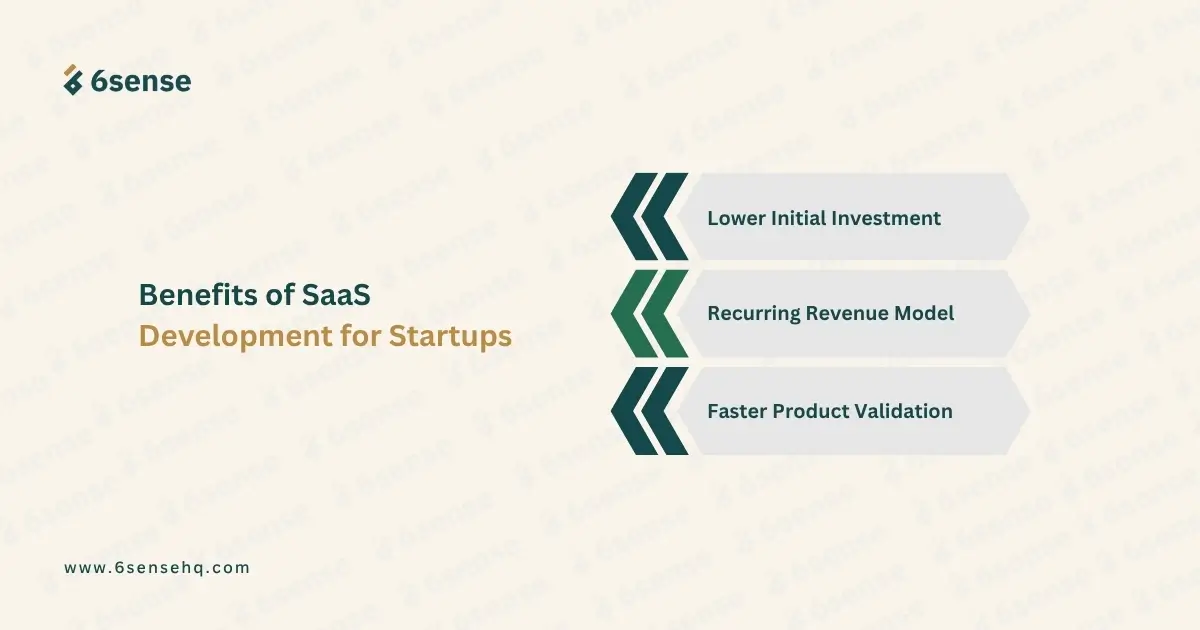
Key advantages include:
Lower Initial Investment: Startups can launch products without purchasing expensive infrastructure.
Recurring Revenue Model: SaaS businesses operate using subscription pricing based on MRR and ARR, which creates predictable revenue streams.
Faster Product Validation: Startups can launch quickly and test their product ideas with real customers.
Large enterprises also benefit significantly from SaaS development.
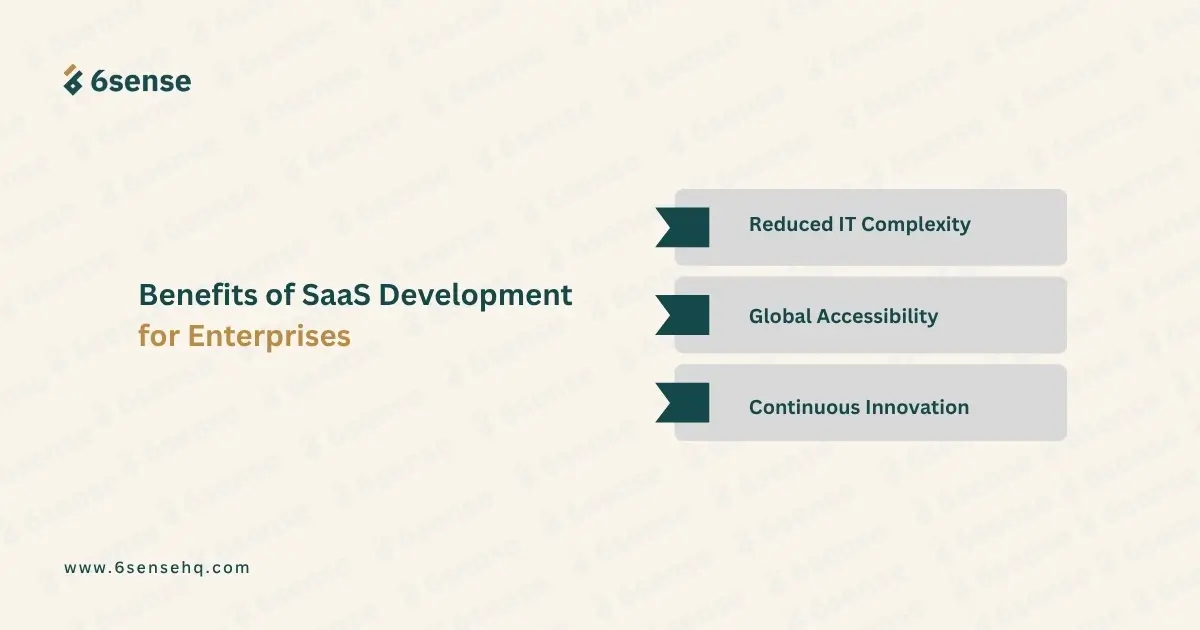
Advantages include:
Reduced IT Complexity: Companies no longer need to maintain large IT teams to manage software infrastructure.
Global Accessibility: Enterprise teams across multiple locations can access the same systems.
Continuous Innovation: SaaS providers continuously improve products with new features and updates.
Many of the world’s most successful technology companies operate using SaaS models.
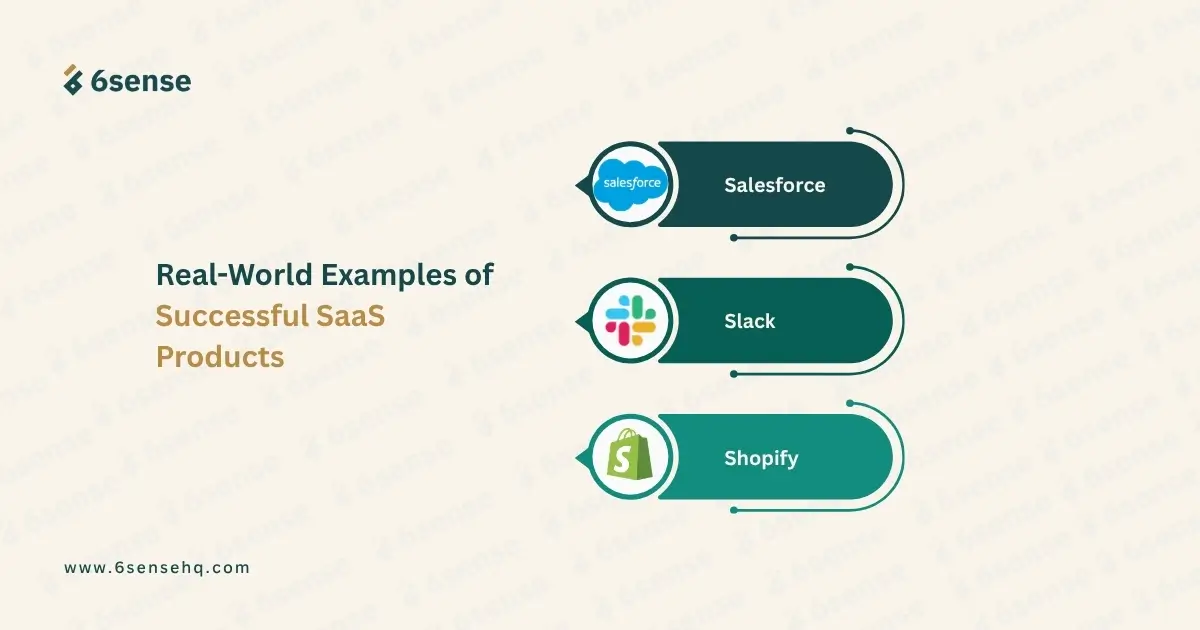
These companies demonstrate the enormous potential of the SaaS model.
Now let’s find out the differences between Saas vs traditional software:
| Feature | SaaS Software | Traditional Software |
| Installation | Cloud-based | Local installation |
| Pricing | Subscription model | One-time license |
| Updates | Automatic | Manual upgrades |
| Accessibility | Anywhere via internet | Limited devices |
| Infrastructure | Managed by provider | Managed internally |
| Security & Compliance | Centralized cloud security | Company-managed security |
| Customization Flexibility | API-based modular features | Often highly customized locally |
| Vendor Lock-in Risk |
| Benefit | What It Means | Key Outcome |
| Lower Costs | No servers or infrastructure required | Reduced total cost of ownership |
| Faster Deployment | Cloud launch instead of installation | Faster time to market |
| Scalability | Auto-scaling infrastructure | Growth without hardware upgrades |
| Remote Access | Web-based access from anywhere | Global collaboration |
| Automatic Updates | Centralized maintenance | Always up-to-date software |
| Collaboration | Real-time teamwork tools | Higher productivity |
| Security | Enterprise cloud security | Stronger data protection |
Beyond technical benefits, SaaS also provides major business advantages.
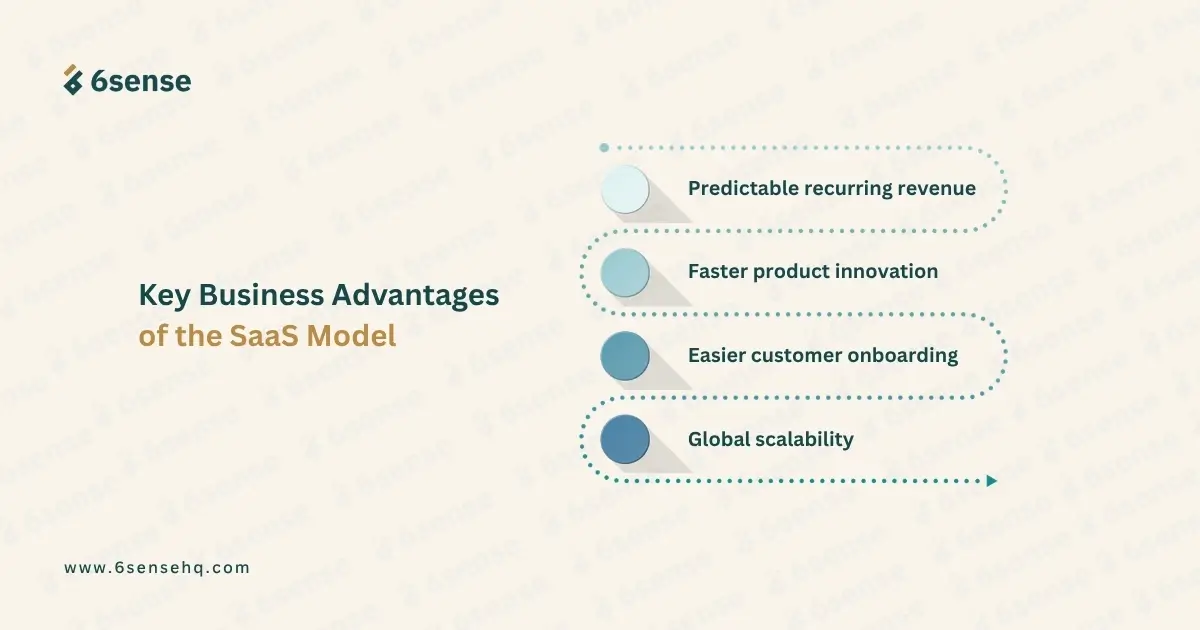
These include:
While SaaS offers many benefits, it also presents challenges.
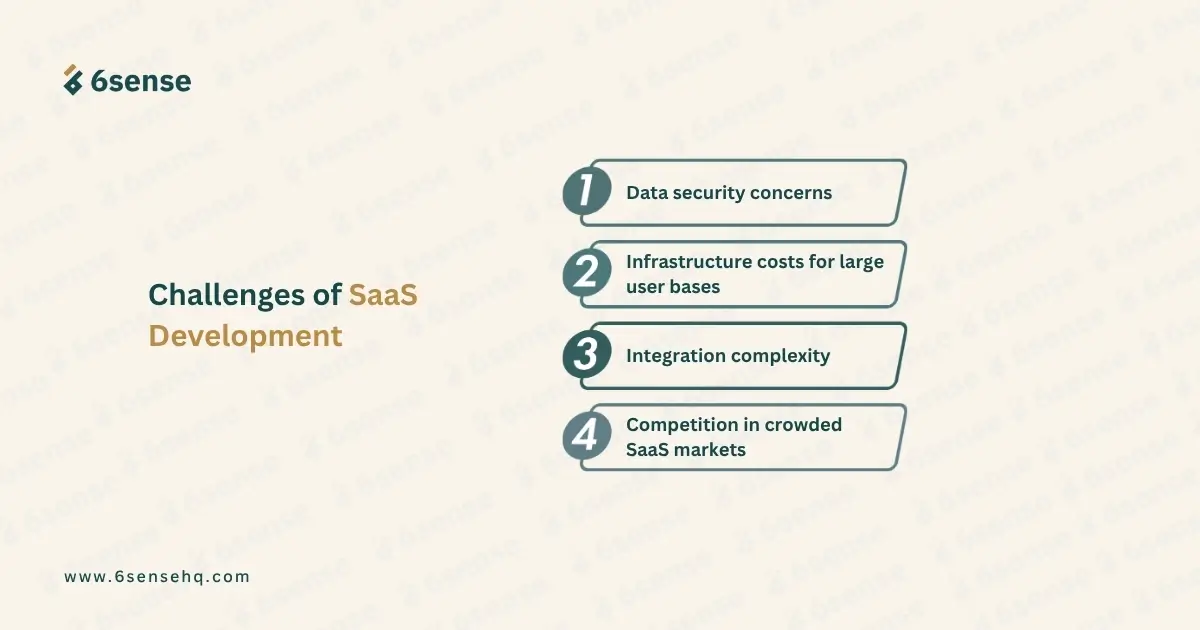
Common challenges include:
Companies must carefully plan their architecture and product strategy to overcome these challenges.
SaaS is powerful, but it is not always the best solution.
Situations where SaaS may not be ideal include:
Understanding these limitations helps companies choose the right architecture.
The SaaS industry continues to evolve as new technologies emerge.
Artificial intelligence, automation, and low-code development platforms are accelerating SaaS innovation. Many SaaS companies are now integrating AI features directly into their products, enabling smarter workflows, automation, and better decision-making.
Industry leaders also believe cloud software will continue to shape the future of digital products.
As Marc Benioff, CEO of Salesforce, once said:
This idea reflects how SaaS technology allows businesses of all sizes to access powerful software tools without massive infrastructure investments.
As cloud computing and AI continue to advance, SaaS development is expected to play an even greater role in digital transformation. This enables companies to innovate faster and scale globally.
SaaS development is changing how businesses build and deliver software. Instead of investing heavily in infrastructure, companies can build cloud-based products that scale globally and evolve continuously. Companies like Slack and Shopify demonstrate how SaaS platforms can scale from startup to global adoption without requiring users to install software locally.
At 6sense HQ, we have helped dozens of startups and growing companies build SaaS products that launch quickly and scale efficiently.
If you are evaluating the SaaS model for your next product, talk to our team at 6sense HQ and explore how SaaS architecture can support your growth.
Choosing the right SaaS development methodology is key to growth. Learn how Agile, Lean, and DevOps can help scale your startup.
6 min read
Master the SaaS development process with our step-by-step guide on planning, building, and scaling a successful cloud product.
8 min read
| Possible dependence on provider |
| Full ownership of infrastructure |
| API-based ecosystem |
| Flexible tech stack |
| Competitive Advantage | Faster market entry | Stronger market position |
| Product Analytics | Usage insights | Continuous improvement |
Learn why SaaS development is faster and more scalable than traditional software. Compare deployment, cost, and cloud agility.
9 min read